![MaritimeJournal[Seawork]](https://www.maritimejournal.com/wp-content/uploads/2026/09/MaritimeJournalSeawork.svg)



No bids received in German offshore wind auction
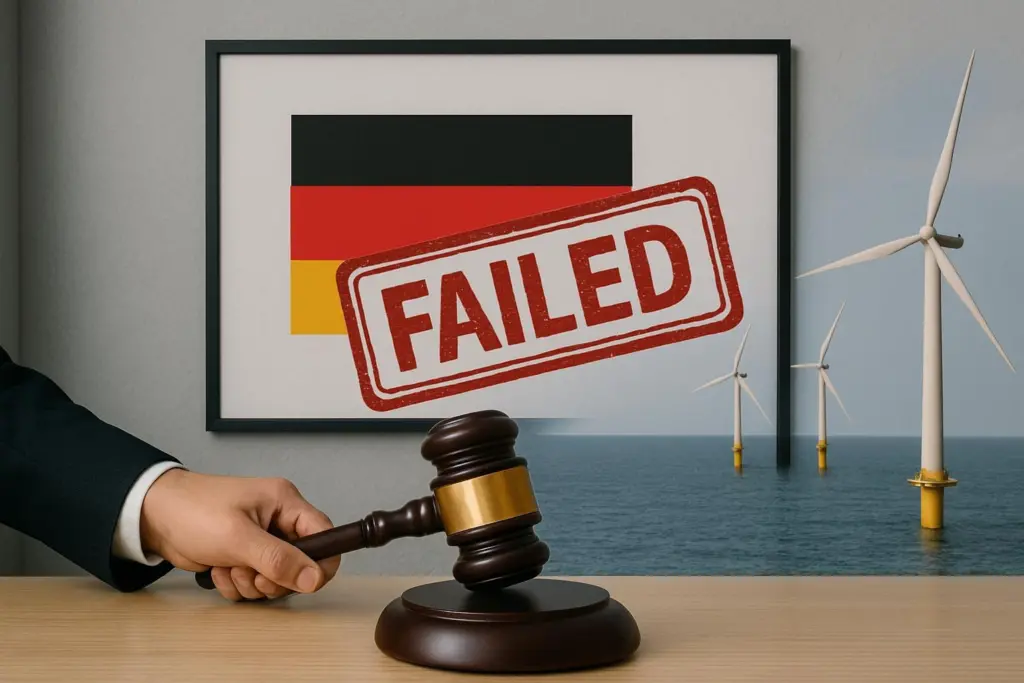
Germany’s second offshore wind auction for 2025 has failed to attract a single bid.
It is the second auction this year, with the first, in June, receiving just two bids. The winner in that auction, TotalEnergies, will have to pay €180 million for the right to build the wind farm, which will be installed over an area of 146km2 and have a generation capacity of 1.2GW.
August’s failed auction asked for bids on two wind farms, known as N-10.2 and N-2.5, with a total capacity of 10GW generated over 182km2. It is an echo of the 2023 auction in the UK, where no bids were submitted and the government had to subsequently raise the energy cap.
Partly to blame for the zero interest is that Germany does not offer Contracts for Difference for wind farm tenders, where developers are paid the difference if the market price drops below the strike price, giving certainty as to how much they will earn. In Germany, developers pay upfront for the right to build the farms – with no stability or certainty that they will make any returns.
“The fact that not a single company participated in this auction is a foregone conclusion,” said Stefan Thimm, managing director of the German Offshore Wind Energy Association (BWO), a political lobby for the offshore wind industry in Germany. “The industry has been warning for years against burdening companies with too many risks. However, the legal requirements no longer take into account the framework for investments in offshore wind projects in Germany. The current auction design forces developers to bear risks beyond their control without any protection.
“The result sends a clear message: The German offshore wind market is currently not attractive to investors. The federal government is thus missing the opportunity for significant value creation and employment in Germany and Europe. If the regulatory framework is right, the industry will invest more than €2045 billion in offshore wind expansion.
“This urgently requires a course correction in auction design and a systematic elimination of bottlenecks, for example in port expansion and the modernisation of seaports.”
WindEurope reaction
European association WindEurope also reacted with dismay.
“Germany’s current offshore wind auction relies on negative bidding. It doesn’t offer any revenue stabilisation and exposes bidders to risks that go beyond their control,” said Viktoriya Kerelska, director of Advocacy & Messaging at WindEurope.
“The uncapped negative bidding (‘second bidding component’) further intensifies the financial pressure on offshore wind developers by asking them to pay high sums for the right to develop an offshore wind farm.
“The auction result must be a wake-up call for the German government. Negative bidding adds costs that make offshore wind more expensive and reduces the number of companies willing and able to participate in auctions. It’s time to amend the auction model so Germany can deliver on its offshore wind targets and industrial competitiveness.”
“Specifically, we demand the following regarding the auction design: The federal government must finally pave the way for a reliable CfD system alongside long-term electricity supply contracts,” said BWO’s Thimm.
“Contracts for Difference lead to a reduction in electricity generation costs of up to 30% – the basis for competitive electricity prices. Without this reform, further auctions could fail – and with them the energy transition.”
Related Articles
 FEATURES & VIDEOS
 ENVIRONMENT
 OTHER NEWS