![MaritimeJournal[Seawork]](https://www.maritimejournal.com/wp-content/uploads/2026/09/MaritimeJournalSeawork.svg)




Offshore charging tower and hub launched at WindEurope
Two new offshore charging systems aimed at supporting vessel electrification were unveiled at WindEurope as the industry struggles to address power supply challenges in offshore wind operations.
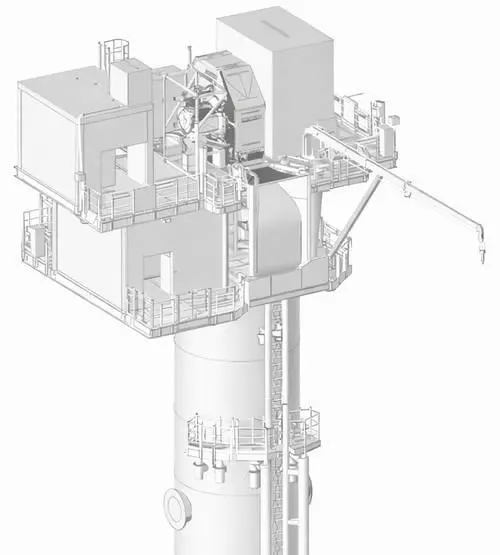
Developed by Stillstrom, the technologies – known as the Power Hub and Power Tower – were designed as standalone charging installations that can operate independently of wind turbine infrastructure. The company says the systems are intended to expand deployment options for offshore charging, particularly as wind farms move further from shore and increase in scale.
As service vessels play an increasing role in offshore wind projects, from installation to ongoing maintenance, access to reliable offshore electricity is increasingly seen as a prerequisite for reducing reliance on conventional marine fuels and enabling electrified vessel operations.
The Power Hub is designed as a compact structure mounted on a monopile foundation and can be installed within existing wind farms, allowing charging capability to be added to operational sites. The Power Tower, by contrast, is aimed at new developments and is built to align with standard turbine foundation designs. This allows it to be installed using conventional offshore construction vessels and processes.
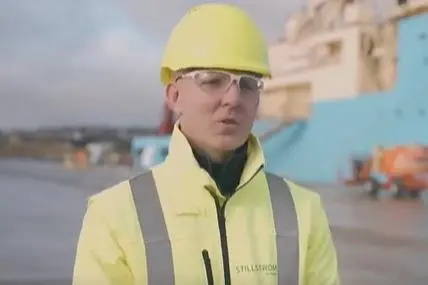
Stillstrom’s Detailed Engineering Manager Koen Legrand said: “Our two new monopile systems help to address the sector’s long-standing ‘chicken and egg’ challenge, where vessel electrification and infrastructure deployment must progress in step.
“The Power Hub is a compact, monopile-mounted structure designed for installation within operational wind farms, enabling charging capability to be added to existing infrastructure. The Power Tower is designed for new-build offshore wind projects, with a form that mirrors a turbine foundation and allows installation using standard construction vessels, tools and processes, enabling charging to be integrated from the outset.”
Stillstrom, a subsidiary of AP Moller-Maersk, has been developing offshore charging technologies for several years, including systems integrated into wind turbine foundations. The new standalone concepts suggest a shift towards more flexible infrastructure that can be deployed either within or alongside wind farm assets.
The introduction of such systems comes as offshore wind developers and vessel operators face increasing pressure to reduce emissions across the full lifecycle of projects, including installation and maintenance activities.
“These new solutions give developers and operators practical, scalable options, enabling offshore charging either fully integrated within wind farm structures or through standalone offshore installations,” said Kristian Borum Jørgensen, CEO of Stillstrom.
Related Articles
 FEATURES & VIDEOS
 ENVIRONMENT
 OTHER NEWS