![MaritimeJournal[Seawork]](https://www.maritimejournal.com/wp-content/uploads/2026/09/MaritimeJournalSeawork.svg)






Oil and chemical spills up in 2023: report
There were more crude and refined oil spills in the oceans last year along with more chemical leaks, the International Salvage Union’s annual report shows.
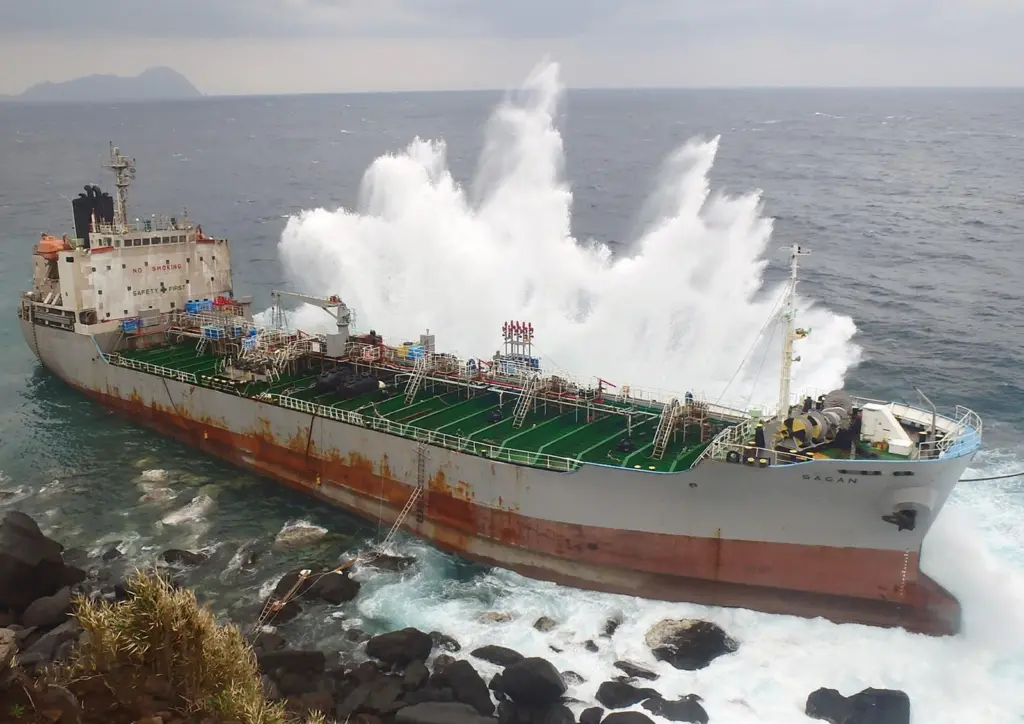
The reported numbers are also likely to be lower than reality, with a number of services not recording bunker or cargo quantity and type.
As the International Salvage Union releases its annual pollution prevention survey, ISU president John Witte says while a lot of focus has come to be placed on emissions, it’s important not to lose sight of the importance of simply protecting the environment.
The survey was first carried out by the ISU in 1994, and this latest report stresses that in each year there can be significant variations of the quantities of pollutants in each category, partly due to increasing vessel size, for example, one major container ship case could significantly affect that category.
Just one year’s statistics may therefore be considered a relative ‘snapshot’ in time and the trends graphic accompanying the report (back to 2019) illustrates the longer term variations.
When considering the period 1994 to end-2023 where ISU members provided services to vessels carrying 43,397,100 tonnes of potential pollutants (an average of 1.5 million tonnes per year), the importance to the environment of an adequately funded professional marine salvage industry is clear.
Breaking down the statistics
ISU members provided 173 services to vessels carrying 1.9 million tonnes of potentially polluting cargo and fuel during 2023 compared to 186 services and just under 2.5 million tonnes in 2022. ISU recognises that not all these potential pollutants were at immediate risk of going into the sea and that some cases will have had limited danger. But others will have carried a real risk of causing substantial environmental damage and that in an era of “zero tolerance” of any pollution, even the smaller cases represent a significant concern.
The survey results are presented in tabular form comparing 2023 with the previous year and looking at bulk liquids, the figure of 187,229 tonnes of crude oil was an increase from 140,900 tonnes in 2022.
Refined oil products also saw an increase, up from 144,858 tonnes in 2022 to 255,020 tonnes in 2023; similarly, chemicals were up from 79,319 tonnes to 135,847 tonnes in 2023, while bunker fuel decreased to 81,053 tonnes in 2023 from 108,112 tonnes the previous year.
An increased number of the services in the survey did not record the quantity of bunkers nor the cargo type, meaning the reported numbers are likely to represent a more modest total than the reality.
Decreases were recorded in the bulk (polluting/hazardous) and container categories with bulk down to 769,325 tonnes from 1,235,741 in 2022. Container figures were 403,725 tonnes (26,915 TEU at nominal 15t/TEU) compared with 747,270 tonnes (49,818 TEU) in 2022 remembering that a major casualty can affect the statistics in this category.
The bulk, non-polluting category increased to 446,166 tonnes in 2023 from 113,926 tonnes in 2022 and while outside the pollution prevention theme of the survey carry notable financial implications for owners and insurers.
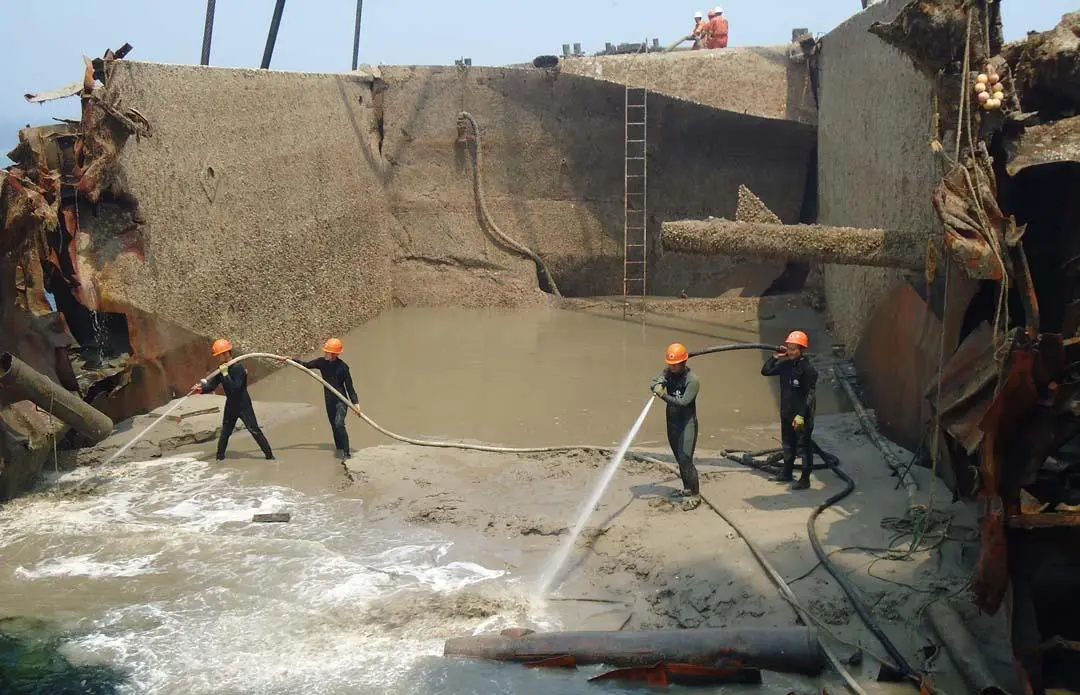
Breaking down the individual services, the 173 carried out in 2023 included 43 wreck removal/marine services contracts; 19 Lloyd’s Open Forms; 24 towage contracts; 10 Japanese forms; 5 Lump Sum; 5 Day Rate contracts; 37 other contracts (including commercial terms, common law salvage and OPA 90 responses) and 29 Turkish Forms.
Conclusions
ISU says that the fewer services in 2023 is in line with the downward trend of its general industry statistics. And while container numbers are lower, after bulk cargo they represent the most significant category, with ISU members providing services to vessels carrying some 400,000 tonnes of cargo compared to 187,000 tonnes of crude oil.
The wide variety of both vessel type and cargo presents an equally wide set of challenges to salvors and the areas of concern are highlighted in the report. Containers carrying a great variety of harmful and dangerous goods including plastic pellets (nurdles) ‘represent one of the biggest threats to the marine environment’.
“Containers continue to be difficult to deal with – offloading, storing and perhaps backloading,” said John Witte. “But the traditional threat from oils remains and there were also several cases of car carriers and ro-ro fires and the carriage of electric vehicles is an increasing concern. Salvors often do not know if there are EVs or batteries on board or the quantity.
“Sustaining a viable professional salvage industry ready to respond to all kinds of incidents around the world is vital and that is recognised by insurers and owners but it needs to be properly funded.”
Related Articles
 FEATURES & VIDEOS
 ENVIRONMENT
 OTHER NEWS