![MaritimeJournal[Seawork]](https://www.maritimejournal.com/wp-content/uploads/2026/09/MaritimeJournalSeawork.svg)





Optimising methanol use with fuel cells in shipping
Fuel cells leveraging methanol reformer technology offer an efficient and sustainable propulsion solution, particularly for smaller vessels like tug boats, feeder ships and ferries, writes Dr Andreas Bodén, Senior Vice President & CTO - PowerCell.
![Andreas-Bodén-1-Headshot[99]](https://www.maritimejournal.com/wp-content/uploads/2025/05/00_326498_andreasboden1headshot99_934781-819x1024.webp)
Hydrogen and methanol: A synergistic approach to sustainable shipping
As the maritime industry works towards net-zero emissions, renewable fuels are recognised as central to long-term sustainable shipping. Optimised ship design, hybrid energy systems and clean technologies such as wind-assisted propulsion can help bridge the gap, but ultimately the industry needs access to renewable fuel and to use it efficiently.
Hydrogen Europe’s “Long-term Outlook on Zero-Emission Mobility” survey highlights e-fuels as the most promising option across various ship categories, including ferries, cruise ships, bulk carriers, small and large container vessels. With this focus on scarce e-fuels, methanol reformer technology is emerging as a key player by converting methanol into hydrogen onboard through steam reforming. This enables proton-exchange membrane (PEM) fuel cells to use methanol with 30% greater efficiency than internal combustion engines, offering a compact, high-power, and net-zero energy solution without the need for pure hydrogen infrastructure.
Hydrogen is often regarded as the cornerstone of the energy transition and is particularly well-suited for vessels with fixed or short routes, such as passenger ferries and service ships. However, widespread adoption in deep sea shipping presents logistical hurdles, including the availability of green hydrogen, energy density constraints, and challenges in storage, transport, and handling. Hydrogen must be stored at extremely low temperatures or high pressures, requiring complex and costly infrastructure, which limits its feasibility for large-scale maritime operations.
Methanol offers a practical alternative by serving as an efficient carrier of the hydrogen molecule. It is easy to store, transport and manage at ambient conditions, eliminating many of the challenges associated with hydrogen while still enabling the use of high-efficiency fuel cells. It can be produced from biomass, captured carbon and renewable electricity, offering a versatile and scalable approach to decarbonisation.
Maximising limited resources
As is the case for all e-fuels, there are challenges scaling production and securing final investment decisions for renewable methanol projects. Shipping may also struggle to access renewable fuels compared to other industries such as road transport and chemicals. On the other hand, the Methanol Institute reports that nearly 90 green methanol projects are in development, aiming for an annual output of 9 million tons by 2027, some of which will support the marine sector.
Despite this optimism, renewable methanol is expected to remain a scarce and costly resource – according to Lloyd’s Register, an initial cost of around $1,000 per ton, significantly higher than conventional fuels. As a result, ship owners must prioritise efficiency to reduce fuel consumption and mitigate operational expenses.
While methanol offers higher energy density than hydrogen and ammonia, it still lags behind traditional hydrocarbon fuels. Lloyd’s Register notes that vessels require approximately two times more methanol than conventional fuel oil for equivalent energy output, emphasising the need for more efficient propulsion systems.
Fuel cells: Enhancing efficiency
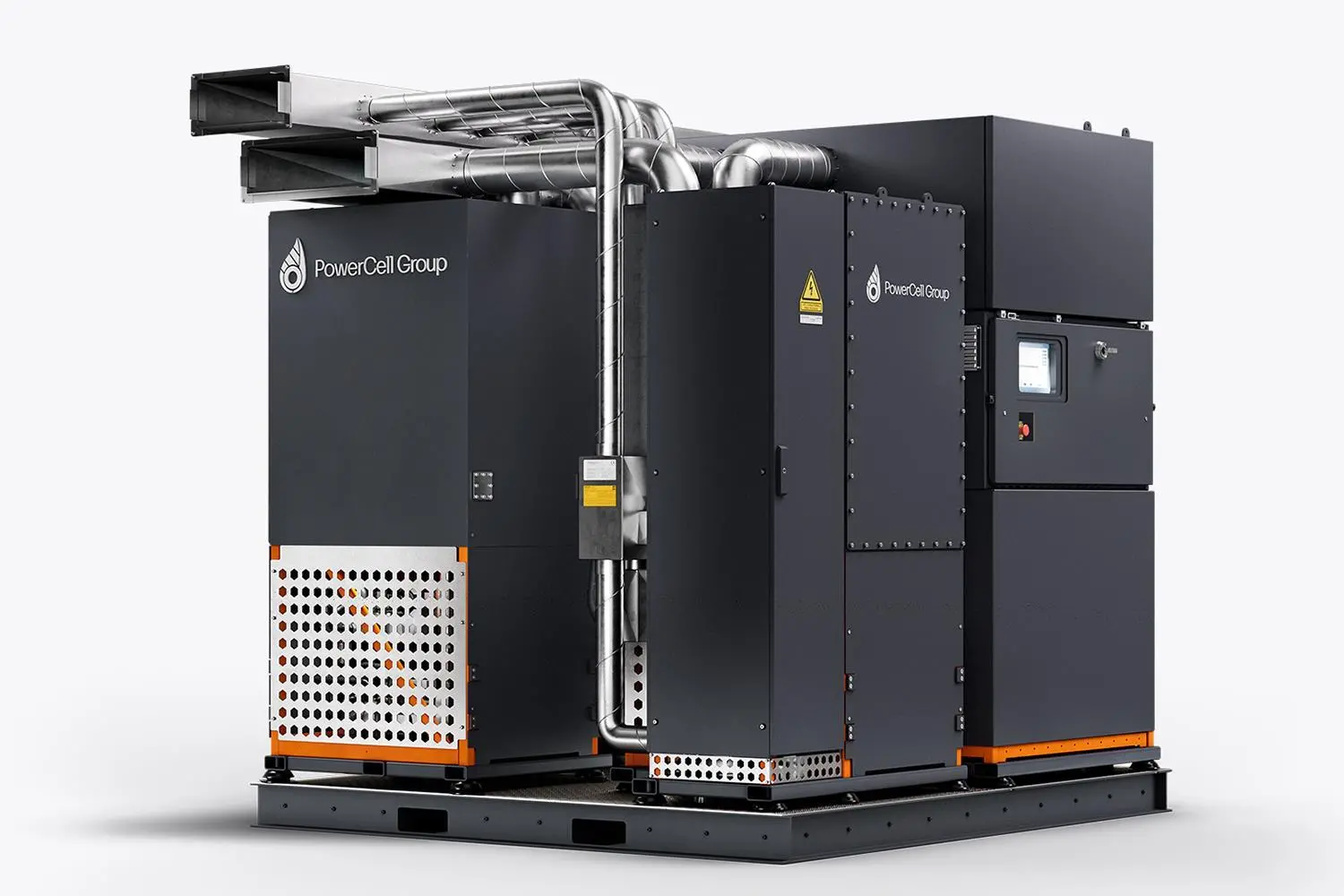
Fuel cells leveraging methanol reformer technology offer an efficient and sustainable propulsion solution, particularly for smaller vessels like tug boats, feeder ships and ferries.
By converting methanol into hydrogen, they achieve net-zero greenhouse gas emissions while consuming around 30% less fuel than internal combustion engines. Their high efficiency increases operational range while reducing fuel storage needs and minimises maintenance due to fewer moving parts.
Additionally, fuel cells provide instantaneous, reliable power with lower noise and vibration, therefore improving onboard comfort. This is particularly valuable for passenger vessels, where a quieter and smoother ride improves the travel experience.
Meanwhile, larger vessels, including container ships, can employ fuel cells for auxiliary power, eliminating emissions from fossil-fuel-based generators during port operations. In this case, renewable methanol significantly reduces nitrogen oxide emissions by up to 80%, while completely eliminating sulphur oxide and particulate matter emissions.
These benefits are amplified when employing fuel cell reformer technology designed to minimise local pollutants.
Navigating sustainability and efficiency
The International Maritime Organization’s revised greenhouse gas strategy aims for net-zero emissions in international shipping by 2050, with interim milestones set for 2030 and 2040. Meeting these objectives necessitates efficient renewable fuel use and innovative propulsion systems. Ongoing research and development efforts are focused on increasing the longevity and performance of fuel cell systems to ensure their widespread adoption in maritime applications.
With maritime transport accounting for 3% of global human GHG emissions, reducing the sector’s carbon footprint remains a key priority to many. Fuel cells with methanol reformers offer a pragmatic solution. Whether driving smaller vessels or supporting auxiliary power on deep-sea ships, this technology helps to bridge the gap between current fuel limitations and the transition to more sustainable shipping practices. However, widespread adoption will require investment in renewable methanol production, infrastructure development and supportive policies to scale these solutions effectively.
As the industry moves toward net-zero emissions, fuel cell technology is emerging as a viable solution. By offering efficiency, scalability and compatibility with various low-carbon fuels, fuel cells contribute to reducing reliance on conventional fossil fuels and support shipowners in meeting evolving energy demands and stricter emissions regulations.
Related Articles
 FEATURES & VIDEOS
 ENVIRONMENT
 OTHER NEWS