![MaritimeJournal[Seawork]](https://www.maritimejournal.com/wp-content/uploads/2026/09/MaritimeJournalSeawork.svg)




Studies examine impact of offshore wind on marine food chain
As offshore renewable projects grow in number and scale, they are also expanding in type of project: as well as fixed-bottom and floating wind projects, we are now seeing tidal turbines, which use wave energy instead of wind.

It’s all supposedly good for the climate in terms of weather and air – but at what cost to the life in the oceans themselves?
Southampton’s National Oceanography Centre (NOC) is working on a number of studies to see what kind of effects are being seen below the surface of the seas as more and more installations make themselves felt.
Physical oceanographer and ocean Dr Michela De Dominicis spoke to Maritime Journal about one of them, the PELAgIO (Physics-to-Ecosystem Level Assessment of Impacts of Offshore Windfarms) project, which uses subsea robots and computer simulation to understand how these installations are affecting the water and its resident phytoplankton, the lowest link of the food chain.
“So my research about offshore wind is mainly trying to understand what is going to happen if we put thousands of wind turbines at sea,” Michela says. “What we try to understand is how the usual environment is going to change from the physical, so if the temperature, salinity, the currents, the mixing of the water is changing, then what are the possible impacts of these changes on everything?
“Because in the ocean you have oxygen, nutrients and then these phytoplankton and small algae, which is the base of the food chain for fish, sea birds and marine mammals.”
Deep and shallow differences
Because the vast majority of offshore wind farms have been built in shallow waters, the change to water stratification has not so far been an issue, says Michela, because shallower water stratification is mixed all the time by the tides.
“This is a completely different environment from where they are trying to put them now,” Michela says.
“In the North Sea at least, which is not extremely deep, you have a two-layer system with the water on the top getting warmer in the summer so it’s less dense and stays on the top, and the water on the bottom stays on the bottom.
“If you put in thousands of wind turbines in a system like this it’s potentially going to have an effect, and this is what we are trying to study – it can perturb the natural equilibrium of this stratified system. We are trying to understand the order of magnitude of these changes – is it acceptable?”
Nutrients could be displaced, oxygen distribution could change, so micro-organisms get confused, and as yet we do not know what effect that could have on feeding patterns further up the chain.
Sensor equipment
Using autonomous gliders, specifically Teledyne’s Slocum Sentinel Glider, moored instruments and probes to measure temperature, salinity, velocity and depth, the project is gathering data that will be analysed once it’s all in – and from there, the NOC will be able to make recommendations to government on offshore policy.
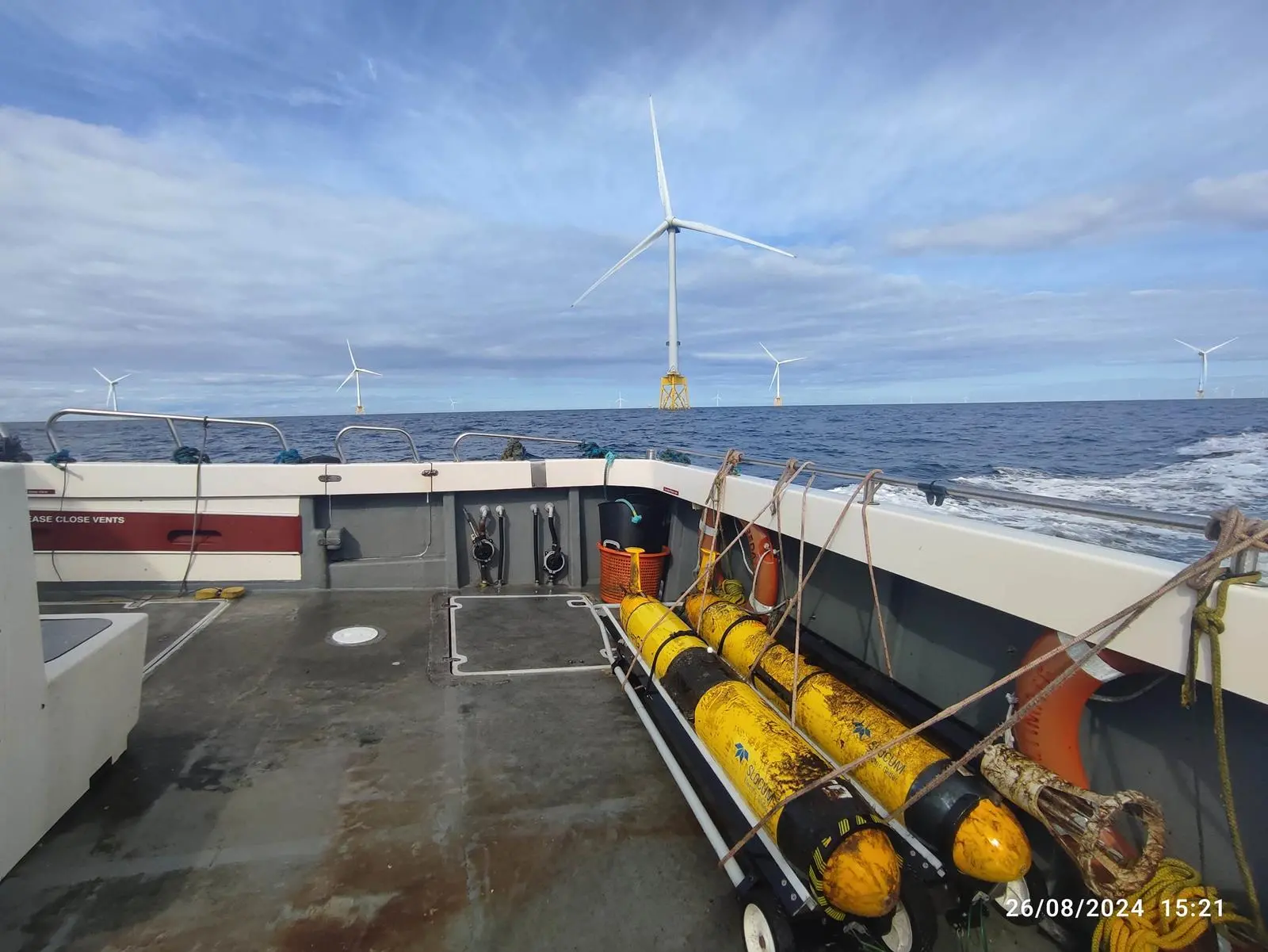
The Slocum gliders, up to 2m long, find their own way around the seabed for months on end down to 1,000 metres, travelling up and down the water columns and returning to the surface every now and then.
Scientists send instructions via satellite, which can be picked up by the glider when it returns to the surface of the sea.
“Despite their small size and low power use, they’re packed with sensors, measuring a range of parameters including oxygen, temperature, salinity, the turbulence in the water, and chlorophyll levels, which tells us about how much phytoplankton there is,” say project leaders. “This includes highly sensitive sensors such as a shear probe and a piezoceramic oscillator, which helps to measure turbulence in the ocean by recording extremely small forces at 512 times a second.”
Tidal turbines
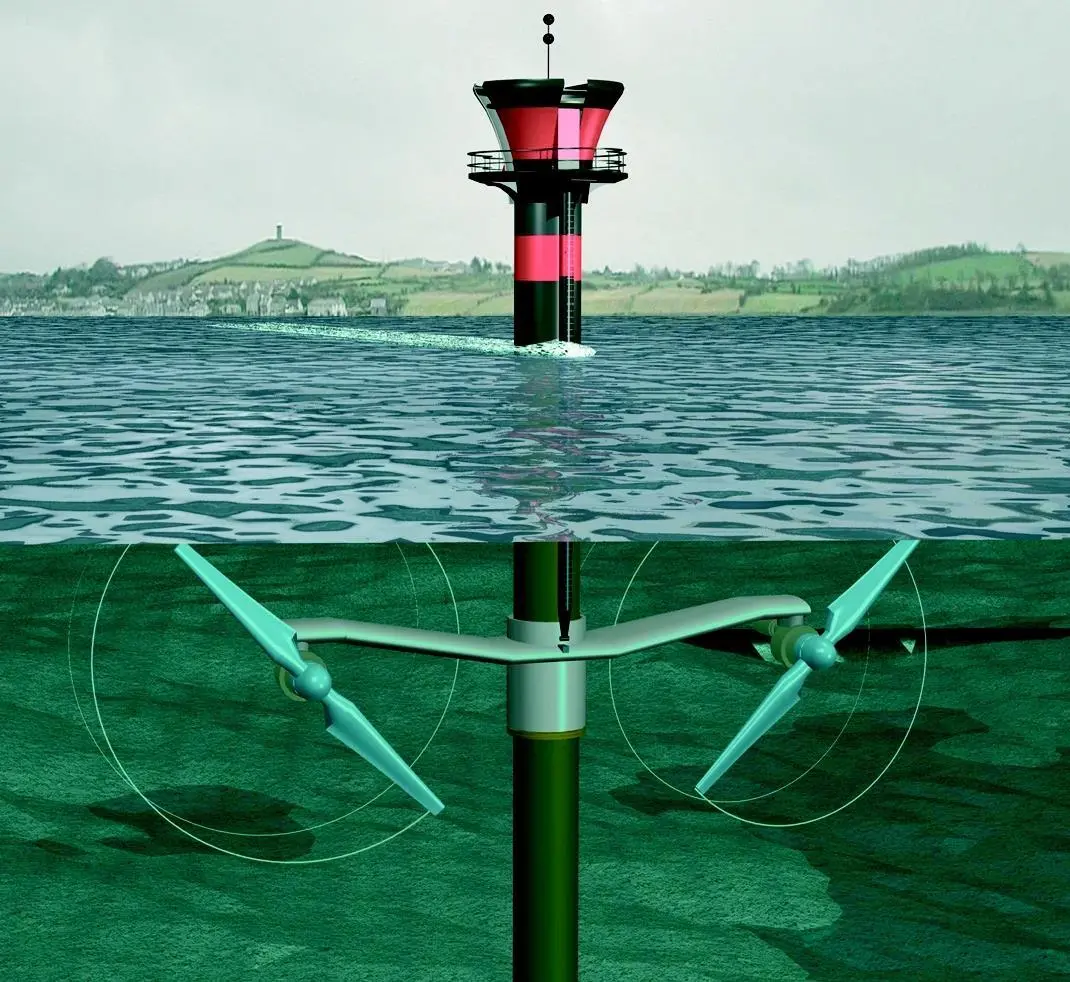
Until they are decommissioned, offshore wind turbine foundations remain in one place, obviously, but with tidal energy it’s a different story.
“They have a different impact,” says Michela. “You have drag, but you have the turbine sinking energy from the system because they use the energy from the tides.
“With fixed turbines there is a mixing of the water column, but with the tidal turbines since they are sinking energy, we can have a different effect.
“We can have an increase of the stratification overall because you have less energy from the tides because it’s taken out by the turbines.”
If there were enough of them, Michela says, this means tidal turbines could actually weaken the tides themselves.
Artificial reefs
One of the benefits of installing structures on the seabed is that they can create artificial reefs for marine life.
“Those artificial reefs can increase the connection between different things,” she says. “For example, if you have larvae of any species being transported, they might settle on those structures whereas if that structure was not there, instead they might get lost at sea. It might increase the resilience of a species that would otherwise be in danger.
“At the same time, if you have an invasive one settling there that’s not good. So it’s good for the species you want to keep, and bad for the invasive ones.”
PELAgIO is led by Professor Beth Scott of the University of Aberdeen, and is one of three projects under ECOWind, which is funded by the Natural Environment Research Council, the Crown Estate and the Department for Environment, Food and Rural Affairs.
The other two ECOWind projects are Accelerate and Ecowings.
Related Articles
 FEATURES & VIDEOS
 ENVIRONMENT
 OTHER NEWS