![MaritimeJournal[Seawork]](https://www.maritimejournal.com/wp-content/uploads/2026/09/MaritimeJournalSeawork.svg)





Sumitomo invests 33.3% in UK floating wind project
Japanese trading and investment firm Sumitomo has invested in its first floating wind farm, sounding a loud note of confidence in the sector.
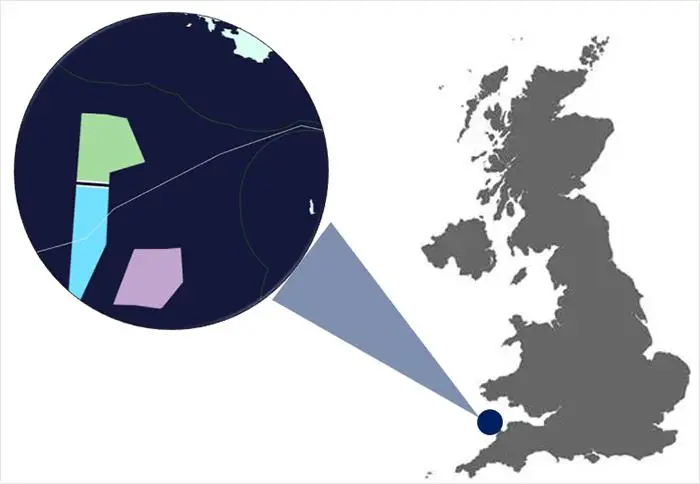
The company has bought a third of the equity interest in the Gwynt Glas Offshore Wind Farm being developed by EDF and the Ireland and Electricity Supply Board (ESB) in the Celtic Sea.
The project, which is divided equally among the partners, with a third each, is designed to generate up to 1.5GW of electricity for the UK.
Sumitomo says the stake will expand its offshore energy portfolio, which it believes is one of its key management priorities.
“Sumitomo Corporation will continue to develop renewable energy projects taking into account the energy policies and market characteristics of individual countries and regions, including the United Kingdom, thereby contributing to the realization of a sustainable society,” it says.
Floating pipeline
Floating wind in the UK is still tiny, with just 78MW operational across two projects, Hywind Scotland and Kincardine, according to government figures.
However the potential pipeline is vast, with the Welsh Affairs Committee publishing a report that concluded there was scope for 20GW of floating wind in the Celtic Sea alone. The Crown Estate, which owns all the seabed around the UK, has long had its eye on floating wind, announcing tenders in 2022.
In 2023, RenewableUK and the Offshore Renewable Energy Catapult published their own report about the urgent need to upgrade ports to really kickstart the sector.
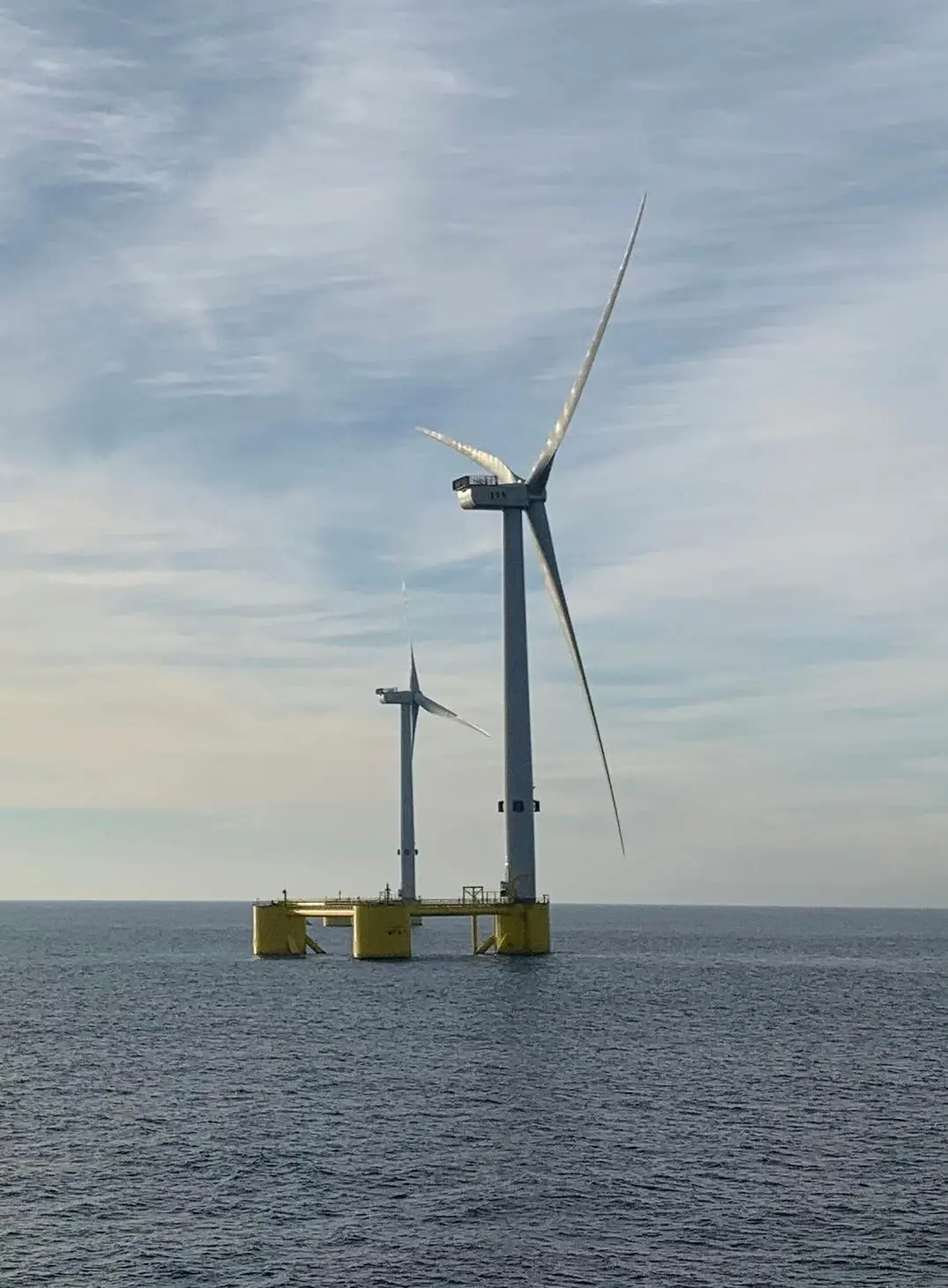
Unlike in fixed-bottom offshore wind, where China dominates the world by some margin, Europe is in fact ahead of the Asian giant when it comes to floating wind.
But it is still tiny. Norway currently holds the lead in installed floating offshore wind capacity, with roughly 100MW in operation – most of it from Hywind Tampen, an 88MW, 11-turbine array in the Norwegian North Sea. Commissioned in 2022–2023, Hywind Tampen was the world’s first floating wind farm built specifically to power offshore oil and gas installations, supplying electricity directly to the Snorre and Gullfaks platforms rather than feeding the onshore grid.
The UK sits close behind, followed by Portugal and France.
Back to China, it is still in an experimental phase in floating wind, where its installed base of fixed-bottom is a whopping 35GW, more than every other country combined.
However it is unlikely to be behind in floating wind for long: in May, China installed what developers describe as the world’s most powerful single floating turbine to date, a 16MW unit mounted on a 24,100-tonne semi-submersible platform off Yangjiang, Guangdong, in water more than 50 metres deep.
Related Articles
 FEATURES & VIDEOS
 ENVIRONMENT
 OTHER NEWS