![MaritimeJournal[Seawork]](https://www.maritimejournal.com/wp-content/uploads/2026/09/MaritimeJournalSeawork.svg)




Tackling offshore wind cable maintenance costs
A new UK-led research project aims to slash costs in floating offshore wind by improving the processes around maintenance of mooring lines and subsea cables.
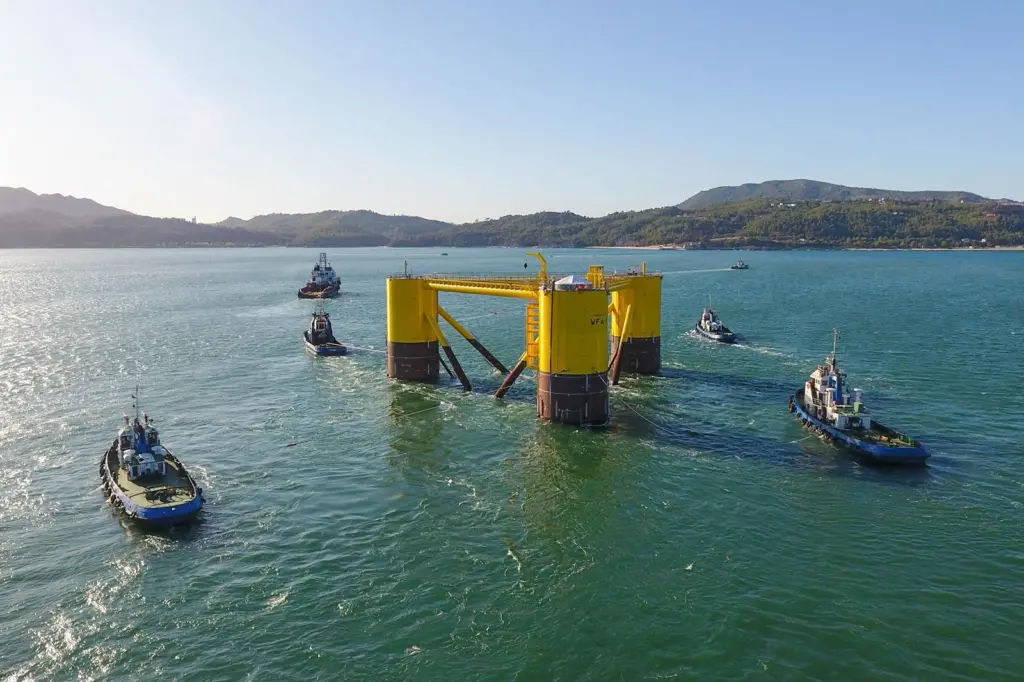
The project, by The Floating Offshore Wind Centre of Excellence, run by ORE Catapult, focuses on the performance and repair of dynamic cables and mooring lines, critical systems for offshore windfarm maintenance.
“Operating and maintaining a floating offshore windfarm creates challenges not previously faced in fixed offshore wind, including the monitoring and replacement of mooring lines and dynamic cables,” said Sean Snee, floating offshore wind team leader at ORE Catapult.
“The learnings from this project could reduce the overall cost of floating offshore wind mooring line and dynamic cable repairs and replacement across the UK and internationally.”
Data collection
The project, delivered in collaboration with Apollo Engineering and DOF Subsea UK, will gather data on component failure modes and cost-effective repair methodologies.
Understanding these maintenance needs is vital to lowering operational costs and ensuring the long-term viability of offshore renewables.
Historically, mooring failures in oil and gas have led to single incidents costing over GB£400 million, while subsea cable faults account for up to 80% of UK offshore wind insurance claims.
“This study will allow the next generation of gigawatt-scale arrays to be designed, built, and operated with long-term integrity and maintainability in mind,” said Will Brindley of Apollo Engineering.
There’s good motive behind the research, the centre aims to cement the UK’s position as a global leader in floating offshore wind, advancing innovation and increasing efficiency of the local supply chain.
Related Articles
 FEATURES & VIDEOS
 ENVIRONMENT
 OTHER NEWS