![MaritimeJournal[Seawork]](https://www.maritimejournal.com/wp-content/uploads/2026/09/MaritimeJournalSeawork.svg)

‘Technological rat race’ among obstacles in offshore wind: report
A new white paper released by the Port of Rotterdam says offshore wind is going to be vital in shouldering a share of the burden of energy needs – yet it faces what some might see as insurmountable hurdles.
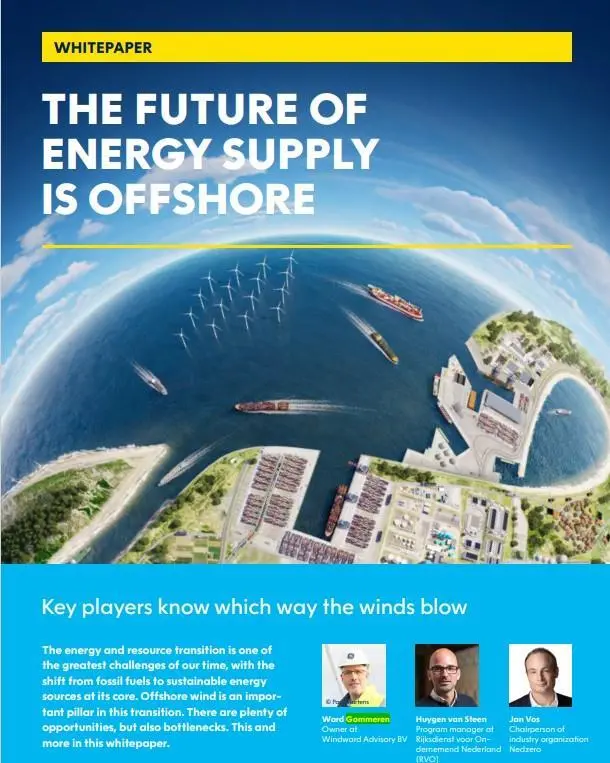
Three sector leaders have painted a picture of an industry maturing at an extraordinary speed, but at the same time being threatened by supply chain shortages, rising costs and a chronic limit in port capacity.
Ward Gommeren, owner of Windward Advisory; Huygen van Steen, programme manager at the Dutch government agency RVO; and Jan Vos, chairperson of the industry organisation Nedzero, warn that while the industry has ‘plenty of opportunities’, it also faces bottlenecks that must be addressed.
Offshore wind, the paper says, ‘provides a sustainable and renewable source of energy that is essential to reduce dependence on fossil fuels’ and strengthens energy security and economic growth.
In 2022, Germany, Denmark, Belgium and the Netherlands signed the Esbjerg Declaration – a political commitment to turn the North Sea into a ‘green energy powerhouse’. By 2023, France, Ireland, Luxembourg, Norway and the UK had joined, collectively targeting 65GW of offshore wind by 2030, rising to 300GW by 2050.
“Offshore wind energy contributes significantly to achieving climate neutrality in the EU,” says Van Steen. RVO, part of the Dutch Ministry of Climate and Green Growth, is steering the implementation of the Roadmap Offshore Wind Energy 21GW, scheduled for completion by 2032.
“To make offshore wind future proof, we must continue to invest and make wind farms smarter, safer and more nature inclusive. In the long term, the roll-out of offshore wind energy will only be successful if it is done sustainably and circularly.”
“We are on the right track,” says Vos, who said earlier targets of 6GW of onshore wind and 4.5GW of offshore wind by 2023 had been hit on time and within budget.
“That is impressive, especially considering the large investments required. 1GW requires an investment of approximately €1.5 billion. Given investments that have already been made, it would be at the very least illogical if that line would not be continued.”
Now the stakes are higher.
“By 2050, 70GW of offshore wind energy must be generated solely in the Netherlands,” he says. “It will only be half of our country’s total energy needs by then.”
‘Technological rat race’ threatens progress
The white paper warns of serious stress points in the market, such as the almost exponential increase in size of the wind turbines themselves.
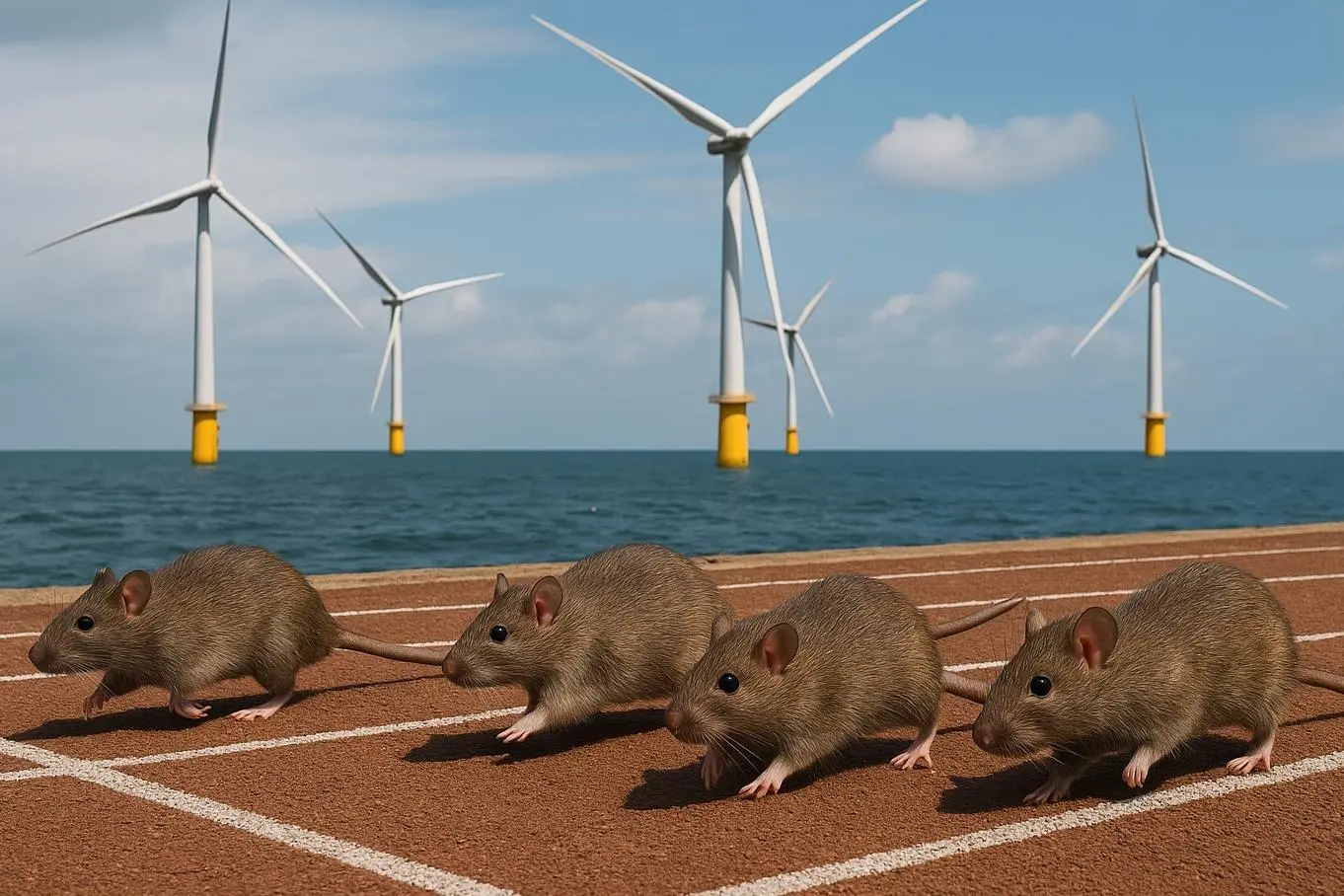
“The technological evolution we have seen in recent years has been far too fast,” he says. “In 2014, we were still building turbines with a capacity of 6MW and a rotor diameter of 150 metres. Now, just 10 years later, it is 12MW and sometimes even more than 14MW, while a diameter of 220 metres is no longer an exception.
“It constantly needs to be bigger and bigger in far too short a time frame, leaving manufacturers with no return of experience. As a result, many companies are in trouble. We need to slow down that technological rat race.”
In any case, bigger is not always better, says Van Steen. “Size and power of wind turbines are definitely not decisive,” he says, pointing to the Netherlands, where a scoring system takes more than finance into account before awards are made.
“Innovative plans in terms of ecology and system integration weigh in as well. This involves, for example, looking at how the generated power is integrated into the Dutch energy system. That is one of the big issues in the ongoing development of a sustainable energy system.”
Economics are also a major issue.
“The price for wind energy is actually too low to produce at the moment, while the costs to purchase the green energy are too high for companies,” says Vos. “Partly as a result of increasing uncertainty, not all developers of offshore wind farms are able to make the business case.”
Gommeren, Owner at Windward Advisory BV, agrees, and says the number of parties bidding for tenders to build offshore wind farms is decreasing.
“On top of that a lot of money is being asked at a very early stage once you win one of these tenders,” he says. “More and more companies are wondering whether it is still attractive.”
A critical bottleneck: Europe’s port capacity
All three experts agree on the sector’s biggest looming crisis: a shortage of port space.
“Ports are essential for the realisation and operational phase of offshore wind farms,” Vos says. But with the rapid rise in turbine size and project numbers, current port capacity ‘falls hundreds of hectares short’.
“Larger turbines provide a higher energy yield, but also require larger infrastructure capacities at the ports. If we really want to make the energy transition possible, more investments in available capacities will have to be made on a European scale.
“Shortages are only getting more acute. That scarcity is very much alive among our members.”
“Port capacity in the North Sea countries is too low to realize the envisaged peak in the construction of wind farms in the North Sea around 2030,” says Van Steen.
Larger turbines require heavier-lift vessels, deeper quays, and more staging areas. Projects are already taking longer as a result, creating knock-on delays across the supply chain.
But there’s one European port that stands head and shoulders above the rest, Gommeren says.
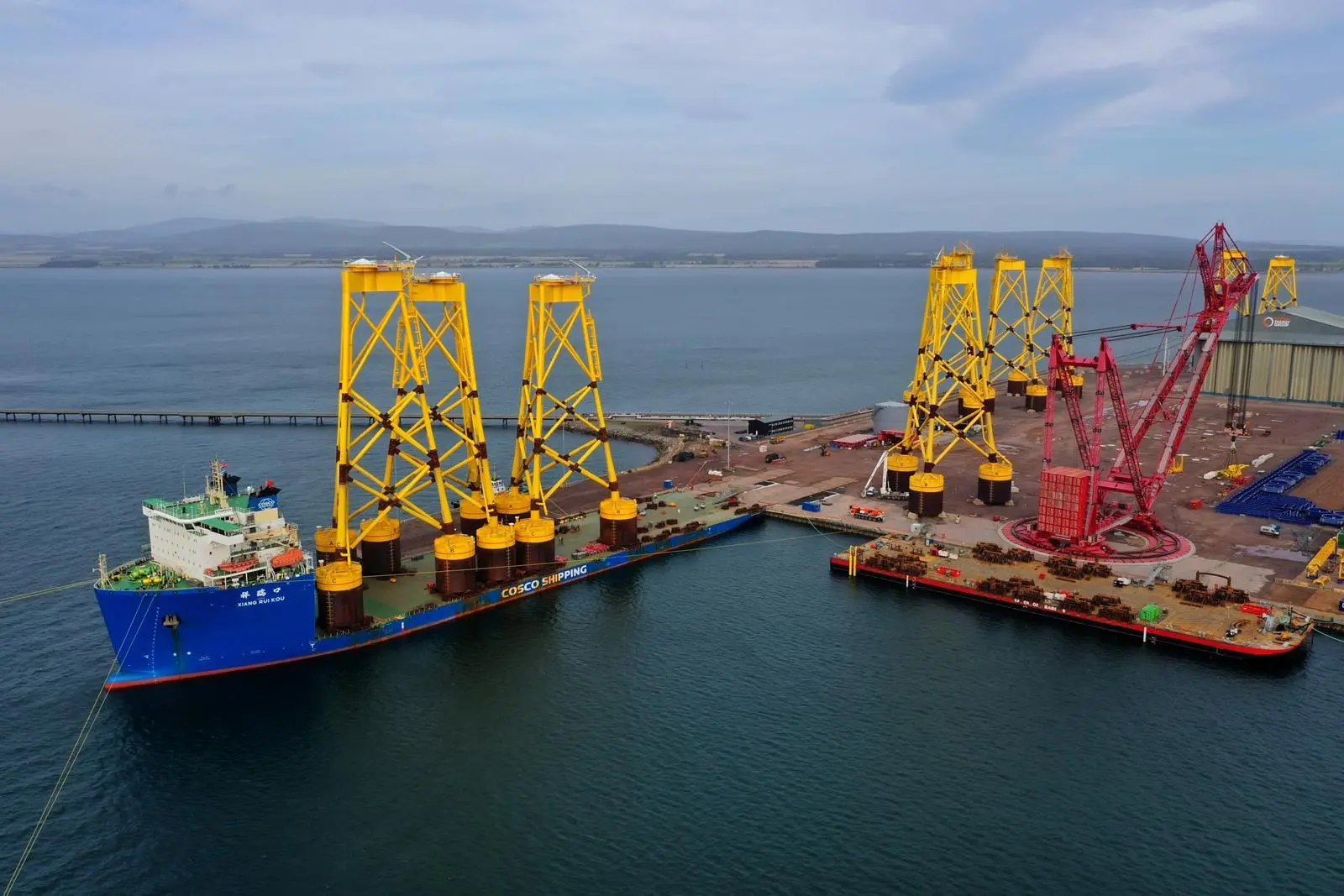
“Rotterdam is the most strategic hub for offshore wind,” he says. “No other location is as flexible and as cooperative as Rotterdam. Everything fits: deep waters, large quays, no tidal restrictions, good hinterland connections, the right industrial cluster and the right offshore expertise.”
Looking forward
As offshore wind scales up, the white paper says ports will increasingly specialise.
Den Helder, for example, is positioning itself as a future maintenance and service hub. Others may eventually specialise in decommissioning, though, as Vos says, “that is by no means a priority at the moment”.
New wind farms are designed to operate for around 40 years, and the immediate priority is rapid expansion.
Making that future sustainable will require innovation at every stage.
“We must continue to invest and make wind farms smarter, safer and more nature inclusive,” Van Steen says.
Despite the hurdles, all three leaders somehow remain optimistic.
“The intent is firm. And the vision is sound,” Gommeren says.
After 36 years in the energy industry, he believes the future will require multiple solutions. “Offshore wind by itself will not be enough to meet future energy needs, but we are on the right track. And there is no turning back.”
Related Articles
 FEATURES & VIDEOS
 ENVIRONMENT
 OTHER NEWS