![MaritimeJournal[Seawork]](https://www.maritimejournal.com/wp-content/uploads/2026/09/MaritimeJournalSeawork.svg)






US offshore wind left adrift as Trump buys back leases
In yet another blow to the beleaguered US offshore wind industry, the Trump administration said last week it would pay developer Invenergy $765 million to walk away from four US wind leases, according to the LA Times newspaper.
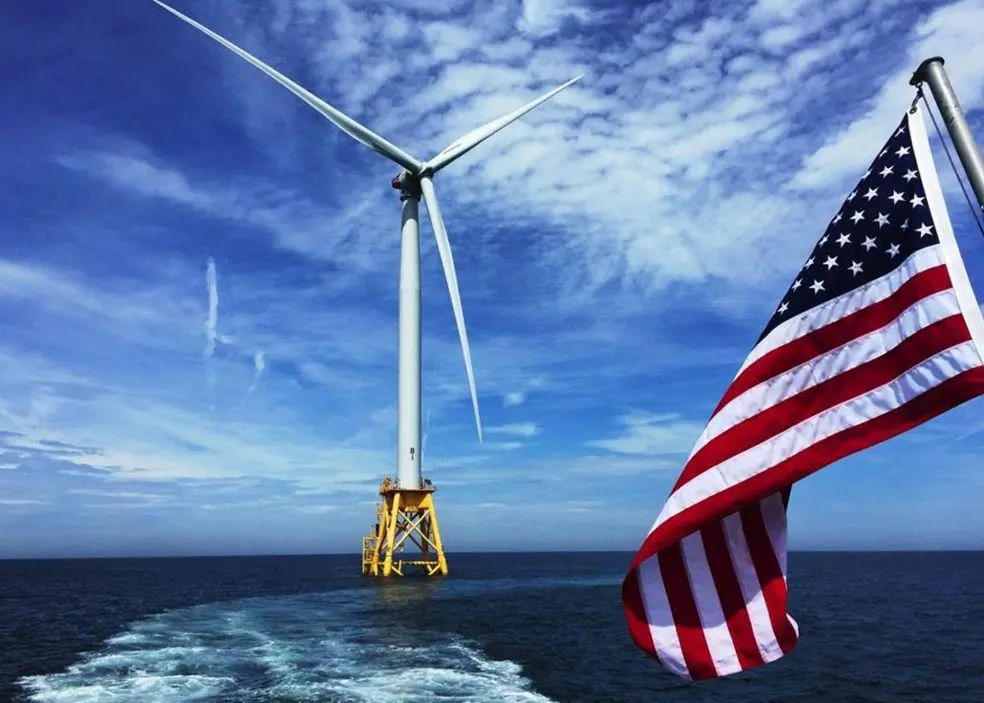
The agreement with Chicago-based Invenergy marks the latest in a series of unprecedented settlements under which offshore wind developers have agreed to relinquish federal leases in return for reimbursements linked to investments in natural gas, liquefied natural gas (LNG) and other conventional energy projects.
Announcing the Invenergy deal on 17 June, the US Department of the Interior said the company would redirect capital towards natural gas-fired generation in five Midwestern states and geothermal projects in the western United States. The settlement covers four early-stage offshore wind leases off the coasts of New York, California and Maine.
Invenergy senior vice-president for development Daniel Runyan said the company would ‘deploy additional capital into projects that can be delivered on a commercially reasonable timeline and meet customer demand while continuing to evaluate opportunities as market conditions evolve’.
The administration has now agreed more than $2.6 billion in lease buy-backs, according to Associated Press reporting.
‘Historic agreements’
In April, the Interior Department announced agreements with Bluepoint Wind and Golden State Wind, describing them as ‘historic agreements to promote US energy security and affordability’. Under the arrangements, Bluepoint Wind agreed to surrender its New York lease in return for reimbursement of up to $765 million, equivalent to its original lease payment, after parent company Global Infrastructure Partners invests in a US LNG project.
Golden State Wind, which held a lease in the Morro Bay Wind Energy Area offshore California, became eligible to recover approximately $120 million in lease fees after committing to invest an equivalent amount in oil and gas assets, energy infrastructure or LNG projects along the Gulf Coast.
“We welcome the opportunity to engage constructively with the administration on this agreement and acknowledge the clarity they have provided with this decision and deal,” said Michael Brown, chief executive of Ocean Winds North America, a 50% owner of Bluepoint Wind and Golden State Wind.
“Our priority remains disciplined capital allocation and delivering reliable energy solutions that create long-term value for ratepayers, partners, and shareholders.”
Those agreements followed an earlier March settlement with French energy company TotalEnergies, which agreed to abandon two offshore wind leases and redirect approximately $928 million into US oil, gas and LNG investments.
Backlash
The deals have prompted a growing backlash from states and offshore wind advocates.
Seven states led by New York sued the administration this month, arguing that administration had improperly used a federal judgement fund intended for legal settlements despite there being no litigation between the parties.
Nick DeMichele, vice-president for communications at industry body Oceantic, said: “Unable to defend its offshore wind actions in court, the administration is using taxpayer dollars to buy foreign companies out of legally executed offshore wind leases. The economic damage and costs to consumers’ pocketbooks are staggering.”
“Replacing coastal offshore wind with geothermal or natural gas infrastructure in another region does nothing to address rising ratepayer affordability concerns, reliability challenges or potential gaps in power supply in the Northeast and Mid-Atlantic, said Hillary Bright, executive director of advocacy group Turn Forward.
The Trump administration has defended the policy as part of its energy dominance agenda. Interior Secretary Doug Burgum said offshore wind leases had been sold “under the assumptions that taxpayers would indefinitely subsidise costly, unreliable projects and that no national security concerns were implicated – both assumptions have since been proven false.”
From Biden to Trump
The settlements come as the US offshore wind sector has been sharply reduced from the ambitions of the Biden administration, which had targeted 30GW of offshore wind capacity by 2030.

Only four commercial offshore wind projects are currently producing electricity in US waters – the 30MW Block Island Wind Farm off Rhode Island; the 132MW South Fork Wind project off New York; the 806MW Vineyard Wind 1 scheme off Massachusetts; and Dominion Energy’s 12MW Coastal Virginia Offshore Wind pilot project.
Five larger developments remain under construction, including Dominion’s 2.6GW Coastal Virginia Offshore Wind project, Equinor’s 810MW Empire Wind 1, Ørsted’s 924MW Sunrise Wind and the 704MW Revolution Wind project serving Rhode Island and Connecticut.
A further 20 to 25 commercial-scale projects are still at various stages of planning, permitting or leaseholding, according to the Bureau of Ocean Energy Management (BOEM), although the pipeline continues to shrink as developers reassess investments and federal policy shifts. Among the largest schemes still on the books are Atlantic Shores South off New Jersey, Equinor’s Beacon Wind and Empire Wind 2 projects off New York, Avangrid’s New England Wind development off Massachusetts, the 3.5GW Kitty Hawk project off North Carolina and US Wind’s proposed Maryland offshore wind complex.
Industry groups warn that continued lease cancellations could jeopardise billions of dollars in supply chain investments and thousands of jobs, while supporters of the administration’s approach argue the settlements will redirect capital into projects they believe can be developed more quickly and at lower cost.
Related Articles
 FEATURES & VIDEOS
 ENVIRONMENT
 OTHER NEWS