![MaritimeJournal[Seawork]](https://www.maritimejournal.com/wp-content/uploads/2026/09/MaritimeJournalSeawork.svg)






A one-stop shop for emissions trading
New software has been launched as a direct response to helping the shipping sector meet obligations under the EU Emissions Trading Scheme (EU ETS).
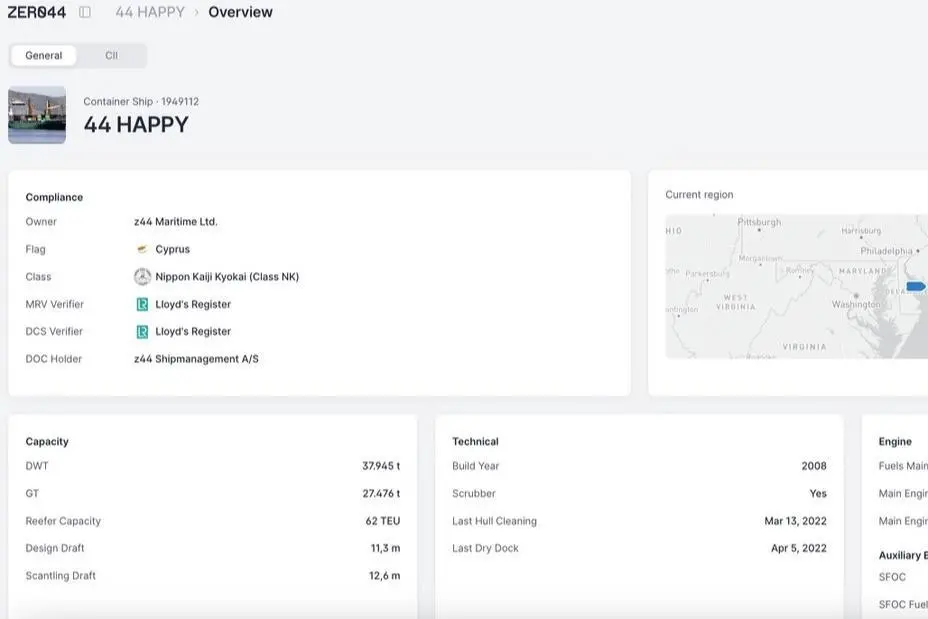
The EU ETC Scheme means that as of 1 January 2024, ship owners, managers and charterers will have to buy emission allowances (EUAs) for every tonne of CO2 emitted. Many companies are not prepared for this.
“Since January this year, we have been working intensively on our EU ETS solution and, together with our development partners, have examined the complexity of regulation from all perspectives,” said Friederike Hesse, co-founder and managing director at zero44.
”We are proud that we have succeeded in developing a flexible, simple and at the same time complete solution. And we are very much looking forward to implementing it now with numerous customers.”
Simplifying the process
Zero44 offers an EU ETS solution that covers all processes and obligations of emissions trading.
For companies in the shipping industry, the EU ETS poses the following three major challenges, the first being that the periods of shipping and the periods of EU ETS regulation are not aligned with each other.
EU ETS accounting is annual, the data verification required for this is supposed to take place on 31 March in the year following the assessment period and the submission of EUAs in the following September.
This is a problem for the sector because charter contracts are structured differently in terms of timing. To prevent major financial risks, EU ETS settlements are needed that are carried out during the year close to the time of each completed voyage.
Secondly, there is a multitude of business models and stakeholders involved. Owners, charterers, ISM managers, commercial managers and cargo owners are affected by the EU ETS and have to agree amongst themselves who is responsible for which measures within the EU ETS value chain and how often the settlement of allowance trading should take place.
These agreements also influence each other: for example, an agreement between the owner and the charterer has an impact on the agreements between the owner and the ISM manager. Time charters, voyage charters, pools and parceling each bring their own challenges.
Lastly, the Union Registry (which is used to account for all EUAs) is not designed with the specifics and requirements of shipping in mind. No links can be established in the Union Registry between the EUAs and the ships, voyages, charterers and ship managers. Instead, these links must be managed within the shipping company itself so that a correct accounting of costs can be carried out.
Efficient coordination
Zero44’s software aims to solve all three challenges. It enables intra-year accounting of the required emission allowances; efficient coordination between all involved stakeholders and adaptation of the Union Registry through the transferral of data and assignment to the relevant accounting periods, vessels and stakeholders.
The software has been developed in conjunction with MPC Container Ships, Harren Group and Zeaborn Ship Management. It’s aimed at all segments of the shipping industry and all stakeholders involved in EU emissions trading, including owners, charterers and ship managers.
Key functions include a daily updated measurement of emissions based on vessel consumption data, a planning tool for calculating EU ETS costs of future voyages or periods, as well as determining the financial EU ETS risks in the whole year.
Other functions include mapping of charter and ship management contracts regarding EU ETS and partnerships with data verification providers such as DNV, Swiss Climate, Verifavia or Korean Register,
Users can also connect with as EUA traders including GreyEpoch, CF Partners, Aither, Belektron, Vertis, Greenstar Capital, World Kinect Energy Services and marketplaces such as enmacc.
Six other companies have already integrated the software into their systems and are testing it in their fleets. Their feedback is being used for the continuous optimisation and further development of the software.