![MaritimeJournal[Seawork]](https://www.maritimejournal.com/wp-content/uploads/2026/09/MaritimeJournalSeawork.svg)


Passenger paralysed on commercial RIB investigated by MAIB
The Marine Accident Investigation Branch (MAIB) is investigating an incident in which a passenger on a commercial RIB broke her back, leaving her permanently paralysed.
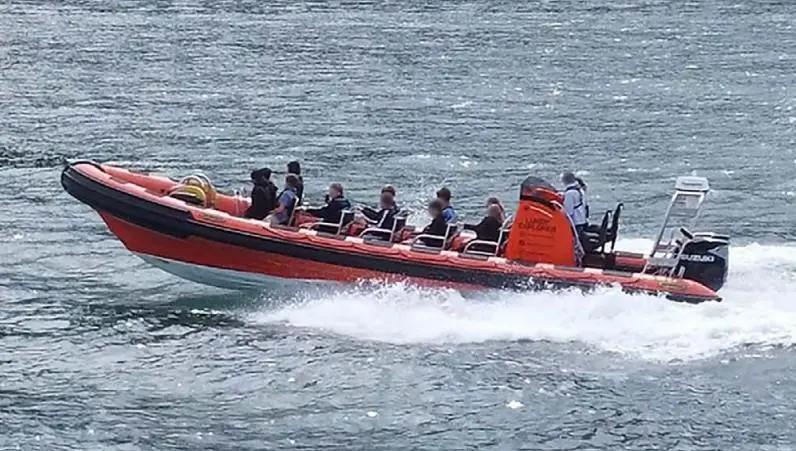
The passenger was sitting in a jockey seat at the front of the rigid inflatable boat (RIB) Lundy Explorer, which was taking 12 tourists on a sea safari from Ilfracombe Harbour, in the southwest English county of Devon.
Local weather conditions deteriorated quickly, the MAIB report found, resulting in chop and wave heights that the skipper had not expected.
“The skipper had been easing the engine’s throttles as the bow reached a wave crest, then increasing the throttle as it descended,” the report says. “After a third high wave the bow landed on the water with force, bringing the RIB to a sudden stop. All the passengers were thrown forward and the passenger on the port side jockey seat fell off to the port side.”
She became wedged between the pedestal of the jockey seat and the sponson in a twisted position with her right leg over the seat – and said she could not feel her legs. It was later discovered that the casualty, a 28-year-old woman in good health, fractured her T12 vertebra, just above the lumbar spine, and damaged her spinal cord, leading to permanent paralysis below the waist.
Two other passengers were also injured, but recovered.
“Several operators, manufacturers and skippers were consulted during this investigation, and all acknowledged that the front seats of a RIB could present comfort issues, often referring to them as ‘kamikaze’ or ‘suicide’ seats,” the report says.
While there are no regulations on safety standards for the design, position and use of seats on high-speed RIBs, industry guidance such as the HSPV Voluntary Code of Practice mention the potential for high forces in forward areas of RIBs and the risk of spine damage.
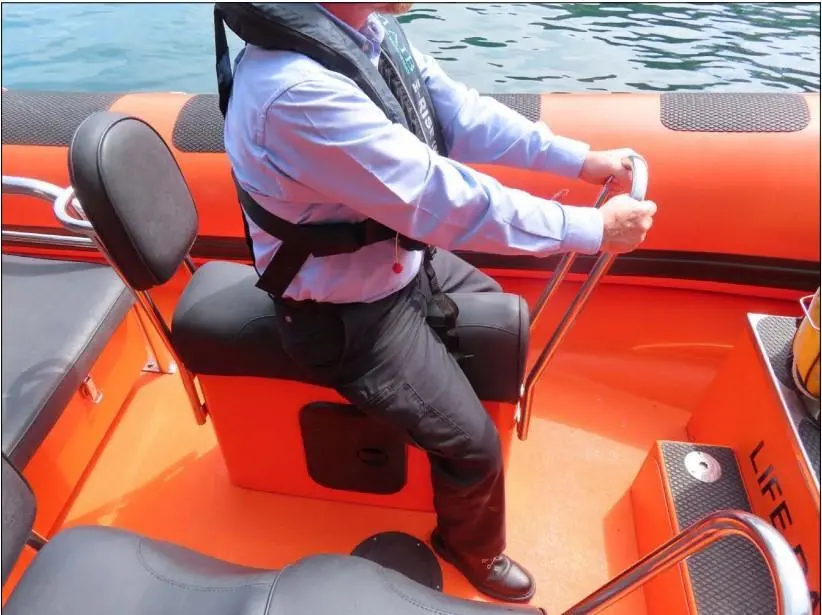
The casualty sat solo on the jockey seat, and therefore did not have her lumbar spine supported as it would have been if she had sat further back (pictured).
In September 2023, the MAIB issued a safety warning about the incident, stressing that since 2001, it has been notified of 54 accidents during RIB rides that have resulted in lower back injuries, 17 of which resulted in spinal fractures.
“Initial analysis of these previous accidents as part of this investigation indicates that passengers seated in the front third of a RIB’s overall length… are exposed to a significantly higher risk of lower back injuries than those seated further back, as the vertical motions experienced are generally greater towards the bow,” it says.
This week’s report says the skipper underestimated the effect on passengers in rough conditions, which is why the trip was not aborted. It also says the pre-departure safety briefing did not fully follow industry guidance on the company’s risk assessment and passengers were placed at increased risk of injury.
Company procedures
The sea safari company, Ilfracombe Sea Safari, had some written emergency procedures but only a few risk assessments for its day-to-day operations, the MAIB report says.
“The use of jockey seats was not risk assessed. The stated mitigation for the risk of worsening sea conditions was to moderate speed or return to port. While the company had cancelled trips in the past due to poor weather, this had only occurred pre-departure and had neither been considered necessary nor implemented mid-voyage. Since maximum operating parameters, such as sea state, were not formalised, the go/no-go decision to proceed was subjective.
“Other mitigations suggested in industry guidance, such as limiting passenger numbers when rough conditions were anticipated, had not been considered. It is apparent that the company’s procedures were rudimentary and not strictly followed. It is likely that the adoption of an Safety Management System, as recommended in industry guidance, and including information on the setting of weather limitations, would improve operational safety.”
The report does not seek to apportion blame, it says, but seeks to prevent future accidents ‘through the ascertainment of its causes and circumstances’.