![MaritimeJournal[Seawork]](https://www.maritimejournal.com/wp-content/uploads/2026/09/MaritimeJournalSeawork.svg)





Pilot ladder rules ‘biggest change in a generation’
Sweeping new safety rules governing pilot transfer arrangements are set to reshape global shipping practices, with industry leaders urging early action ahead of their phased introduction.

The amendments to SOLAS Chapter V, Regulation 23, developed by the International Maritime Organization (IMO), will apply from 2028 for new vessels and at the first annual survey after 1 January 2029 for existing ships.
Captain Gary Clay, founder of Fathom Safety, believes the scale of the reforms cannot be overstated.
“They represent the biggest change of pilot transfer regulations in a generation and will have a massive impact on the industry,” he says.
“The changes have largely been driven by IMPA (International Maritime Pilot Association) in response to the number of pilot transfer fatalities we have experienced in recent years,” says Clay. The updated rules are therefore intended not only to modernise standards but to directly address persistent safety risks.
“The aim of the revised regulation is to draw together all the current legislation, guidance and standards into a single piece of legislation, removing so-called ‘grandfather rights’ that vessels claimed in the past to avoid complying with best practice and place a legal requirement upon shipping to provide safe, compliant pilot transfer arrangements.”
In this way, the IMO hopes to eliminate ambiguity and ensure consistent compliance across the global fleet.
The updated framework introduces stricter rules on equipment standards, certification and maintenance. It includes defined limits on pilot ladder service life, enhanced manufacturing requirements and a prohibition on repairing critical components such as steps and spreaders. Vessels will also need to ensure improved securing arrangements, increased load-bearing capacity, and the availability of spare equipment.
Responsibility implications
At the same time, the responsibility for safe operations is being reinforced on both sides of the pilot transfer process.
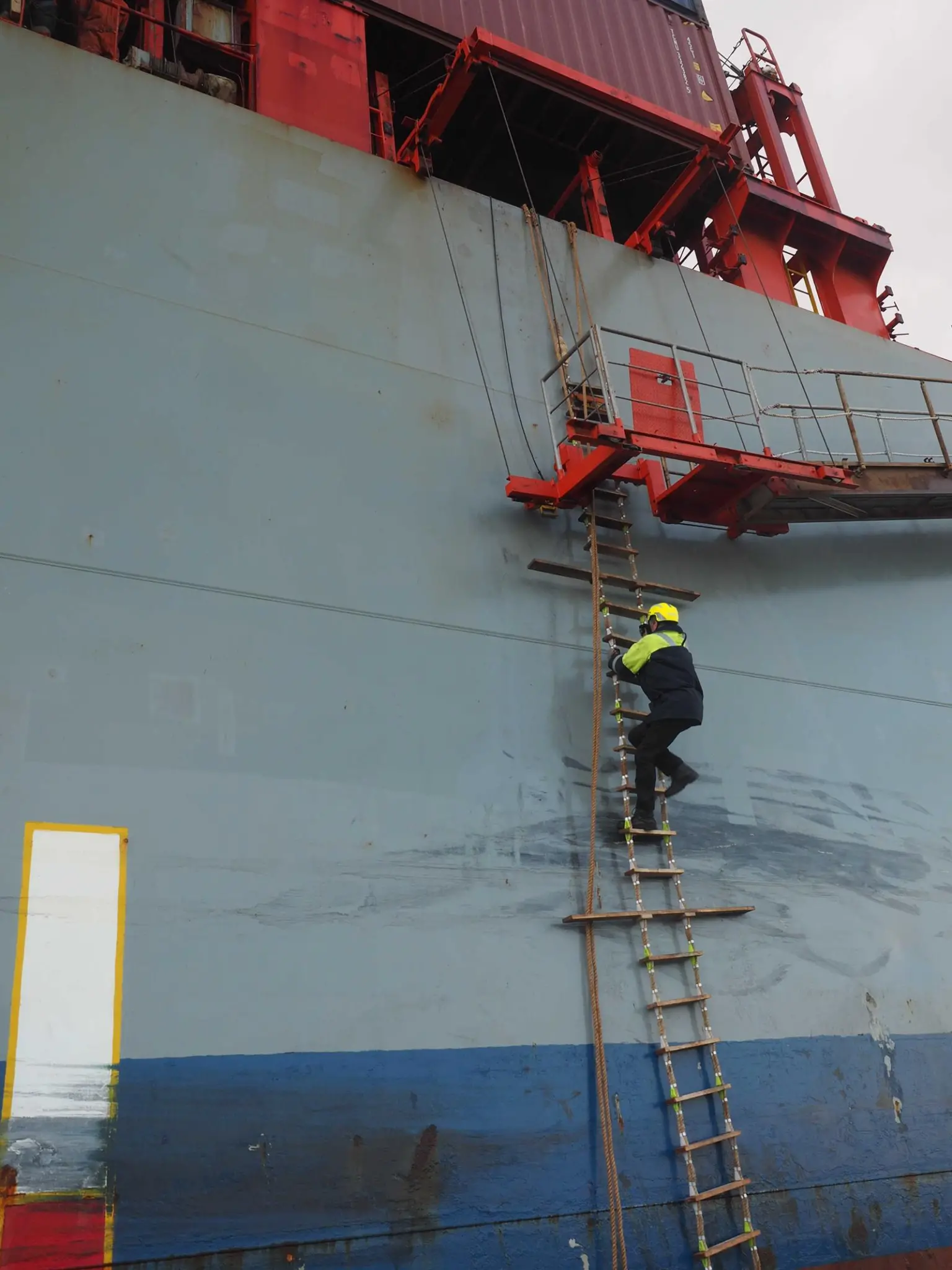
“It will also place a legal burden upon maritime pilots to refuse to use any arrangement that is non-compliant,” Clay says. In practice, this ‘will empower pilots to turn away vessels that fail to comply with the new legislation’, potentially leading to operational delays for unprepared operators.
For shipowners and managers, the implications extend well beyond procedural updates.
“For the merchant fleet the new regulations contain some major changes regarding provision, age and certification of equipment, deck and stanchion arrangements, pilot ladder winches, and crew training,” Clay says.
“Many of the new rules will likely involve some form of remedial engineering work that they need to include into upcoming maintenance periods,” which could mean retrofitting equipment, upgrading securing points or replacing outdated systems to meet the new standards.
“It is only human nature to think these changes are a long way away. But very much like the Y2K bug issue it is essential companies act now.”
The new SOLAS regulations start to come into force in 2028 for new vessels and at the next annual survey after 1 January 2029 for other SOLAS vessels. The full requirements are here.