![MaritimeJournal[Seawork]](https://www.maritimejournal.com/wp-content/uploads/2026/09/MaritimeJournalSeawork.svg)



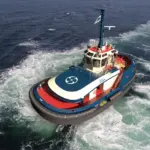


Swedish technology powers India’s electric harbour tugs
Swedish marine technology company Berg Propulsion has been hired to supply electric propulsion equipment and electrical integration for two battery-powered harbour tugs under build in India.
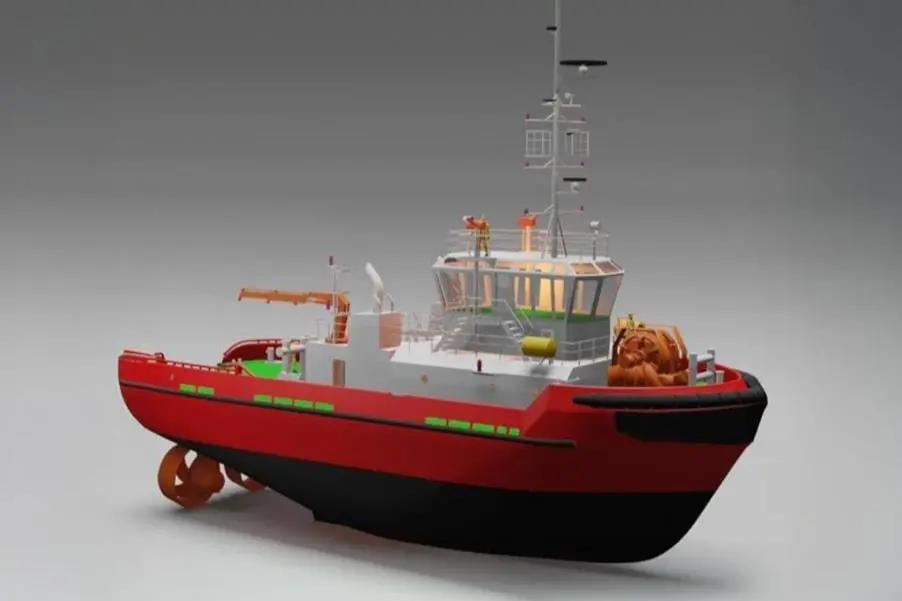
The vessels are being built by KMEW Group in Mumbai on behalf of India’s Ministry of Ports, Shipping and Waterways and form part of the GTTP, a national programme intended to introduce 50 lower-emission harbour tugs at major ports by 2030.
Designed by Navnautik, the 33.55-metre tugs will operate primarily on lithium-titanium-oxide (LTO) battery systems, with dual diesel generator sets installed as back-up power. Each vessel is designed to deliver 60 tonnes of bollard pull and is expected to enter service in late 2027, subject to regulatory approval.
Berg Propulsion’s role centres on propulsion technology and systems integration. The company will supply electric motors and contra-rotating L-type thrusters, which are intended to improve manoeuvrability for harbour operations, alongside electrical systems integration and propulsion controls.
The project also highlights the engineering challenges associated with designing electric workboats, where battery systems compete for limited onboard space. According to Berg Propulsion, the compact arrangement of propulsion equipment allowed for changes to the vessel layout during the design phase.
“Working closely with Navnautik, KMEW and the client, we successfully reduced the dimensions of the switchboard room by approximately 40% by positioning most of the propulsive equipment in the aft section of each tug,” said Amrita Singh, Account manager for New Sales with Berg Propulsion.
“Berg Propulsion has integrated electric systems, engines and thrusters aboard hybrid-electric vessels for many years, and this deep understanding of engineering and design made transferring that knowledge to a fully electric tug design straightforward. It also freed up the designer to concentrate on their core objective: ensuring that everything on board fits optimally.”
“Factoring in electric powertrains can be challenging for any naval architect or designer, given that shipboard space is at a premium,” said Aniruddha Sen at Singapore-based Navnautik. “This is especially the case aboard a tug. The compact nature of Berg Propulsion’s integrated packages gave us a lot of flexibility to incorporate them into the general arrangement. The company had a clear vision regarding the onboard footprint, which also made the design phase a smooth and painless task.”
Founded in Sweden, Berg Propulsion develops propulsion systems and electrical integration technologies for commercial and naval vessels, including propellers, thrusters and vessel manoeuvring systems.