![MaritimeJournal[Seawork]](https://www.maritimejournal.com/wp-content/uploads/2026/09/MaritimeJournalSeawork.svg)



The need to foster digital collaboration in the maritime sector
New research by Thetius and Bureau Veritas calls for greater data sharing in the maritime sector, especially digital collaboration to help support the energy transition.
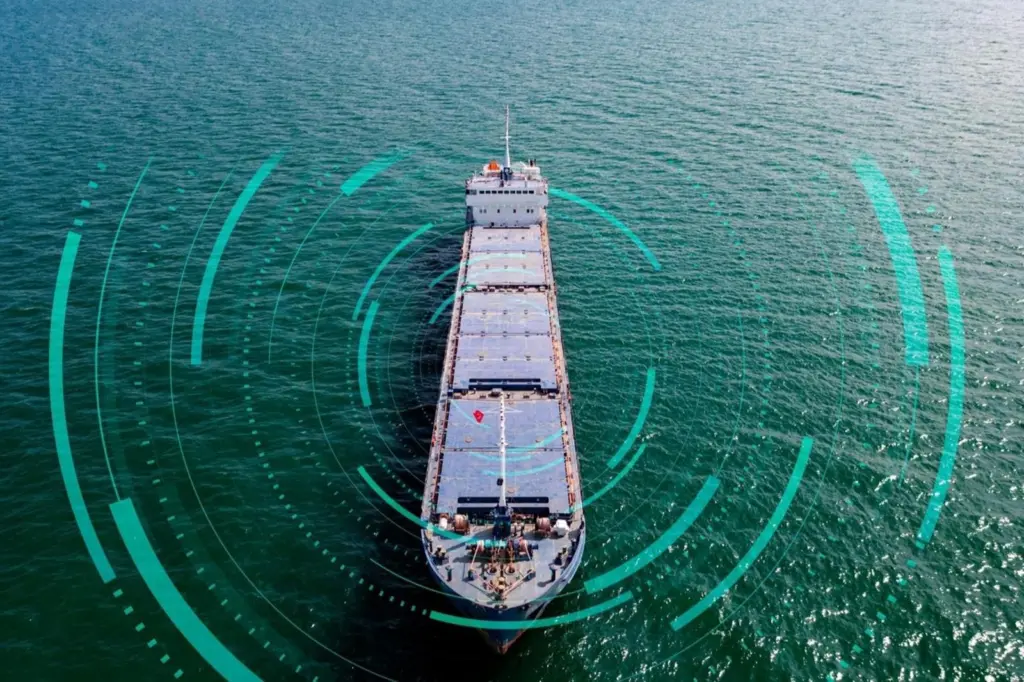
Written by maritime innovation consultancy Thetius, the report, titled ’Common Interest, benchmarks shipping’s progress on using digital solutions to collaborate on decarbonisation goals’, shows how industry frontrunners are already breaking down the technical, legal, financial and cultural barriers to progress.
“The challenge can be thought of as a network optimisation problem, with many stakeholders in the chain,” said Matthew Kenney, principal research consultant at Thetius and lead author of the report.
“As the report describes, caution is understandable when it comes to sharing data, particularly with competitors. Collaboration is an awkward concept in a competitive market, and the challenges include legal, financial and practical issues such as a lack of data standards, data silos and human error.”
Collaborative opportunities
The report also identifies key areas where digital collaboration has the potential to open new opportunities for growth and optimisation.
Collaboration between different software providers and ship operators can provide more detailed ship performance analytics for fleet owners and managers. Digital synchronisation of the shipping ecosystem can help address “sail fast then wait” practices (such as the Blue Visby Solution) and reduce greenhouse gas emissions from voyages.
Data sharing is also critical to ensure seamless port visits and help deliver “just in time” arrivals, supporting decarbonisation and voyage efficiency. Large-scale data sharing can improve modelling of ship performance, with data pooled from multiple ships dramatically increasing the accuracy of modelling algorithms and digital twins.
The report also identifies four main categories of challenge as the primary obstacles that hinder more effective data sharing in the maritime sector: Competition laws; data siloes; costs and cultural and behavioural resistance.
Through the lessons and insights shared in the report, it is hoped that maritime organisations can identify the most effective tools to overcome each of these obstacles. In turn, Bureau Veritas believes that this can lead to a fresh approach to digital collaboration.
“It should be viewed as an opportunity that shipping is simultaneously confronting the challenges of decarbonisation and digitalisation,” said Laurent Hentges, vice-president, digital solutions & transformation, Bureau Veritas Marine & Offshore.
“Collaboration is possible, practical, necessary, and mutually advantageous. It is a powerful opportunity, if we can identify and remove barriers that inhibit data sharing, and one that should inspire optimism for the decarbonisation journey ahead.”