![MaritimeJournal[Seawork]](https://www.maritimejournal.com/wp-content/uploads/2026/09/MaritimeJournalSeawork.svg)


Qualified on paper, untested at sea: what certificates don’t show
Small-workboat operators need certificates and completed courses, but neither shows what a crew member can recall and apply on a particular vessel. A simple layer of topic-level checks, drills and observed practice can reveal gaps before they become operational problems, says Buket Çiçek, Account Manager at QuizFlight, the enterprise learning and assessment platform.

On a small workboat, training is rarely an abstract exercise. A crew member may need to interpret an electronic chart, respond to a man-overboard alarm, isolate equipment, follow a lifting plan or communicate clearly during a fast-changing operation.
The vessel is compact, roles often overlap and there may be little spare capacity when something goes wrong.
Formal training and certification are therefore essential. In the UK, Workboat Code Edition 3 introduced specific approved or recognised navigation and radar training requirements for masters and relevant crew. Small commercial vessels must also hold the correct certification and comply with the code appropriate to their operation.
However, a completed course answers only one question: did the person finish the required learning activity? It does not, by itself, show which parts they understood, what they have since forgotten or whether they can apply the knowledge correctly on their own vessel.
That distinction matters because a single overall result can conceal an uneven risk profile. A crew member might score well across a course while still misunderstanding one narrow but important topic, such as the limits of radar information, the sequence for raising an alarm or the conditions under which a deck operation must stop.
The answer is not to replace recognised training, certification, drills or practical assessment. It is to add a small diagnostic layer between course completion and operational sign-off.
Start with the job, not the course
Generic refresher questions are easy to administer but often produce little useful information. A stronger approach begins with the real work performed by a specific crew on a specific type of vessel.
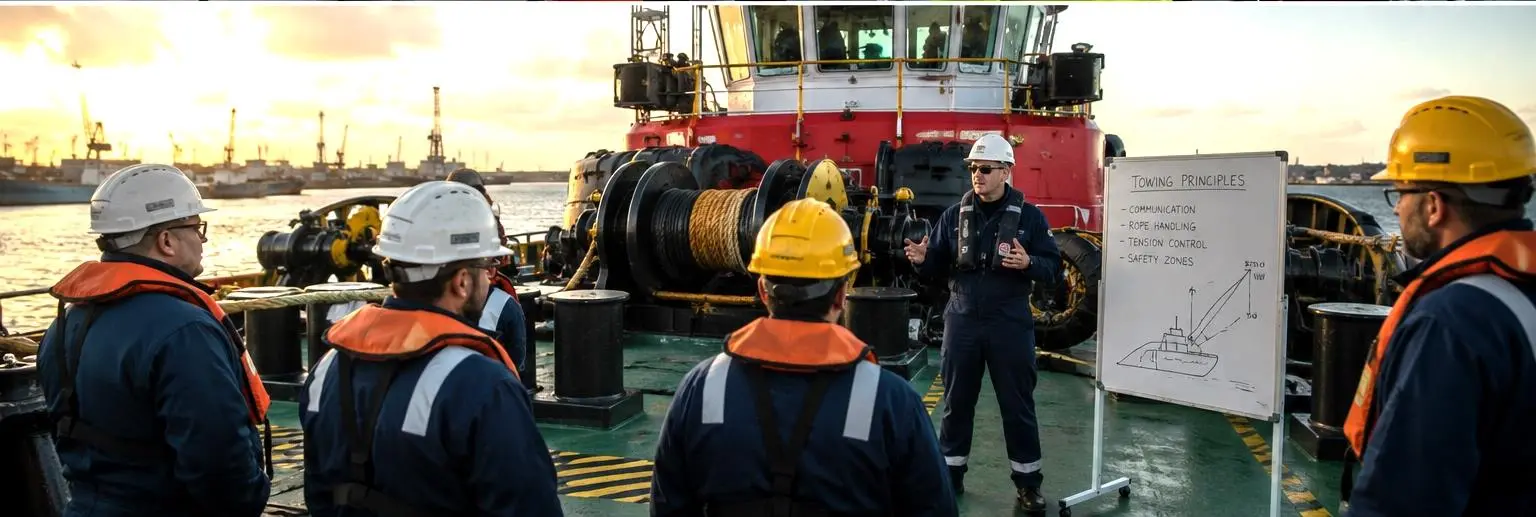
Operators can divide the required knowledge into practical areas such as:
• navigation and bridge watchkeeping
• radar and electronic chart-system use
• emergency communication
• man-overboard response
• fire and flooding actions
• personal protective equipment
• lifting, towing or deck-work controls
• machinery isolation and restart
• pollution prevention
• vessel-specific reporting and escalation.
The list should reflect the vessel, equipment, operating area and assigned responsibilities. A deckhand who is not involved in navigation should not be assessed as though they were the master.
Equally, a crew member who uses a particular system should not receive only broad questions that never test the decisions they must make with it.
This creates a knowledge map rather than another pass-or-fail score.
When each question is linked to a defined topic, the operator can see whether the gap concerns emergency response, equipment use, local procedure or another specific area.
Use questions to diagnose, not to certify
A short knowledge check can reveal uncertainty, but it cannot prove practical competence. That limitation should be stated clearly.
Someone may select the correct answer on a screen and still hesitate during a real emergency. Conversely, an experienced crew member may perform a task safely but struggle with poorly written terminology.
For that reason, diagnostic questions should lead to an appropriate next step rather than being treated as a substitute certificate.
Useful questions present realistic decisions instead of asking people to repeat definitions. For example:
• Which action should happen first after this alarm?
• What information from this display must be verified elsewhere?
• Under which condition must this operation stop?
• Who must be informed before this equipment is isolated?
• Which part of this procedure changes in restricted visibility?
Wrong options should represent plausible misunderstandings. If an incorrect choice is obviously absurd, the result measures test-taking rather than operational understanding.
The result should then be checked against observation. A weak topic might trigger a toolbox discussion, supervised practice, a vessel walk-through or a formal drill. Where regulation or company policy requires competent-person assessment, that requirement remains unchanged.
Measure topics, not just people
Small operators may be tempted to focus on individual scores. The more useful signal is often the pattern across a crew.
If several people miss questions about the same alarm, the issue may not be individual carelessness. The procedure may be unclear, the onboard briefing may be inconsistent or the equipment interface may differ from the training example. If only one role struggles with a topic, the problem may be the way responsibility is handed over or explained.
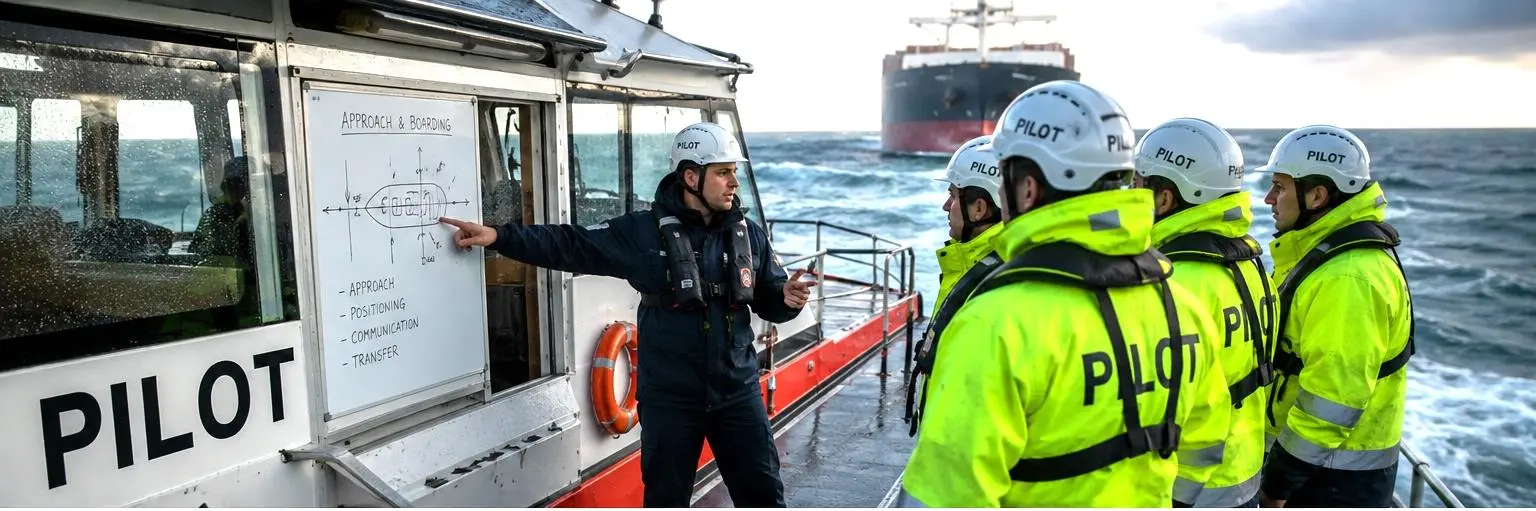
Topic-level reporting helps operators distinguish between these cases.
It can show:
• a widespread gap requiring a crew briefing
• a role-specific gap requiring targeted instruction
• a vessel-specific issue that does not appear elsewhere
• a recurring misunderstanding after previous training
• a question that is badly written and needs to be corrected.
This is especially valuable when the same learning topic appears in different courses. Navigation, emergency response or safe deck work should not become separate data silos simply because they were taught at different times.
Keep the follow-up proportionate
A diagnostic system should reduce noise, not create more administration. There is little value in forcing every crew member to repeat an entire course because of one weak topic.
Instead, the follow-up can match the gap:
• one misunderstood concept: a brief explanation and re-check
• several related errors: focused refresher learning
• uncertainty about a practical sequence: supervised demonstration
• a crew-wide pattern: toolbox talk or drill
• repeated failure in a safety-critical area: escalation under the operator’s competence and safety-management procedures.
This approach also respects experienced personnel. They receive attention where evidence shows it is needed rather than being treated as though all completed learning has expired at once.
Build a defensible record
For each knowledge check, the operator should be able to explain why it exists, which procedure or requirement it relates to, who needs it and what happens after a weak result.
That record does not need to be complicated. It may include the topic, role, vessel or equipment context, date, result, follow-up action and person responsible for confirming completion. Questions should be reviewed whenever procedures, equipment or regulatory requirements change.
Most importantly, operators should avoid turning the process into a false claim of competence. Knowledge evidence is one part of a larger picture that includes qualifications, experience, drills, observation and practical assessment.
Completion remains necessary. The opportunity is to look one step further: not merely whether training happened, but which parts of it the crew can still understand and use when the vessel depends on them.
AUTHOR BIO
Buket Çiçek is an Account Manager with experience in strategic account management, client relationship management and corporate learning solutions. She works with organisations to understand their business needs and support learning, development and business growth. Her professional interests include L&D, employee experience, talent management, digital transformation and corporate learning technologies.
Related Articles
 SPECIAL REPORTS
 FEATURES & VIDEOS
 FEATURES & VIDEOS