![MaritimeJournal[Seawork]](https://www.maritimejournal.com/wp-content/uploads/2026/09/MaritimeJournalSeawork.svg)






Special report: Transforming America’s Arctic ports
For nearly two decades, the idea of an American deep-water Arctic port has been on paper only, passed around in congressional hearings, quietly shelved by budget realities and periodically revived as alarm about Russian and Chinese activity in the Arctic grew louder.
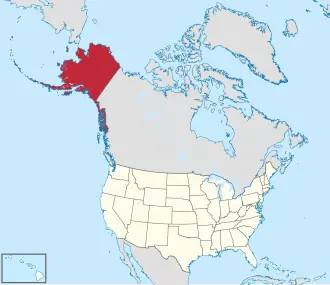
Now, after a series of landmark legislative actions, executive decisions and a construction contract worth nearly $400 million, Alaska’s ports are at the centre of a transformation that could redefine American power in the world’s most contested emerging ocean.
The changes now in motion – at Nome, Juneau, Kodiak, Seward, and beyond – are being driven by a convergence of forces: unprecedented federal investment, a rapidly melting Arctic opening new shipping lanes, and a geopolitical contest with Russia and China that American military planners increasingly describe in urgent terms.
The result is a reshaping of Alaska’s maritime infrastructure that its advocates call the most consequential since the state’s founding.
Nome: America’s first Arctic deep-water port breaks ground
“For the United States, the closest maritime operational support base to the Arctic is Dutch Harbor, 750nm from Nome, Alaska – two days’ sailing,” said Dr Troy Bouffard, director of the Center for Arctic Security and Resilience at the University of Alaska Fairbanks, in 2024. “Presence is the most important factor to Arctic operational challenges, and a deep-water port in Nome is the best solution available.”
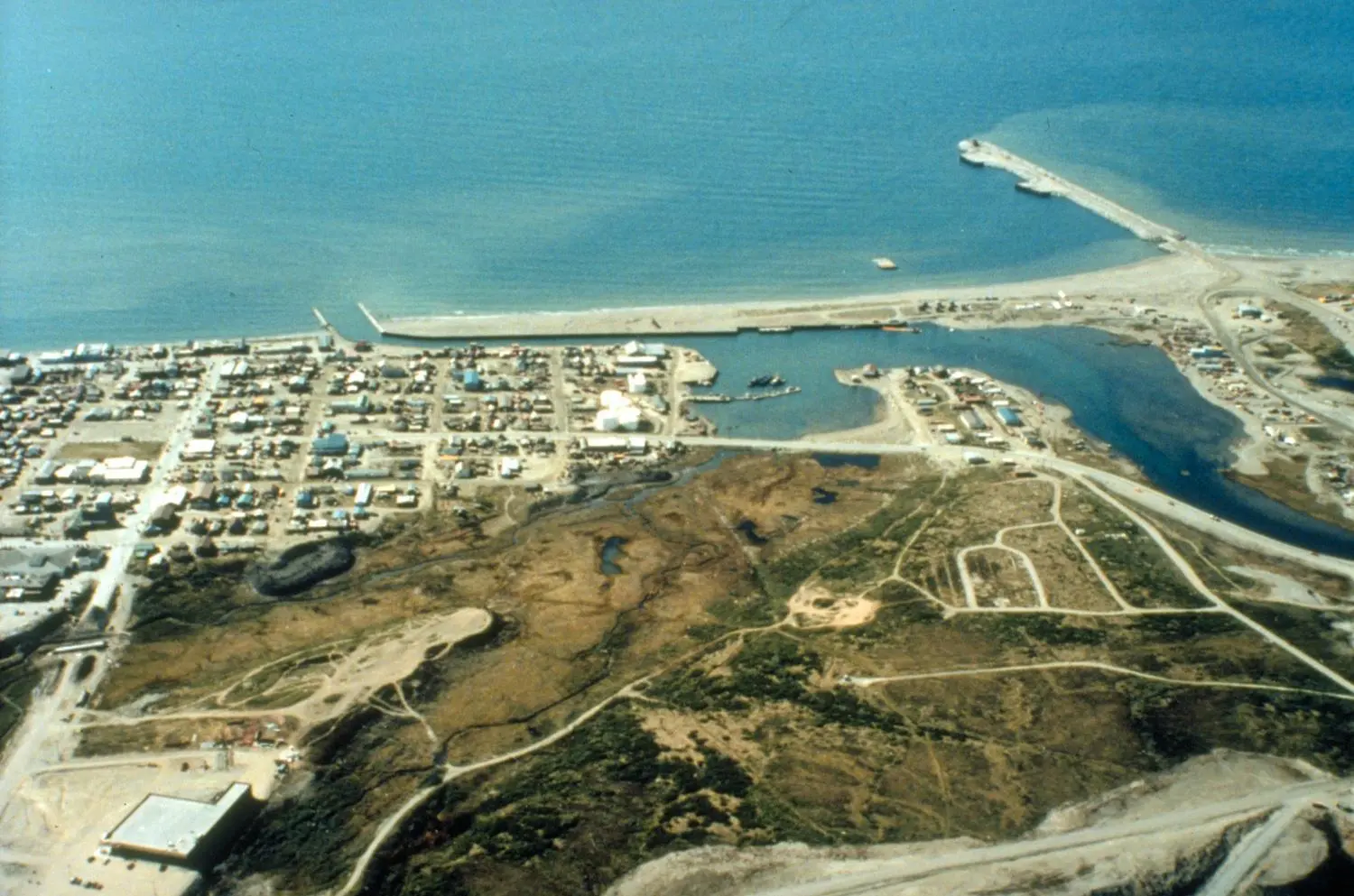
In August 2025, the US Army Corps of Engineers awarded a $399.4 million construction contract to Kiewit Infrastructure West Co. to begin Phase 1A of the Port of Nome Modification Project – the first concrete step towards transforming this remote community of 3,500 people into the nation’s first deep-draft Arctic port. Construction is expected to begin in summer 2026, with completion targeted for September 2029.
The scale and significance of the project are hard to overstate. Today, the outer basin of Nome Harbour is only 22 feet deep, limiting access to vessels with drafts of about 18 feet. The expansion will dredge a new basin to a depth of 40 feet, enabling every major US military vessel except aircraft carriers to dock directly in the Arctic rather than hundreds of miles away. Phase 1A includes a 1,200-foot causeway extension and approximately 600 feet of new dock face. Subsequent phases will add another 1,870 feet of dock space and widen the inner harbour.
The Port of Nome sits just 102 miles south of the Arctic Circle and roughly 160 miles from the Russian coast, putting it at the intersection of two of the world’s most consequential shipping corridors: the Northwest Passage and the Bering Strait.
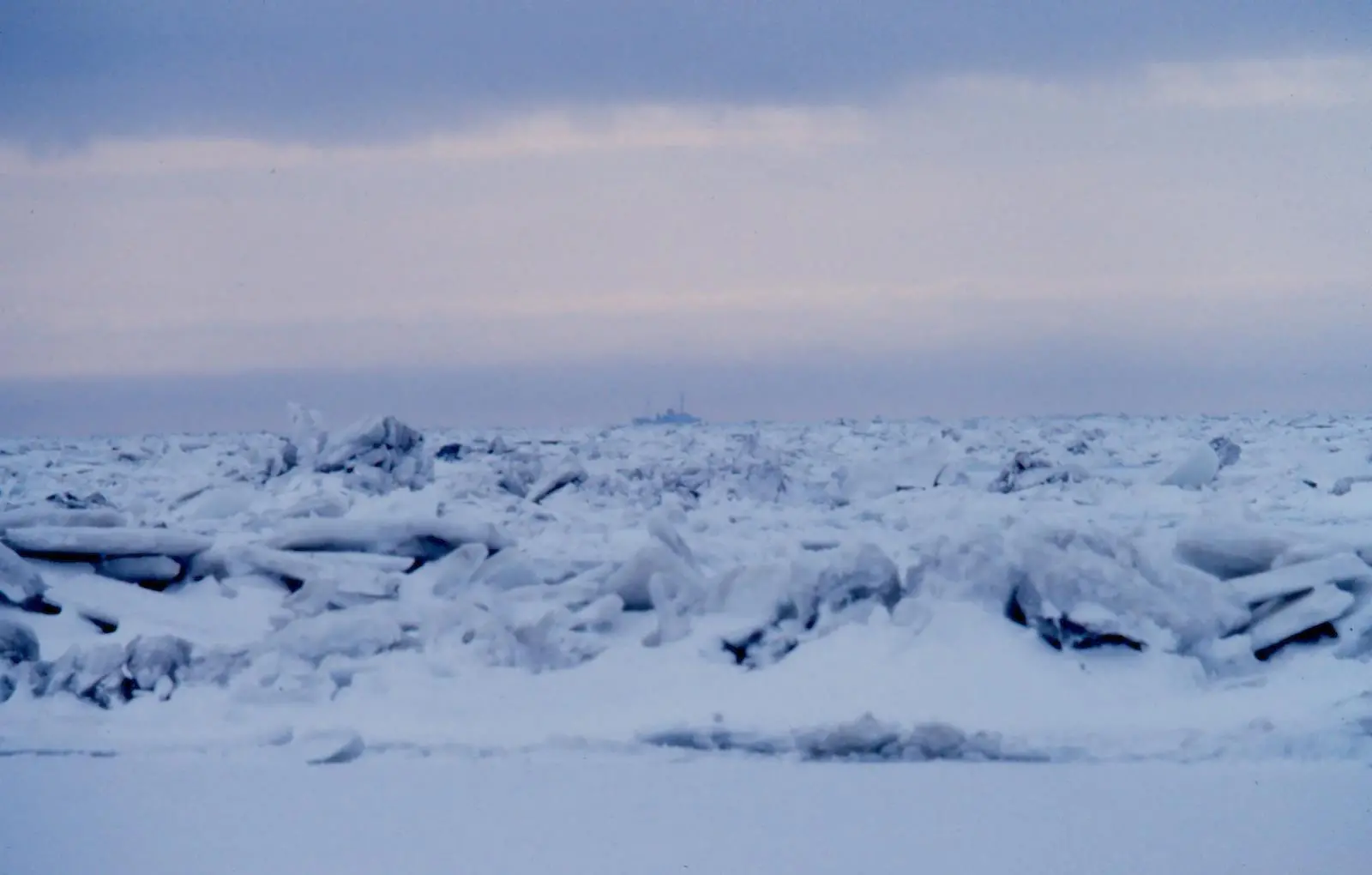
According to a report produced by KNOM Radio, commercial shipping traffic through the Bering Strait has more than doubled since 2009, rising from 262 transits to 509 in 2022 alone. Russian and Chinese naval vessels regularly transit the same waters, and in September 2024, a four-vessel flotilla combining Russian and Chinese ships was observed near to Nome, exposing what US officials say is the strategic vacuum that the port expansion is designed to fill.
Alaska Republican senator Dan Sullivan has long argued that the stakes are existential.
“The Port of Nome, the first deep-water port in the Arctic, will be positioned to play a critical role in ensuring the United States is a leader in the Arctic region in terms of national security, international trade and geopolitical influence,” he said.
The project also carries commercial promise. Mineral company Graphite One – whose project is backed by Department of Defense critical-minerals investment – plans to use the deepened port to ship specialized containers of graphite to the lower 48 states for processing. Nome Mayor John Handeland has said that a deeper port will reduce costs for fuel, food and goods across more than 60 remote communities in western Alaska.
“We’re going to be the first deep-draft Arctic port but probably not the last,” Handeland told the Associated Press.
Not everyone is celebrating. Austin Ahmasuk, an Inupiaq community member, has argued that the port’s original causeway displaced subsistence hunting and fishing grounds, and that the expansion will deepen, not remedy, that harm.
“The Port of Nome is development purely for the sake of development,” Ahmasuk said. It is a tension that officials have acknowledged but not resolved – the meeting point between national security imperatives and indigenous subsistence rights that has long defined development debates in rural Alaska.
The ‘One Big Beautiful Bill’: Reshaping Alaska’s Coast Guard infrastructure
If Nome represents a single node in a larger network, it is the federal legislation signed by President Trump on July 4, 2025 – the ‘One Big Beautiful Bill Act’ – that is funding the entire system.
The legislation represents the largest single investment in Coast Guard history, committing nearly $25 billion to rebuilding every facet of the service. For Alaska specifically, the bill earmarks more than $600 million for port and infrastructure upgrades across the state.
Acting Coast Guard Commandant Adm. Kevin Lunday described the bill’s passage as a turning point.
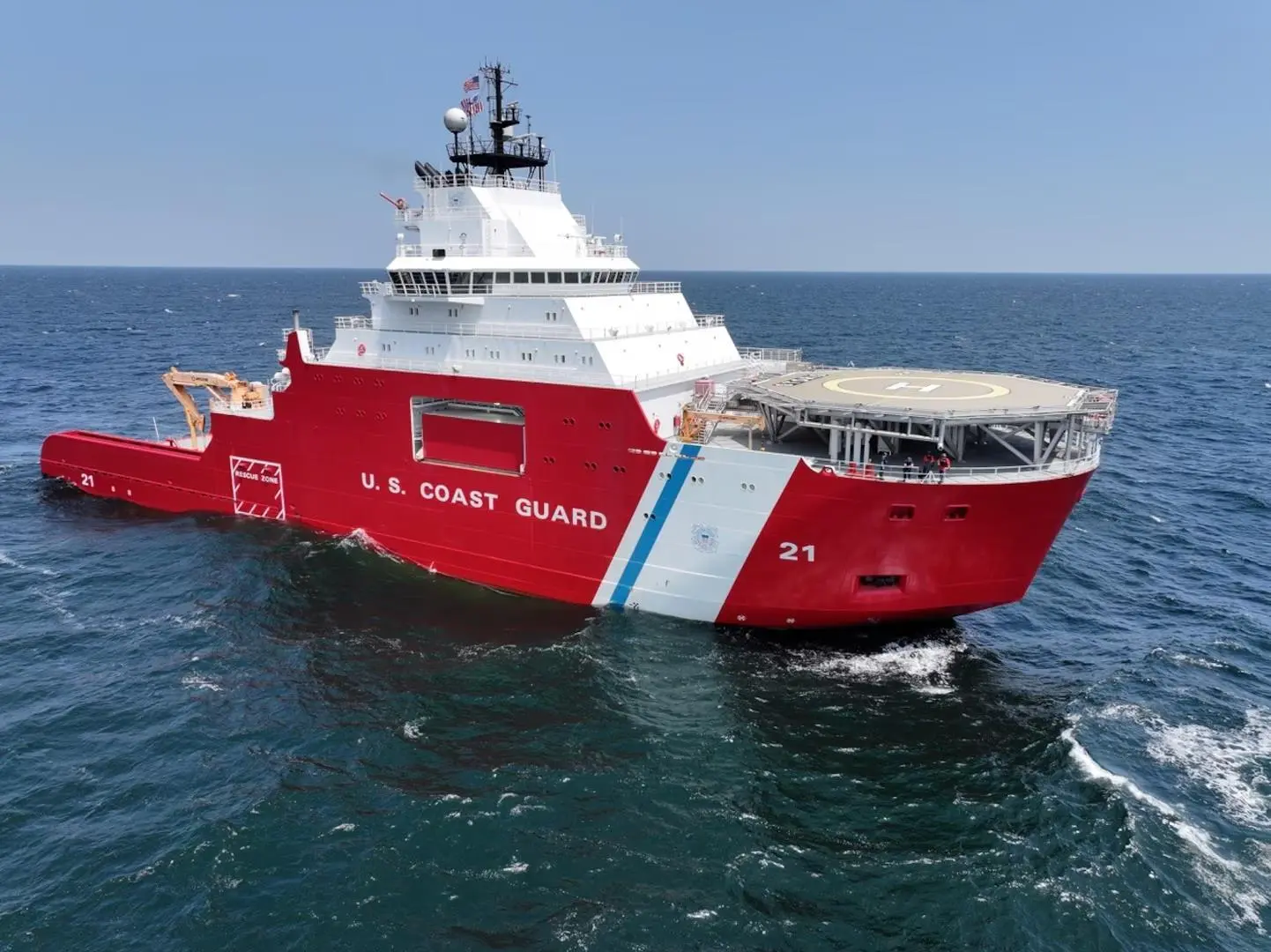
The bill’s Alaska-specific infrastructure allocations are substantial: $300 million for a new Coast Guard pier in Juneau to serve as the future home port for Storis, a converted offshore supply vessel bought for $125 million from a private company; $200 million for home port upgrades at Kodiak, which is already home to the largest Coast Guard base in the country; $50 million for improvements in Seward; and more than $65 million in Sitka.
Each of these communities stands to see significant economic activity from the expansion of Coast Guard operations.
There is also an ice-breaker program for these ports that could result in up to four Arctic Security mediums and 10 light ice-breakers. Decisions are expected to be finalised at any time.
The Coast Guard has also renamed its District 17 – which covers Alaska – the ‘US Coast Guard Arctic District’ as part of its Force Design 2028 modernisation initiative. The renaming signals a permanent commitment to Arctic operations, positioning Alaska as the operational hub of American power in the Far North.
A new ice-breaker fleet — and the ports to support it
The transformation of Alaska’s ports is inseparable from the dramatic expansion of the US icebreaker fleet. For decades, the United States operated with just two ageing polar icebreakers – the Polar Star (commissioned 1976) and the Healy (1999) – a fleet widely regarded as dangerously inadequate given Russia’s 40-plus icebreakers and China’s growing polar ambitions.
The first heavy icebreaker to be purpose-built for the Coast Guard in decades – the Polar Sentinel – is now under construction at Bollinger Shipbuilding in Mississippi, with delivery expected in 2030.
That vessel, and the additional icebreakers funded by the One Big Beautiful Bill, are designed with a draft of 36 feet, meaning they will be unable to dock in Nome until the harbour is deepened. Congressional funding for Nome port and the new fleet are therefore deeply linked: one without the other is of limited operational value.
The private sector is also moving. Canadian shipbuilder Davie has announced a $1 billion investment to begin building ice-breakers at shipyards in Galveston and Port Arthur, Texas, as part of an effort to build American domestic icebreaker-construction capacity.
This was enabled in part by the November 2024 ICE Pact — the Icebreaker Collaboration Effort — a trilateral agreement among the United States, Canada, and Finland allowing joint construction and technology-sharing. Homeland Security Secretary Kristi Noem, speaking at the ICE Pact signing, framed the effort in existential terms.
“Today is a major milestone in the race to secure the Arctic for all of our countries,” she said. “The Arctic is the world’s last, most wild frontier, and our adversaries are racing to claim its strategic position and its rich natural resources for their own.”
Strategic backdrop: Russia, China and a changing ocean
The urgency behind these investments is impossible to understand without placing them in the broader geopolitical contest playing out in Arctic waters. Since at least the mid-2010s, analysts and military officials have watched Russia and China systematically develop the infrastructure and capabilities that the United States has deferred building – and the gap has grown wide.
Russia has opened 16 deep-water ports, 14 airfields and multiple Arctic military bases, and has formed a new Northern Arctic Command. President Putin has described the Northern Sea Route as ‘the new Suez Canal’, a statement as much a declaration of intent as geographic description. In May 2025, Putin confirmed at a joint press conference with Chinese President Xi Jinping that the two nations were ‘developing new Arctic shipping hubs’ and expanding cooperation in Arctic energy projects.
Dr Lawson Brigham, an oceanographer and Global Fellow at the Wilson Center who has spent decades studying Arctic maritime infrastructure, believes the current situation is without precedent among peer nations: “The United States has no major deep-water port from Dutch Harbor in the Aleutian Islands to the US-Canada border in the Beaufort Sea,” a stretch of more than 1,500 nautical miles of remote coastline. “The absence of a deep-draft Arctic port and associated marine infrastructure is a glaring gap.”
Phases, ports and persistent questions
By the time Phase 1A of the Nome port project is complete, the port will have a 1,200-foot extended causeway and new dock face – significant progress, but only the first step. Additional phases will be required to complete the 40-foot deep-water basin and to reconstruct the eastern causeway.
Under the current timeline, full project completion is expected around 2030, at a total project cost of approximately $548 million.
Col. Palazzini, the Army Corps district commander, captured both the ambition and the significance of what is being built in Nome.
“We are committed to assisting the City of Nome by providing a reliable solution that improves the port’s navigation efficiency,” he said.

Beyond Nome, the Coast Guard is eyeing other Alaskan communities – Seward, Kodiak, Dutch Harbour and even Nome itself – as potential homeports for the new Arctic Security Cutters being funded under the Big Beautiful Bill.
Kodiak, already home to the largest Coast Guard base in the country, is receiving $200 million in upgrades. Seward is slated for $50 million in improvements. The combined effect of these investments will be to shift the centre of gravity of American Arctic operations northward and westward – from Seattle to Juneau, from Juneau toward the Bering Strait.
Congress has also flagged the importance of extending the network further. The RAND Corporation’s study of U.S. Arctic military capabilities, published in 2022, recommended not only completing Nome but considering additional deep-water port development in northern Alaska, noting that ‘completing the deep-water port at Nome, Alaska, with partners from across the US government could also prove to be a game changer’.
A race against time
Taken together, the Nome port contract, the One Big Beautiful Bill’s $25 billion Coast Guard investment, the commissioning of the Storis, the ICE Pact with Finland and Canada and the hundreds of millions flowing to Juneau, Kodiak, Seward, and Sitka represent the most concerted American push to develop Arctic maritime infrastructure since the Cold War.
Whether it is enough – and whether it arrives fast enough – to close the gap with Russia and China, and to assert the presence that a warming and newly navigable Arctic demands, is the question that will define Alaska’s strategic role in the decades ahead.
Related Articles
 SPECIAL REPORTS
 FEATURES & VIDEOS
 FEATURES & VIDEOS