![MaritimeJournal[Seawork]](https://www.maritimejournal.com/wp-content/uploads/2026/09/MaritimeJournalSeawork.svg)






FEATURE: Container ship fires push salvors to the limit
The International Salvage Union’s long-standing concerns over container ship cargo fires have again been highlighted by recent incidents handled by Dutch salvage contractor SMIT, underlining the growing complexity of responding to fires aboard modern container vessels.
US businessman Malcolm McLean introduced the intermodal shipping container 70 years ago, revolutionising transport of goods by eliminating the labour-intensive handling of cargo between modes of transport.
With containers, however, the contents are sealed and out of sight with only the paperwork indicating what is (or is not) inside the box.
Containers can carry everything from raw materials to manufactured products, including dangerous goods. When hazardous cargo is properly declared, it can be handled and segregated safely. However, industry concerns persist over misdeclared or undeclared dangerous goods, with some operators suspected of avoiding the higher costs associated with transporting hazardous cargo.
Improperly declared cargo can be stowed incorrectly, increasing the risk of fire. At the same time, container ships have grown dramatically in size. McLean’s first converted tanker carried 58 containers; today’s largest ships can carry more than 23,000 twenty-foot equivalent units.
That scale creates major challenges when fires break out. Ports equipped with giant gantry cranes can handle vessels carrying containers stacked 24 rows across, but access becomes far more difficult at sea or in ports lacking specialist infrastructure. Ship crews also have limited firefighting capability, meaning initial efforts are often focused on containment until professional salvors arrive.
Fire in the hold
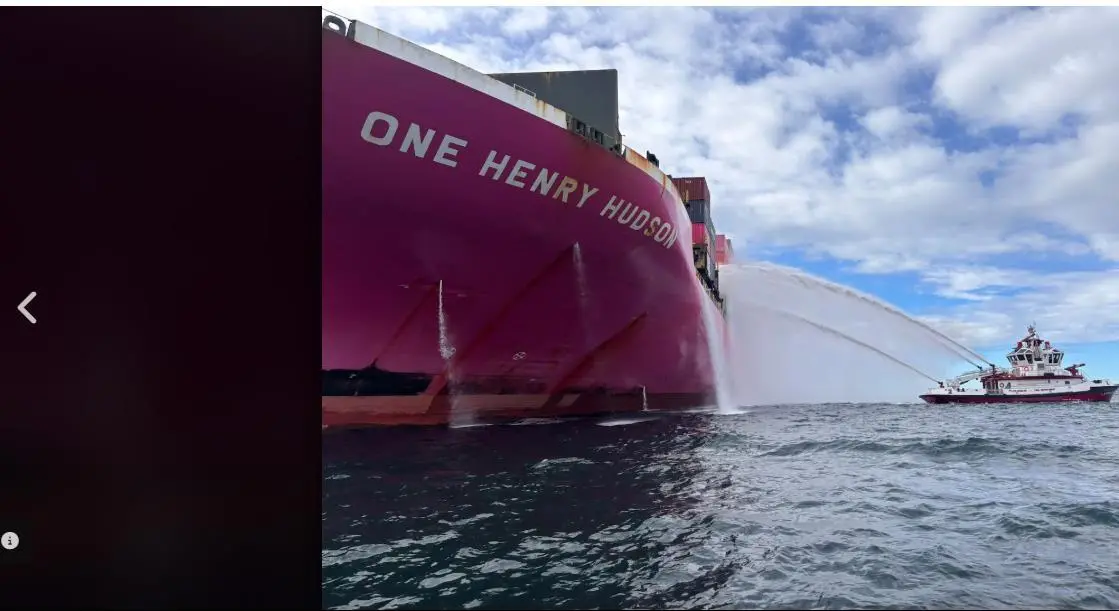
A recent incident attended by the US OPA-90 Alliance Donjon-SMIT (DJS) demonstrated the risks involved even when a vessel is alongside a berth.
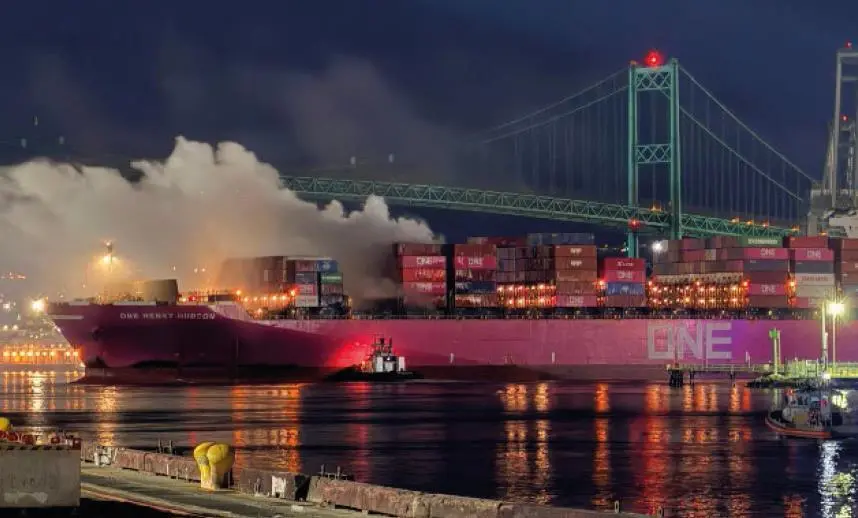
A serious fire broke out in the cargo hold of a 336m, 98,849dwt container ship while berthed at the Port of Los Angeles. Alongside the onboard response, DJS deployed its Salvage and Marine Firefighting team under a Lloyd’s Open Form salvage contract due to the scale and complexity of the incident.
Salvors boarded the vessel within 24 hours. When initial firefighting efforts failed to contain the blaze, the ship was moved away from the terminal to reduce environmental and commercial disruption within the port.
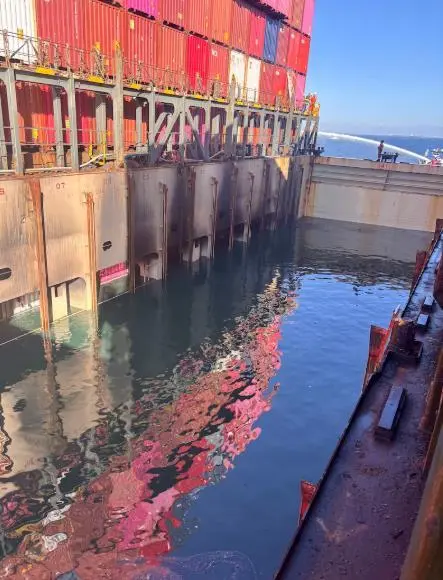
As firefighting water accumulated in the affected cargo hold, naval architects were required to monitor stability and structural stresses. Eventually the fire was brought under control, allowing the vessel to return to the terminal.
The operation extended well beyond extinguishing the blaze. DJS also carried out the controlled removal of contaminated firefighting water and fire-damaged containers before demobilising personnel and equipment.
SMIT Salvage faced a similar challenge in Malaysia after a fire and explosion aboard another container vessel. The company was tasked with assessing, managing and safely disposing of firefighting water and damaged containers during a multi-stage operation that was still ongoing at the time of writing.
Groundings and breakdowns
SMIT’s recent operations also demonstrate the wide range of work undertaken by marine salvors beyond firefighting.
The DJS alliance was called in after a 265ft tank barge grounded at the entrance to the Port of San Juan, breaching all of its double-bottom tanks and several cargo tanks.
Salvors selected what they described as the most cost-effective and environmentally responsible solution: increasing the vessel’s buoyancy by pressurising the damaged tanks before towing it free.
As in many modern salvage operations, removing potentially polluting oil cargo was an immediate priority. The task proved difficult because of the narrow and winding access route to the casualty.
Once lightering operations were completed, the damaged tanks were individually tested before pressurisation. During higher tides, a 200m emergency tow wire was connected to a tug operating in shallow-water conditions, and the barge was successfully refloated and taken to dry dock.
Disabled ships requiring emergency towage also remain a regular source of work for commercial salvors. Operators frequently rely not only on their own fleets but also on partner companies and chartered vessels, reflecting the cooperative nature of the salvage industry despite commercial competition.
When a general cargo vessel suffered rudder failure in severe weather off Portugal, SMIT arranged a tow to Vigo after sourcing what the ISU described as a “unicorn” tug. In another case, a drifting bulk carrier off São Luís, Brazil, was towed safely into port through SMIT’s partner network.
SMIT also joined forces with fellow ISU member AMSOL after a tug-and-barge combination encountered difficulties off South Africa while en route to Nigeria.
The tug was brought safely into Cape Town, while the anchor-handler Boka Keeper, operated by SMIT parent company Boskalis, towed the barge to Walvis Bay for onward towage.
Boka Keeper was later involved in another rescue operation off South Africa, towing a disabled bulk carrier safely to Durban Roads.
Together, the incidents underline both the increasing complexity of container ship fires and the expanding operational demands placed on modern salvors. As ships continue to grow in size and cargoes become more difficult to monitor, salvage teams are being required to combine firefighting, naval architecture, pollution control and emergency towage expertise in increasingly high-risk environments.