![MaritimeJournal[Seawork]](https://www.maritimejournal.com/wp-content/uploads/2026/09/MaritimeJournalSeawork.svg)


Floating wind project certification
Bureau Veritas will deliver an independent certification to the first floating wind project in the Celtic Sea
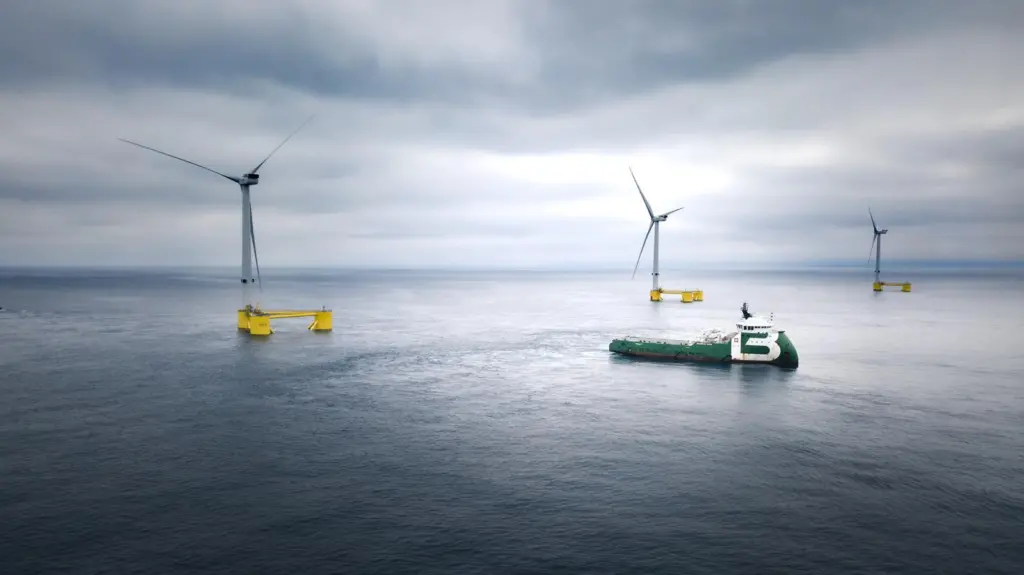
The Erebus project is the first offshore windfarm in the Celtic Sea in Wales UK located 44km from the Pembrokeshire coastline in up to 75m water depth.
It aims to be fully operational by 2026 and will deliver up to 100MW of clean energy, powering 93,000 homes per year.
“We are honoured to be part of this new venture in the Celtic sea, which is essential in meeting the UK 2050 Net-Zero target to mitigate global warming,” said Paul Shrieve, vice president global services at Bureau Veritas Marine & Offshore.
“Supporting new low carbon supply chain opportunities and creating long-term value for the region is at the core of our mission at Bureau Veritas. It is good to see we continue to grow our local engineering and certification capability here in the UK.”
Regulatory requirements
The Erebus project is the result of TotalEnergies teaming up with Simply Blue Group in a Joint Venture named Blue Gem Wind. Principle Power Inc. will design the floating platforms, based on the latest generation of its Windfloat technology.
This floater concept received an “Approval in Principle” from BV in 2016. The ballasted, semi-sumbersible platform supports latest generation multi-megawatt wind turbine generators. The three-column platform is moored with a five-line catenary mooring system and is equipped with a closed-loop ballast system to compensate for changes in mean wind velocity and direction.
BV will be providing independent verification and project certification in line with regulatory requirements. The scope of the evaluation includes all the design phases: site condition assessment, design basis evaluation, integrated load analysis and detailed design evaluation for all the components of the floating wind turbines, including the inter-array cables.
To support the design documentation review, BV will provide independent analysis leveraging its integrated modeling tool Opera – which accounts for all components of a floating asset or wind turbine, covering everything from mooring systems to blades. Opera addresses the complex physics of aero-hydro couplings and multibody interactions and manages sea-keeping and station-keeping for floating structures.
BV’s certification scope is planned to include all post-design phases from manufacturing to operations, including Transportation & Installation (T&I) and commissioning.
Over the last two decades, BV has dedicated significant efforts to developing one-stop-shop solutions related to renewable energies, including design verification of offshore wind farms, supply chain quality assurance for solar photovoltaic panels and project and construction management support for onshore wind developments.