![MaritimeJournal[Seawork]](https://www.maritimejournal.com/wp-content/uploads/2026/09/MaritimeJournalSeawork.svg)






Largest UK offshore wind auction set for July
The next and largest UK government’s renewable energy auction will open in July, with reforms including a new category for deep-water wind and a stronger focus on industrial strategy.
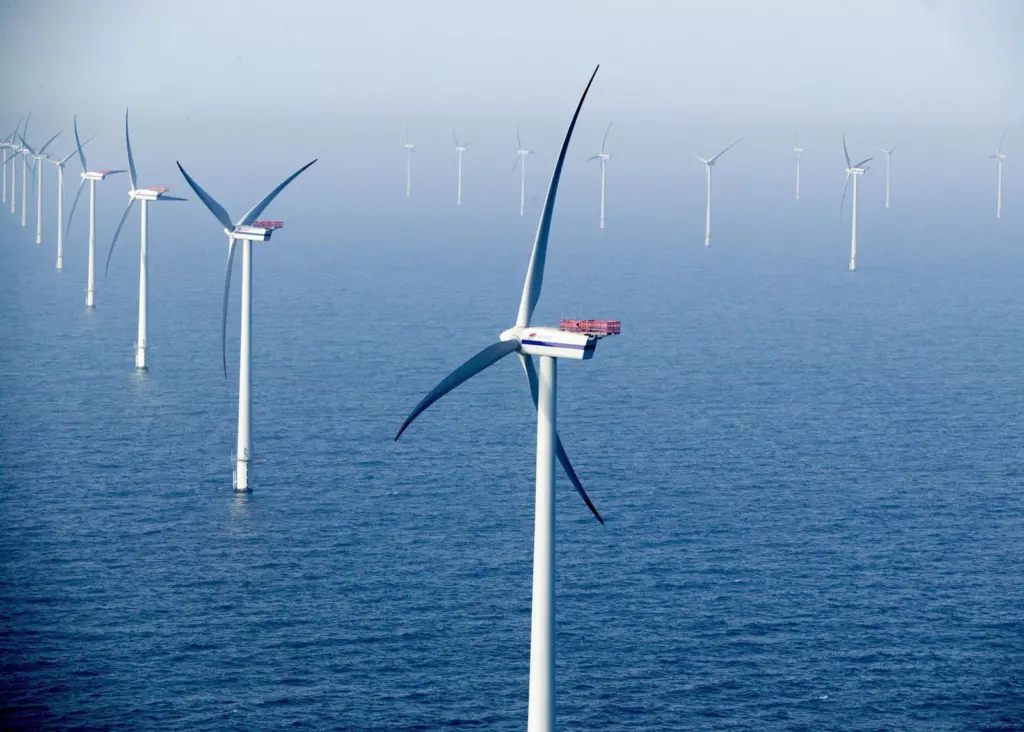
Offshore wind will again be the dominant technology in Allocation Round 8 (AR8), building on AR7, which awarded 8.4GW of offshore wind capacity, making it the largest procurement in Europe. A fraction of this amount was awarded for floating wind, namely 200MW, across two projects in the Celtic Sea and Scotland.
However, the scale of the AR7 deployment – around £1billion (€1.1 billion) per year – may still not be enough to meet 2030 targets and stakeholders have called for yet more funding.
It won’t be cheap.
Trends in strike price – the guaranteed price for generators – illustrate the rising cost of the market, with fixed-bottom offshore wind projects in AR7 clearing at around £90 (€104)/MWh, a huge increase from the £50–£60/MWh levels seen in earlier rounds.
Floating offshore wind, at a much earlier stage of commercialisation, secured strike prices of more than £200/MWh.
Deepwater wind: unlocking the next frontier
A key potential reform in Allocation Round 8 of the Contracts for Difference is the introduction of a dedicated category for deep-water offshore wind, aimed at accelerating deployment of more complex floating projects.
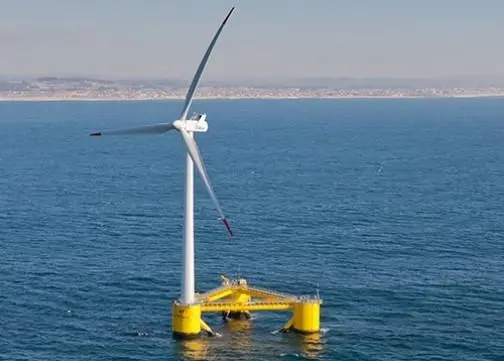
Deepwater sites – typically found in regions such as the Celtic Sea and parts of Scottish waters – are too deep for conventional fixed-bottom turbines and need the mooring platforms used in floating wind technology than seabed foundations. While the UK has already begun supporting floating wind through earlier CfD rounds, all such projects are currently grouped within a single ‘less established technologies’ category, or ‘auction pot’.
But not all floating wind projects are equal.
Developments in deeper, more exposed waters face much higher costs due to more complex installation, anchoring systems and grid connections. As a result, some projects struggle to compete against less challenging schemes within the same auction pot.
Creating a separate deep-water category would allow the government to tailor support more precisely, potentially through even higher strike prices or ring-fenced budgets. This would improve investment certainty and help ensure that the most technically demanding projects can progress.
The change is also closely tied to the UK’s industrial strategy. Regions like the Celtic Sea are expected to become hubs for floating wind manufacturing, port upgrades and new supply chains.
Industrial strategy takes centre stage
At the centre of the AR8 reforms is a new Clean Industry Bonus (CIB), a mechanism designed to reward offshore wind developers that invest in UK supply chains, skills and domestic manufacturing. Under AR8, developers will be able to secure additional revenue support if they can demonstrate tangible commitments to UK-based manufacturing, job creation and supply chain investment.
Alongside the CIB, the government is placing more emphasis on skills and workforce commitments in a bid to ensure that the rapid expansion of offshore wind translates into long-term employment and industrial capability. These changes come as ministers seek to accelerate project delivery timelines and maintain momentum towards the UK’s legally binding decarbonisation goals.
This reflects growing concern within government that previous auction rounds, while highly successful at driving down costs, did not fully capture the domestic economic benefits of offshore wind expansion.
The focus on workforce development is equally prominent. As offshore wind scales rapidly, the industry faces mounting pressure to build a skilled labour pool capable of delivering increasingly complex projects, particularly in areas such as floating wind and deep-water installations.
Taken together, these measures signal a more interventionist approach. AR8 is not just about procuring renewable electricity at the lowest possible price, but about shaping the wider ecosystem that supports it—from ports and fabrication yards to training pipelines and regional economies.
UK current capacity
The UK has around 14GW of operational offshore wind capacity installed in its waters, which reflects rapid growth over the past decade.
Fixed‑bottom offshore wind makes up the vast majority, while floating offshore wind accounts for about 78 MW across two commercial projects, making the UK the global leader by installed floating capacity.
The sector is dominated by major developers such as Ørsted, ScottishPower Renewables, EDF Renewables, ESB and others, with flagship projects including Hornsea, East Anglia and Neart na Gaoithe wind farms.
With a target of between 43GW and 50GW by 2030, the broader pipeline for UK offshore wind, whether it’s from shallow or deep water, looks like offering opportunities for years to come.