![MaritimeJournal[Seawork]](https://www.maritimejournal.com/wp-content/uploads/2026/09/MaritimeJournalSeawork.svg)


Marine salvage in today’s troubled world
The need for transparency and cooperation was the theme at the International Salvage Union’s (ISU) annual Members’ Day recently, with shipowners and insurers facing challenges in a rapidly changing world.
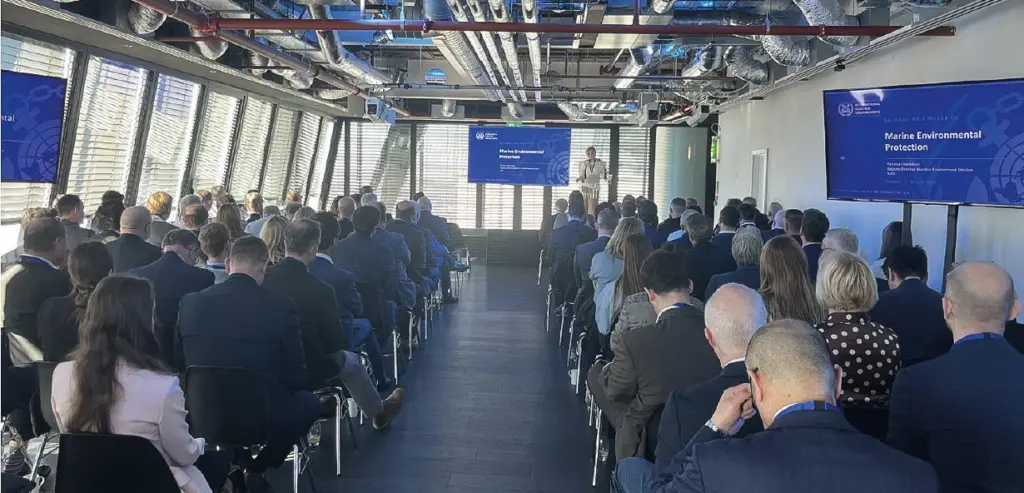
Peter Barker explains how understanding each other’s priorities is increasingly essential in the battle to reduce property losses and prevent environmental damage during maritime emergencies.
The occasion, held in the heart of the City of London, follows ISU’s release of its 2025 Pollution Prevention Survey, revealing that ISU members provided services to vessels carrying nearly 3 million tonnes of potentially polluting cargo and fuel during 2025, a 23% increase on the previous year.
Four of the seven classes of potential pollutants (bunker fuel, crude oil, refined oil products, chemical, bulk, containers and other pollutants) recorded an increase from the previous year and as some services did not record quantity of bunkers or cargo type, it is considered the reported numbers likely represent a more modest total than reality.
The increase in potential pollutants associated with containers is of particular concern for ISU. Assessed at a nominal 15 tonnes per twenty foot equivalent unit (TEU), the 2024 figure of 614,610 tonnes (40,974 TEU) rose to 1,038,840 tonnes (69,256 TEU) in 2025, an increase of 69%.
The range of wider industry representatives at the event demonstrates the importance salvors place on cooperation and working together to overcome hurdles within their own spheres of interest, allowing potential clients space to represent their own perspective on current issues.
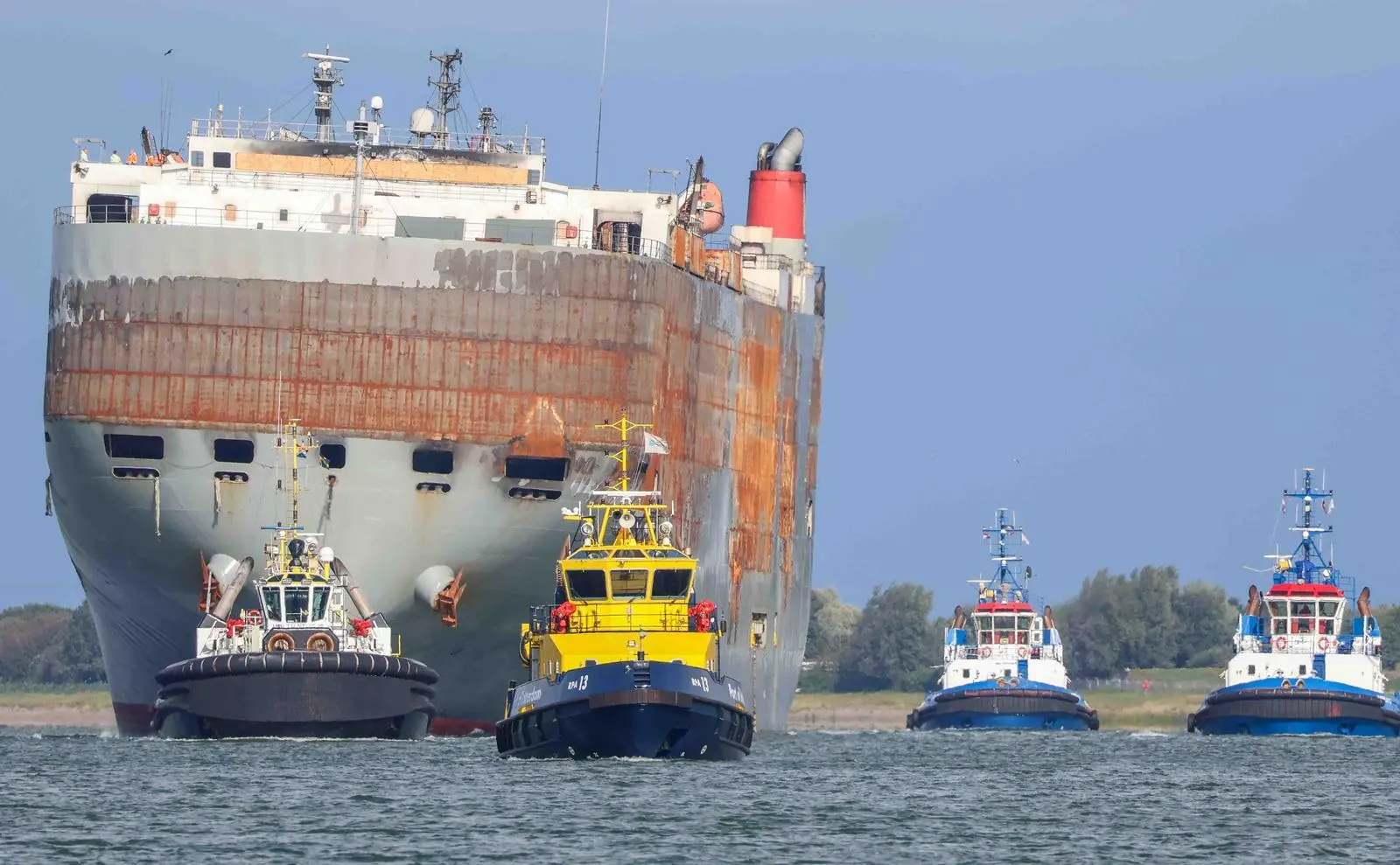
Current geopolitical tensions are another area of concern and interviewed by ISU secretary general James Herbert, Tradewinds editor-in-chief Julian Bray said that while concerned about issues arising from the Iran war and the changes to the established “rules-based order”, he reminded delegates that financially, shipping was enjoying a very positive period.
Discussions also covered traditional subjects including SCOPIC and Places of Refuge and a session on how UK and US navies handle salvage differently. The more recent subject of the global sanctions regime was explored, and as a nod to encouraging young people to enter the industry, an update on new technology and AI.
President’s remarks
ISU president Leendert Muller’s opening remarks summed up the theme, recognising participants had their own priorities but with the same eventual aim.
“I sometimes say we are an eco-system and certainly all the components of the system are here today: main contractors, sub-contractors, lawyers, consultants, property insurers, liability insurers, owners and equipment manufacturers,” he said.
“It gives me great satisfaction that ISU is able to bring the community together like this and we also welcome, and look forward to hearing from, some of our new members.”
Noting that the eco-system is delicately balanced in the industry as well as within the natural world, Muller added: “It is in all our interests to keep that balance, be fair to each other and work well together on individual cases and at an industry level.”
Unlike many industries, investors in the commercial salvage sector need a strong nerve and take the long view. While trends provide clues to the future, the timing of the next contract can never be easily predicted with an element of feast followed by famine.
On this, Muller stresses the fundamental matter on which all agree is that the salvage industry must be financially sustainable, allowing salvors to deal with all kinds of various casualties globally.
“It would be wrong to be a ‘scaremonger’ but we must not take that capability and capacity for granted,” he said. “And I am sure that our opening speakers – the property insurers, the liability insurers and the shipowners – would all say that they want to see a viable and sustainable salvage industry.”
The case of the damaged and abandoned LNG tanker Arctic Metagaz, drifting around the Mediterranean for months now, demonstrates the kind of unpredictable situation salvors face to bring this bizarre episode to a conclusion, unless the deep claims it first.
Sanctions and wars
Commercial salvors are “risk takers” who are content to stand or fall on their decisions, Muller said, with long experience of many different circumstances but mostly within the context of a well-understood legal framework.
It is a “quite different prospect” when the decision relates to a vessel that has been sanctioned.
“The intersection between different sanctions regimes, most obviously the EU, USA and the UK; shifting vessel registrations; lower quality flag states; uncertain ownership and insurance of ship and cargo creates an entirely different context to the decision of whether to offer services,” he said.
Getting it wrong could come with potentially company-ending penalties but at the same time many of these vessels are in poor condition with the threat to coastlines very real, according to Muller.
The subject of Ports of Refuge is described as an issue not often talked about, with an apparent divergence between reality at sea and positive talks about IMO Guidelines.
While not specifically on the agenda, the current wars could not go without mention by the ISU president. He spoke about turbulent times that have increased in recent months and the human cost and suffering war inflicts, including on ISU’s full and associate members.
Acknowledging that it seems “trivial” to turn from real wars to trade wars, Muller said the tariff situation seemed more confused than before, and its impact on world trade was uncertain.
“We have already seen changes to patterns of trade and routings of commercial shipping. Salvage is always downstream of such changes and must adapt and respond,” he said.
The most recent ISU industry statistics are from 2024, the 2025 numbers expected to be published towards the end of Q2 2026. With gross income from all sources in 2024 standing at around US$400 million from 191 services after costs are deducted, this remains a modest business for contractors and a fraction of the scale of the marine insurance industry.
The reduction of Lloyd’s Open Form contracts is yet another constant source of concern, Muller describing the figure of 29 for the year as “disappointing”. While hoping for some increase in the years ahead, ISU is realistic it will never return to historic levels.
The reduction in LOFs perhaps illustrates the pressure on vessel and cargo owners along with insurers to reduce costs associated with maritime emergencies. Ironically, however, LOF was introduced in 1892 following abuse during those times by some salvors and others taking advantage of the predicament of mariners, even in some cases gaining possession of the vessel and cargo.
The simple ‘no cure – no pay’ agreement allowed salvors to start work immediately with neutral arbitration through Lloyd’s protecting both interests.
Lloyd’s Salvage Arbitration Branch figures illustrate how the number of LOF contracts has declined over the period since 1990, when official public statistics were published by Lloyd’s of London. In 1990, 178 new cases were recorded, a number that has declined since, with just the occasional yearly increase, to ISU’s quoted number of 29 in 2025.
LOF is not the only contract used. ISU’s breakdown refers to a total of seven contracts: day rate, Turkish Form, Tow, Wreck, LOF, Japan and other types of agreement.