![MaritimeJournal[Seawork]](https://www.maritimejournal.com/wp-content/uploads/2026/09/MaritimeJournalSeawork.svg)



Portugal enters the floating wind race
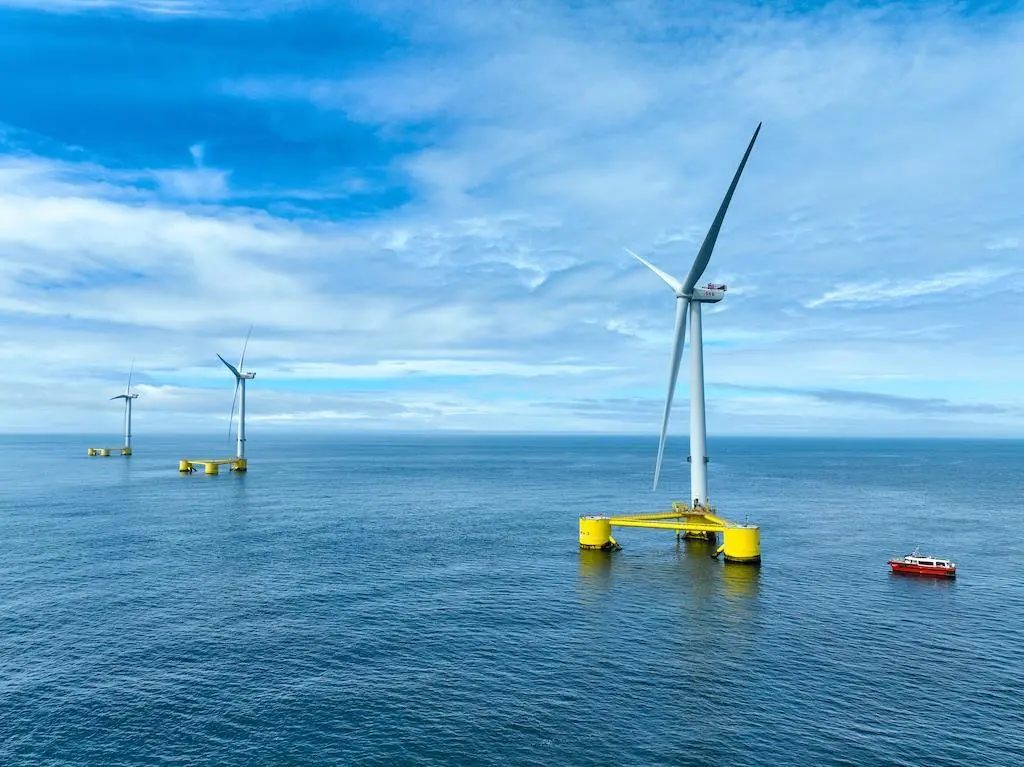
Portugal has announced it will set up special offshore zones to unlock the country’s potential for floating wind installations.
The Technological Free Zones were announced at a conference in Lisbon held by WavEC Offshore Renewables, a private, non-profit offshore marine energy research and consultancy association based in Lisbon.
CEO Marco Alves said the zones would ’provide a further springboard for floating wind developers, unlocking pre-consented areas with active grid connections and reduced regulatory processes’.
”This is an exceptionally exciting time for the marine energy space. It was clear from our conference, which centred around offshore wind innovations across Iberia, that floating wind in particular will play a significant role in the future energy transition. In recognition of this opportunity, Portugal is now planning specially adapted Technological Free Zones to turbo-charge development.”
Portugal joins a small group of countries which have launched similar regimes including Australia, Canada, India, Singapore and the UK.
With national plans to install 10GW of offshore wind capacity by 2030, the measures aim to unlock a massive 131GW offshore wind resources, 90% of which is in deep waters and dependent on floating foundations.
Portugal has already hosted several ocean energy demonstrations, with the WindFloat Atlantic project now powering 60,000 homes. Further plans are afoot with Welsh marine energy developer Marine Power Systems to deploy a unique modular floating offshore wind platform, PelaFlex.
CorPower Ocean’s flagship HiWave-5 wave energy demonstration project is also preparing to launch at the Aguçadoura test site.
Meanwhile, Spain’s recently approved Offshore Wind Roadmap aims to install 3GW by 2030, which is all likely to be floating platforms.
Related Articles
 SEAWORK NEWS
 INDUSTRY NEWS
 OTHER NEWS