![MaritimeJournal[Seawork]](https://www.maritimejournal.com/wp-content/uploads/2026/09/MaritimeJournalSeawork.svg)
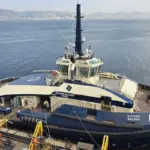

Scientists develop AI based on Archimedes Eureka! moment
A consortium of Scottish researchers has developed new artificial intelligence to modernise the way shipping vessels are weighed and checked – but while the AI is 21st century technology, it’s based on ancient scientific principles that Greek scientist Archimedes discovered in the bath.
The researchers say they have developed a machine vision tool that will automate and undertake accurate readings of the draught marks on ships – which incredibly are still measured and recorded by the naked eye from a quay or boat.
Naval architects at Tymor Marine and the University of Edinburgh have come together thanks to support and cash from CENSIS, a Scottish innovation centre that focuses on sensing, imaging and Internet of Things technologies.
Although accurate draught readings are essential for ensuring a ship’s stability in indicating how much cargo it is carrying and what depths it can safely navigate, because these measurements are still obtained by eye they can be wide open to misreadings because of factors such as waves, faded markings, lighting and marine growth. Because both sides of a vessel must be checked, the process can sometimes take hours.
The researchers have now come up with technology that uses algorithms applied to video recordings of ships to accurately identify where the water line comes to on a vessel’s hull.
“We had been trying to develop this technology for some time, but quickly found there was no off-the-shelf software,” said Rosie Clegg, naval architect at Tymor Marine. “Through CENSIS, we found the expertise we needed at the University of Edinburgh to develop our own technology and bring innovation to what is, broadly speaking, a traditional industry.
“Over the last 12 weeks, we have been able to prove that the concept behind the technology is feasible. Now we will focus on its different elements, train it with data we are now capturing with each visit to a vessel, and begin taking it to a commercial level. We are also exploring the possibility of applying it to drones, which would make the process even safer.”
“The algorithm we have created for Tymor Marine has been built on the recent advances in deep neural networks,” said Dr Hakan Bilen, reader in the School of Informatics at the University of Edinburgh. “The model takes in a video showing a ship’s hull and identifies where digits on the side of a vessel intersects the water line in a variety of different scenarios. We are continuing to build the database by introducing more manual annotations for training and also to improve various components in the method, which should only make it more accurate in the future.
“When researchers were developing AI in the early years, they thought it would easily solve visual tasks that we do effortlessly like recognising digits and estimating waterline and struggle with more complex situations, such as playing a game of chess. However, the opposite has turned out to be the case and it is the seemingly simple tasks that we are still finessing.”
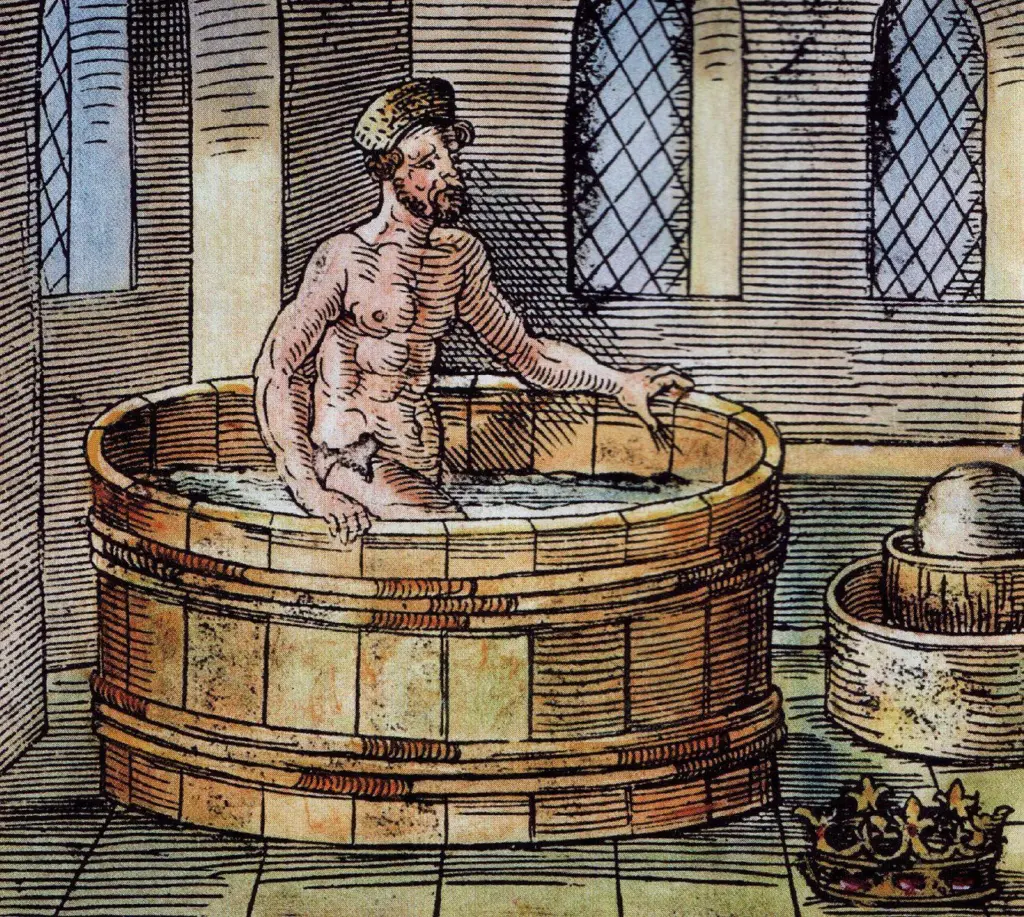
Ancient Greek scientist Archimedes is supposed to have been so excited by his discovery of water displacement while in the bath that he forgot to get dressed before running down the streets yelling ‘Eureka!’
Related Articles
 SEAWORK NEWS
 INDUSTRY NEWS
 OTHER NEWS