![MaritimeJournal[Seawork]](https://www.maritimejournal.com/wp-content/uploads/2026/09/MaritimeJournalSeawork.svg)

Smit to the rescue globally in 2023
Rotterdam-based Smit Salvage has reported on eight incidents it has responded to globally, illustrating the broad spectrum of skills and assets required for this specialist sector of the maritime world.
Smit Salvage is part of the Boskalis group of companies and one of a list of specialist emergency service providers who shipowners and insurers call on when things go wrong at sea. Recent activities include a ship grounding, a cargo hold fire, recovering a jack-up rig leg and five emergency tows – all with the aim of minimising financial loss and acting to protect the environment.
Salvage operations often require complex responses as demonstrated when Smit was tasked to assist the passenger/roro cargo vessel Marco Polo after it grounded on a rocky seabed around 5nm off Karlshamn, Sweden in October. The vessel was carrying passengers and freight vehicles and the severity of the incident, including a reported oil spill, led to the requirement from the Swedish Coast Guard to evacuate the vessel.
Following inspections by Smit and the Coast Guard it was established that Marco Polo had sustained extensive hull damage with several tanks breached and oil leaking from the vessel’s fuel bunker tanks.
Oil booms along with patrol boats were deployed by the Coast Guard, while the Smit salvage team made preparations inside the vessel itself with tugs, a dive support vessel and oil receiving vessels also deployed. Part of the vessel’s bunkers were removed prior to the arrival of a severe storm, which pushed the vessel towards a different grounding location.
The breached tanks were subsequently pressurised and Marco Polo was refloated and brought to a nearby anchorage 10 days after the grounding. Following a dive inspection, the vessel was moved again to Karlshamn, where the cargo and remaining pollutants were removed and finally the vessel was towed to drydock in Gdansk.
Fire in the hold!

During its passage from Brazil to China, the bulk carrier Batavia Express had a fire in a cargo hold containing wood pulp bales. The vessel was diverted to Cape Town. The vessel’s crew and local firefighters attempted unsuccessfully to extinguish the fire, Smit Salvage was engaged to assist and the vessel was brought into the Port of Cape Town.
Measures were taken to inert the affected hold using CO2 and an inert gas generator, with undamaged cargo removed from adjacent holds and stored ashore. The cargo hold was opened and an “orange peel grab” and bale cargo spreader used to remove the affected cargo.
The 7,628t of removed cargo was segregated ashore depending on its condition and after the hold was cleaned and the removed cargo backloaded, Batavia Express resumed its journey to China.
Emergency tows
During the last quarter of 2023 Smit responded to five emergency tows, including when a semi-submersible heavy lift vessel was secured and towed into Rotterdam by a Boskalis tug during a severe storm in “challenging circumstances” in the North Sea.
Meanwhile off Taiwan, a drifting LNG carrier was towed to Kaohsiung for emergency repairs. In the South China Sea a Boskalis tug towed a drifting container vessel to Singapore anchorage and another LNG carrier was brought into port in Australia, the vessel to be subsequently towed to Hong Kong. The final emergency tow incident saw a chemical tanker towed to Jeddah in the Red Sea, all carried out under close supervision and guidance of Smit’s salvage masters and naval architects.
Amputated rig leg
In Trinidad and Tobago, another task where innovative solutions are required on occasion followed an earlier emergency situation where one leg of a jack-up rig had to be cut free, leaving it on the seabed, but freeing the rig.
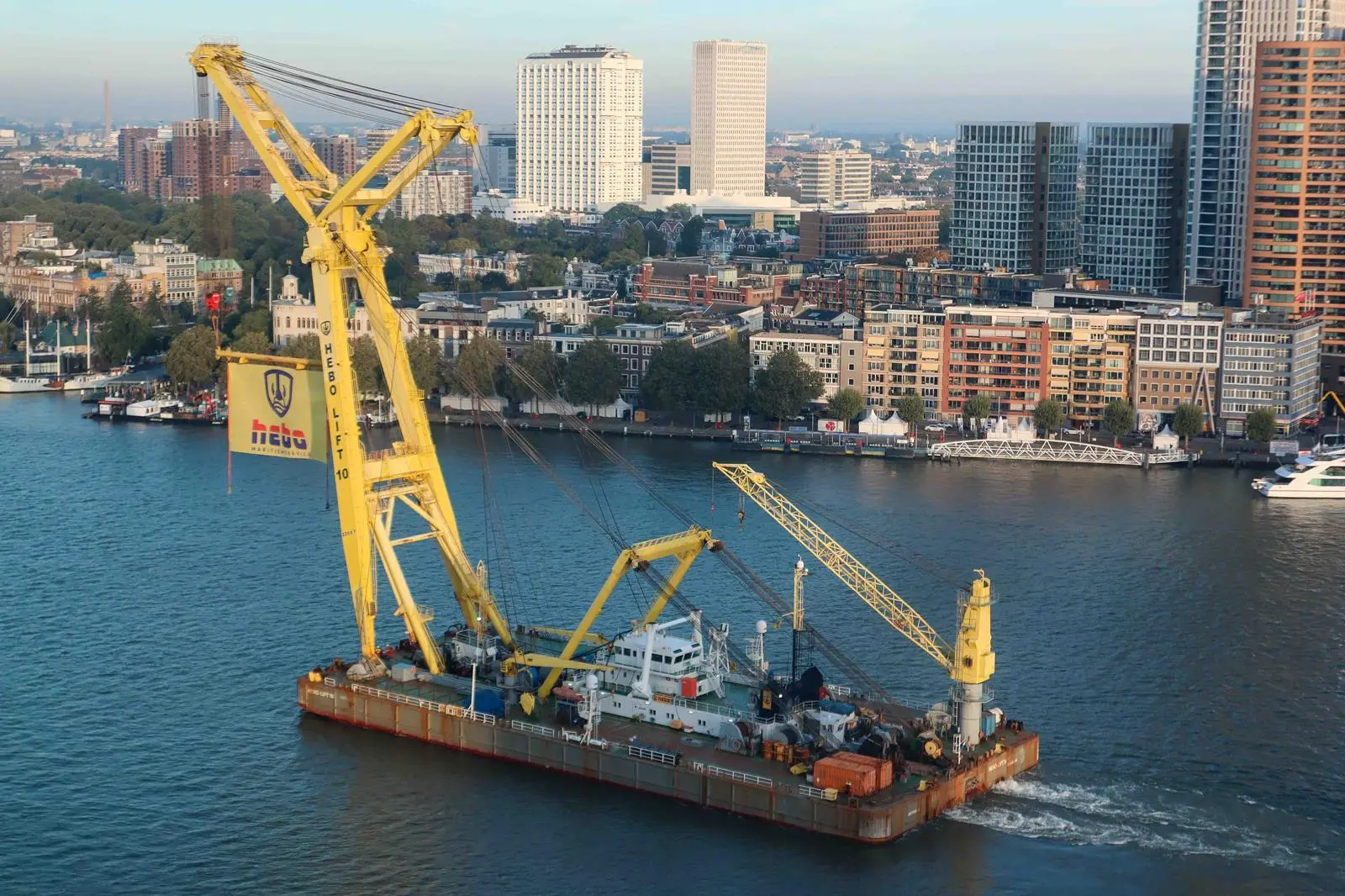
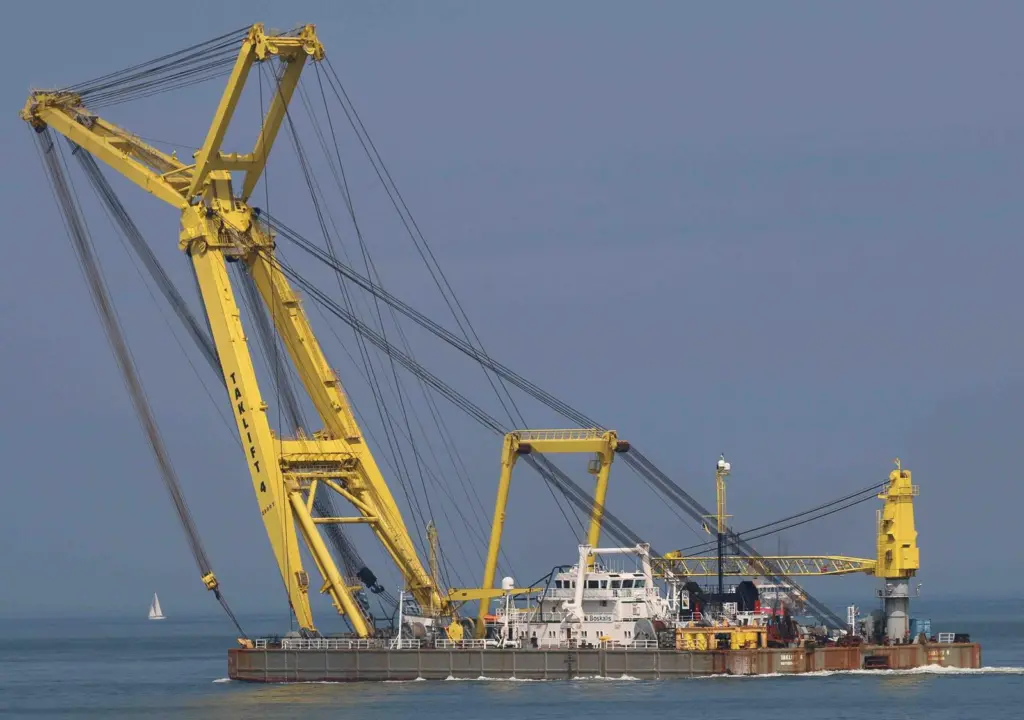
After waiting for a weather window the floating sheerlegs Taklift 4 (now Hebo-Lift 10 and part of Hebo Maritime Service’s fleet) was demobilised from another commitment to recover the leg. It was determined, however, that the best alternative asset for the task was the Boskalis-owned, 3,000t lift crane vessel Bokalift 1. Preparations for the task included fabricating a lifting frame.
The leg was standing vertically with the spud-can 12m deep in the seabed and after 24 hours of pulling and water jetting, the leg was freed. The rig itself had been transported earlier by a Boskalis heavy transport vessel and the leg and rig were reunited in dry dock in early December 2023.
Related Articles
 SEAWORK NEWS
 INDUSTRY NEWS
 OTHER NEWS