![MaritimeJournal[Seawork]](https://www.maritimejournal.com/wp-content/uploads/2026/09/MaritimeJournalSeawork.svg)






Tug autonomy system gets green light
An autonomous system which is due to be retrofitted to a harbour tug has received ABS approval in principle (AIP).
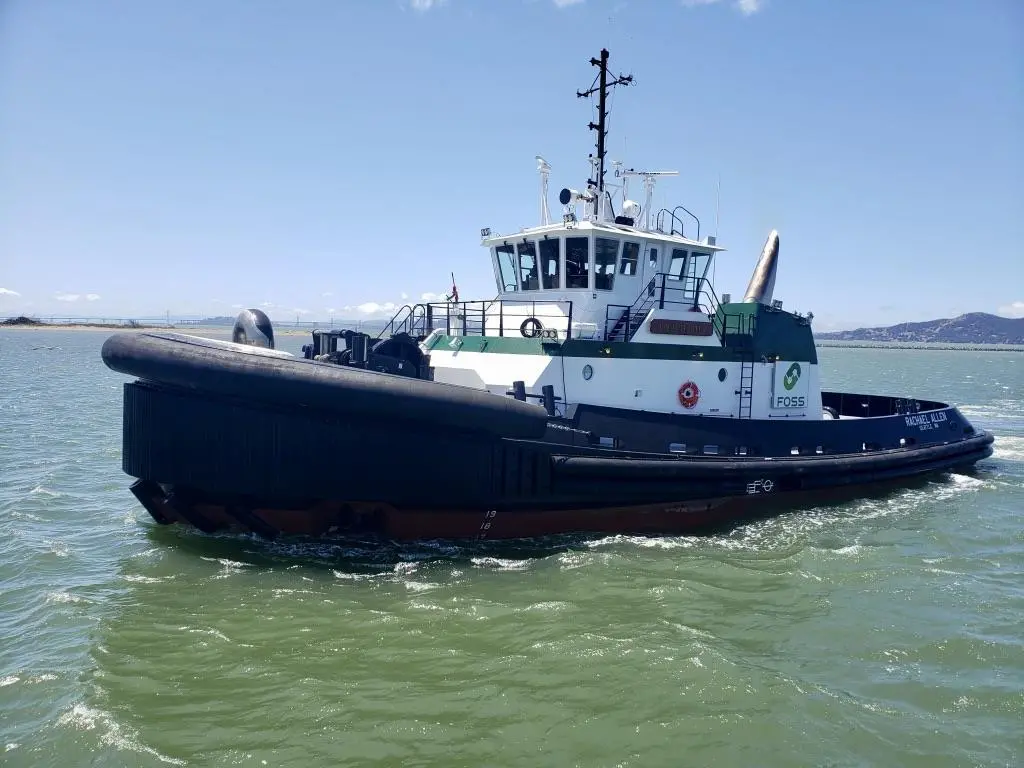
Foss Maritime is to install Sea Machines’ SM300 system on board its harbour tug Rachael Allen to enhance safety and efficiency of operations.
“Sea Machines worked closely alongside ABS and FOSS to yield this most recent approval, which moves our entire industry yet another step closer to widespread adoption of autonomous marine technologies,” said Michael G. Johnson, CEO of Sea Machines.
“Earning this approval demonstrates our unwavering commitment to ensuring that these technologies are utilised safely, while making our industries more competitive and productive.”
Enhancing safety
The system provides autonomous navigation and collision detection and collision avoidance (CDCA). It will function for both routine transit and stand-by operations with the aim of enhancing safety and alleviating crew fatigue. The SM300 system also assists with station-keeping and is capable of interfacing with Kongsberg-MTU propulsion systems.
“As part of our Always Safe, Always Ready culture, Foss is pleased to be providing the SM300 system for additional crew and vessel safety through the enhanced situational awareness it will bring to our operations,” said Dan Cole, project manager, Foss.
Sea Machines’ autonomous system underwent a series of rigorous product reviews to prove that the technology met ABS’ requirements for the use of autonomous systems aboard vessels.
Through the AIP process, ABS reviewed numerous documents for Sea Machines including software test plans and concept of operations materials for the Rachael Allen.
In such reviews, ABS seeks to identify potential design risks or issues that may result in substantial change in direction in the project by evaluating the design approaches, rules, regulations and types of calculations presented.