![MaritimeJournal[Seawork]](https://www.maritimejournal.com/wp-content/uploads/2026/09/MaritimeJournalSeawork.svg)






Two huge UK floating wind projects awarded
Two out of three massive offshore floating wind projects have been awarded by the Crown Estate, with no reason given for failure to award the third.
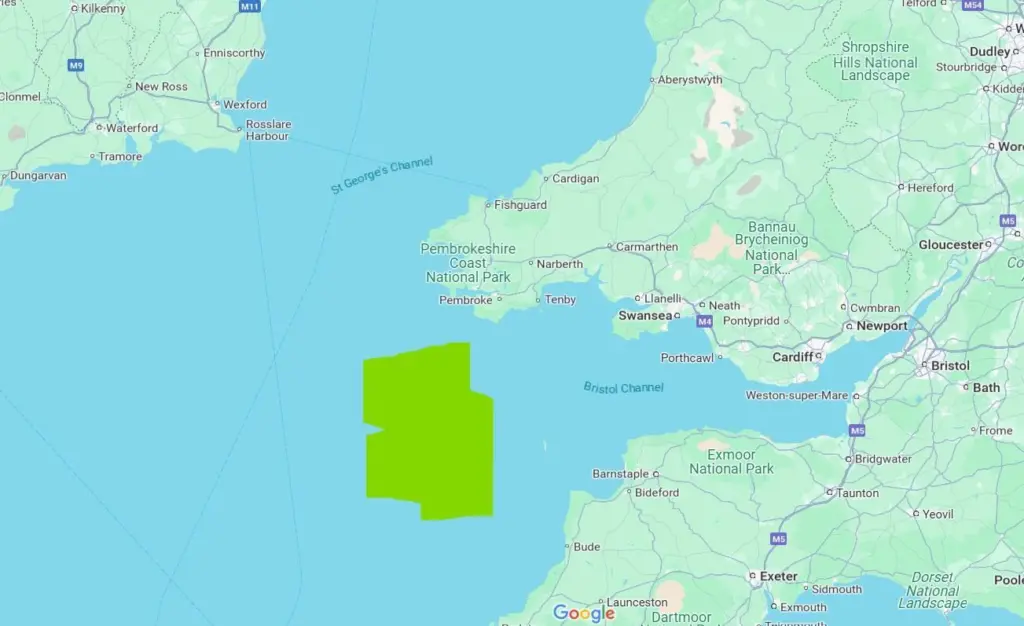
All three projects – each with a 1.5GW generation target – are in the Celtic Sea, with Project Development Areas (PDAs) 1 and 3 awarded and 2, which is slightly to the south of PDA 1, unawarded.
Gwynt Glas, which is a 50-50 joint venture between EDF Renewables UK and ESB, will deliver PDA 1 and Equinor will deliver PDA 3. The awards give both parties ‘preferred bidder status’.
It means that the target of 4.5GW of floating wind will fall short by a third, with capacity awarded now totalling 3GW, although the Crown Estate does say it intends to ‘ensure delivery’ all three sites.
“Work is under way on a range of options to deliver this, and the Crown Estate expects to set out steps by the end of September 2025,” it says.
The Crown Estate refused to tell Maritime Journal how many other bids it had received for the projects, and given the third has not been awarded, the likelihood is none.
“The Celtic Sea is of strategic importance to ESB given its location adjacent to Ireland and the opportunities to develop a floating offshore project in what we believe to be an ideal area bodes well for our ambitions to develop a portfolio of floating offshore wind projects in Ireland and UK to contribute to the net zero plans for both countries as well as those of ESB,” said ESB executive director Jim Dollard.
“The UK is a core strategic market for Equinor and a market where we have more than a decade’s experience in offshore wind,” said Trine Borum Bojsen, Senior Vice President for Renewables Europe of Equinor. “The seabed lease offers the scalability and timing flexibility we seek and is a long-term option for Equinor’s renewables portfolio. We believe that the deeper waters in the Celtic Sea have good future potential for floating wind.”
The projects will necessitate port development too, which British Ports Association chief executive Richard Ballantyne was keen to point out.
“UK ports play a vital role in the UK’s offshore wind industry, supporting the deployment and operation of wind farms that have become a mainstay of our energy transition,” he said. “Floating offshore wind opens up an exciting new frontier, with new opportunities to invest in the vital facilities that will be needed to support this emerging sector, with new jobs and opportunities through the supply chain along the way.”