![MaritimeJournal[Seawork]](https://www.maritimejournal.com/wp-content/uploads/2026/09/MaritimeJournalSeawork.svg)




Insurers join Places of Refuge alliance
Shipowners, salvors and insurers – through their respective trade associations – have jointly called for the prompt and proper implementation of international measures to provide a Place of Refuge for stricken vessels.
This follows a series of incidents where casualty vessels have been delayed in accessing a safe harbour.
The International Chamber of Shipping (ICS) says that it has noted “with dismay” the refusal by some coastal States to make places of refuge available, thereby risking lives and the environment even after the high profile cases of the Stolt Valor and the MSC Flaminia in 2012.
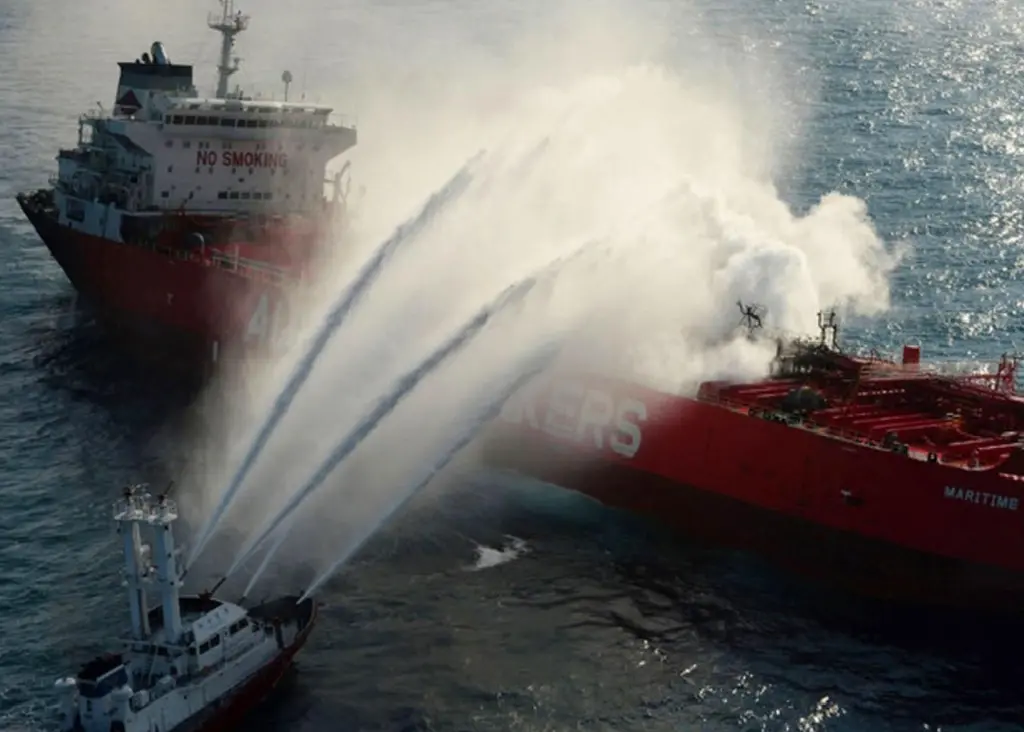
The plight of the Maritime Maisie, presently off the coast of Japan, has brought the subject back into sharp focus. The 44,000 dwt chemical tanker is being held at sea by six tugs after a collision and fire on 29 December 2013. The cargo fire has now been extinguished through the efforts of the salvors in the face of difficult conditions at sea.
The vessel has been seeking a place of refuge in either the Republic of Korea or Japan for more than a month. The salvors have indicated that it is a priority to take the vessel to calm waters to manage the remaining cargo in a safe manner and so to minimize potential damage to the environment.
The International Union of Marine Insurance (IUMI); the International Salvage Union, (ISU) and ICS all recognise that the issue of Places of Refuge for casualty vessels is sensitive and that the risk of pollution from casualties cannot be completely removed. They also recognise that decisions with regard to handling casualty vessels carry political implications and may impact coastal communities.
At the same time, failure to offer a suitable Place of Refuge may prevent successful salvage intervention and therefore allow a casualty’s condition to worsen and ultimately lead to pollution that might otherwise have been prevented, and that pollution may affect a wider area than need have been the case.
The industry bodies do not see merit in pursuing additional international legislation which will be a lengthy process and will consume resources. Instead they will campaign for better application of, compliance with and enforcement of existing rules and guidance. ISU has already formally presented views on Places of Refuge to EU member states through the EU Commission; the issue will be raised in IMO this year and there will be direct engagement with the governments of individual coastal states.
In short, coastal states should be encouraged to recognise that granting a Place of Refuge to a casualty vessel may be the most appropriate course. States should establish an authority to assess each case on its merits without political interference. Such an assessment must include a visual inspection and conclude with recommendations for managing and mitigating the risk of any impact on local coastlines and communities. The assumption should be that a Place of Refuge will be granted if needed and that there should be “no rejection without inspection”.
IUMI, ICS and ISU would like to see wider adoption by coastal states of simple, robust, ‘single point’ command and control models akin to that of the United Kingdom’s SOSREP system.
Related Articles
 INSURANCE, LEGAL & FINANCE
 INDUSTRY NEWS
 ENVIRONMENT