![MaritimeJournal[Seawork]](https://www.maritimejournal.com/wp-content/uploads/2026/09/MaritimeJournalSeawork.svg)



Building Ancora: Simon Light’s plan to reshape marine civils
Less than four months into the top job at the Ancora Group, chief executive Simon Light is combining fleet expansion with a broader push to grow the company.
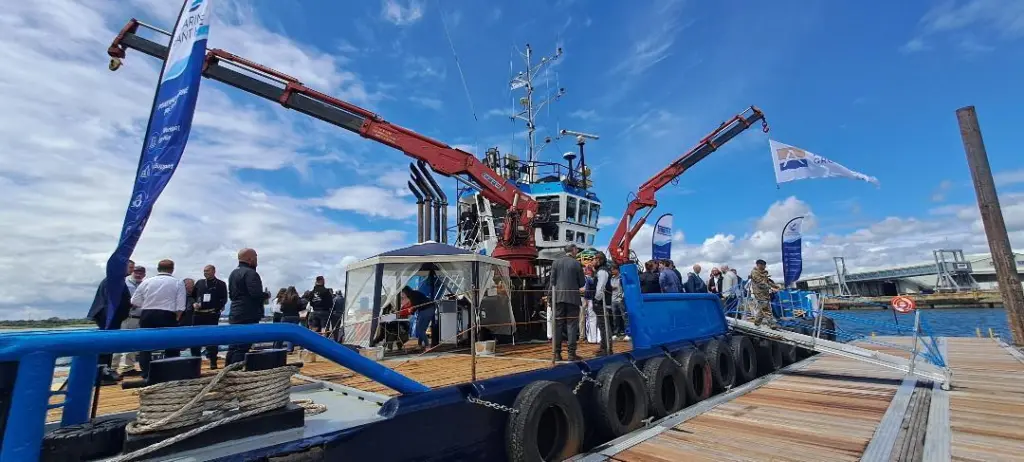
The handover of the Damen multicat Tom Scruby at Seawork 2026 marked the start of new opportunities for both the business and the industry.
But while Ancora is expanding, the industry’s labour pool is shrinking – and Light believes if more potential recruits were aware of the well-kept secrets of the sector, it might have more appeal.
Backed by private equity firm Sullivan Street Partners, Ancora Group was created in 2025 with the integration of Teignmouth Maritime Services (TMS), Hesselberg Erosion Protection and Marine Plant Hire, bringing together marine civils, erosion protection and specialist marine plant under a single umbrella.
Since then it has already made another purchase, snapping up marine infrastructure works firm Red7Marine in May. It is likely to be the first of a few purchases.
Building Ancora
“Ancora Group was formed as a company when Sullivan Street Partners determined to create a platform around building a company very much focused around solving marine infrastructure solutions and very much on the back of ageing infrastructure, ever-growing demands around waterway protection and so on,” says Light.
“We’ve got increasingly different weather patterns, which is only causing increasing pressure on infrastructure which, as we know, in some cases dates back to Victorian times, around 125 years old, and wasn’t designed to withstand the real pressures coming through.
“What Sullivan Street found was that the market was quite fragmented in terms of solutions being provided to clients. It had some very specialist providers solving problems, but not generally a broadly integrated client solution.
“This wasn’t a consolidation strategy. It was very much how do we add more value to clients by making sure we’re building a business that is focused towards the delivery of those different solutions.”
The first acquisition was Teignmouth Maritime Services in March 2025, which brought Hesselberg Erosion Protection and Marine Plant Hire into the group.
“That gave the initial, pardon the pun, platform for us to start in that buy-and-build approach,” Light says.
The acquisition of Red7Marine followed.
“When we acquired Red7Marine, that was very much that sense of, right, how do we build a bit more scale geographically as we extend our capability offering, which includes civil engineering, design, floating fleets and jack-up barges?
“Importantly, it focuses on the markets where we’re looking to really generate some new solutions. So that’s through ports and harbours, both commercial ports and regional ports, working with the water authorities, working for the Environment Agency, and then also increasingly moving into what I call the adjacent markets of defence, nuclear and offshore wind.”
But remaining a specialist provider is still at the heart of the company.
“We’re looking to make sure that we maintain that focus on being a specialist tier two provider, not a tier one general contractor.”
Expansion from the core
Light is determined to push the company further up the value chain while remaining focused on its core markets.
“Our strategy is to build from our core market and continue serving our existing clients,” he says. “Commercial ports, regional harbours, the Environment Agency and water companies remain our focus.
“As we move into other sectors, we can apply the capabilities we already have rather than creating entirely new ones. But we also need to extend our reach beyond construction and provide solutions much earlier in the asset life cycle.
“We want to help clients plan, design, construct and maintain their assets, bringing together smart design and practical constructability. By getting involved earlier, we can shorten programmes and help clients make better-informed business decisions.
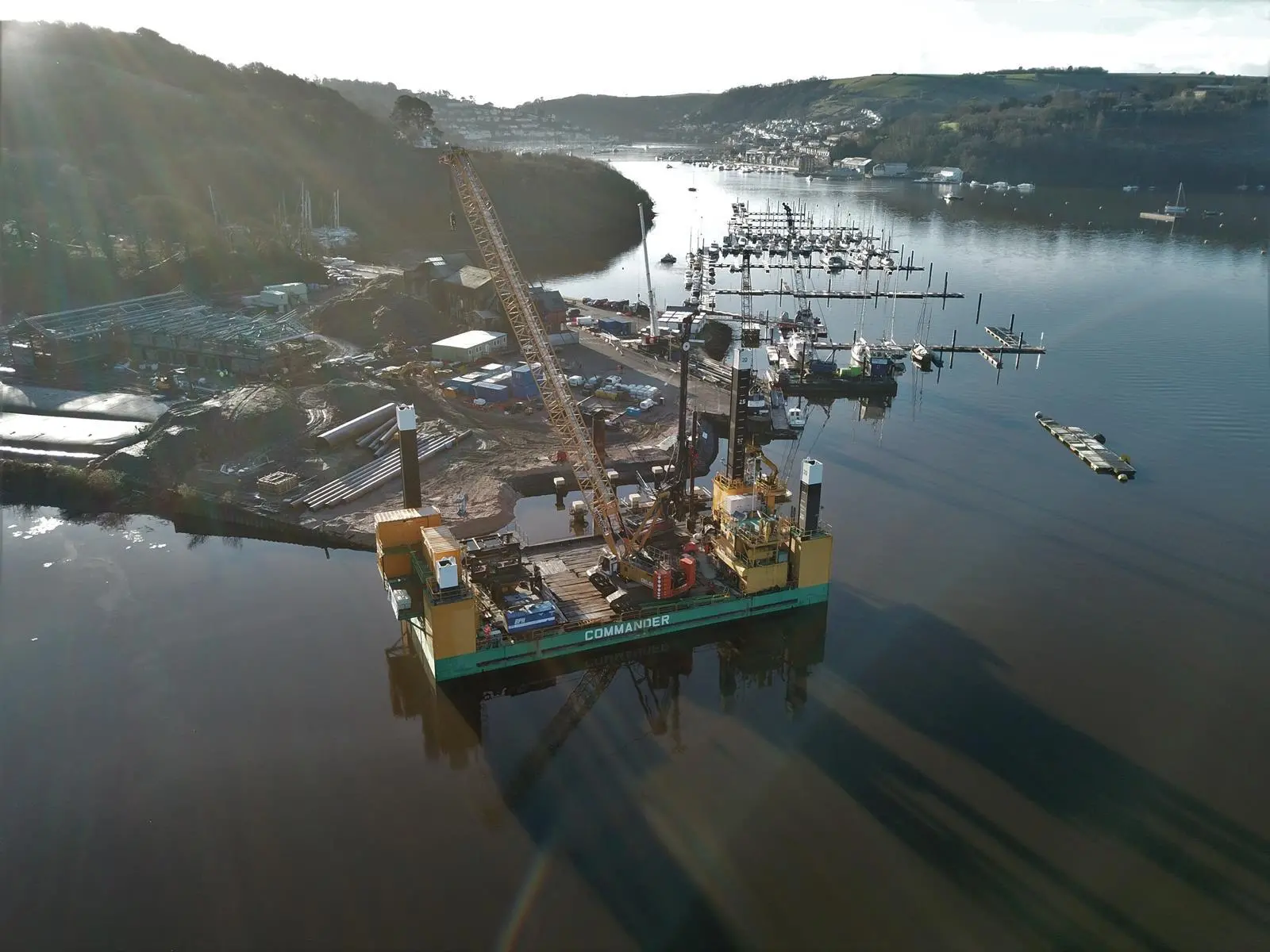
“There’re going to be various challenges that require probably thinking about whether it’s a floating plant solution, or a jack-up barge solution? And what is the civil engineering solution that comes off those? That upfront thinking is really important.”
Smarter assets
In these days of sustainability focus, one important thing is to use the assets you have in a more efficient way.
“We’re looking at various things at the moment, a lot of it going around sequencing the works to make sure that you’ve got fewer vessel movements in order to get to an outcome,” says Light.
“That’s smart engineering: how do you start using the right size of vessel? There’s no need to bring, in some cases, these enormous barges or enormous tugboats, for instance.
“A key part of what we’re looking at is fleet modernisation as well. We’ve got tugs, as many of our competitors do, which date back to 1945, 1946, NATO tugs.
“Some of those are still exceptionally useful for certain types of projects, but there are others that are less useful and probably just in how they’ve been built and designed over the years, less fuel efficient as well.
“And do we need to look at more autonomous vessels as well? It’s all part of fleet modernisation.”
Smart engineering
Light believes marine civils engineering deserves greater recognition.
“There’s some very, very smart engineering that happens within the marine sector,” he says. “I do think it’s a well-kept secret across the broader infrastructure sector in the UK and further afield.
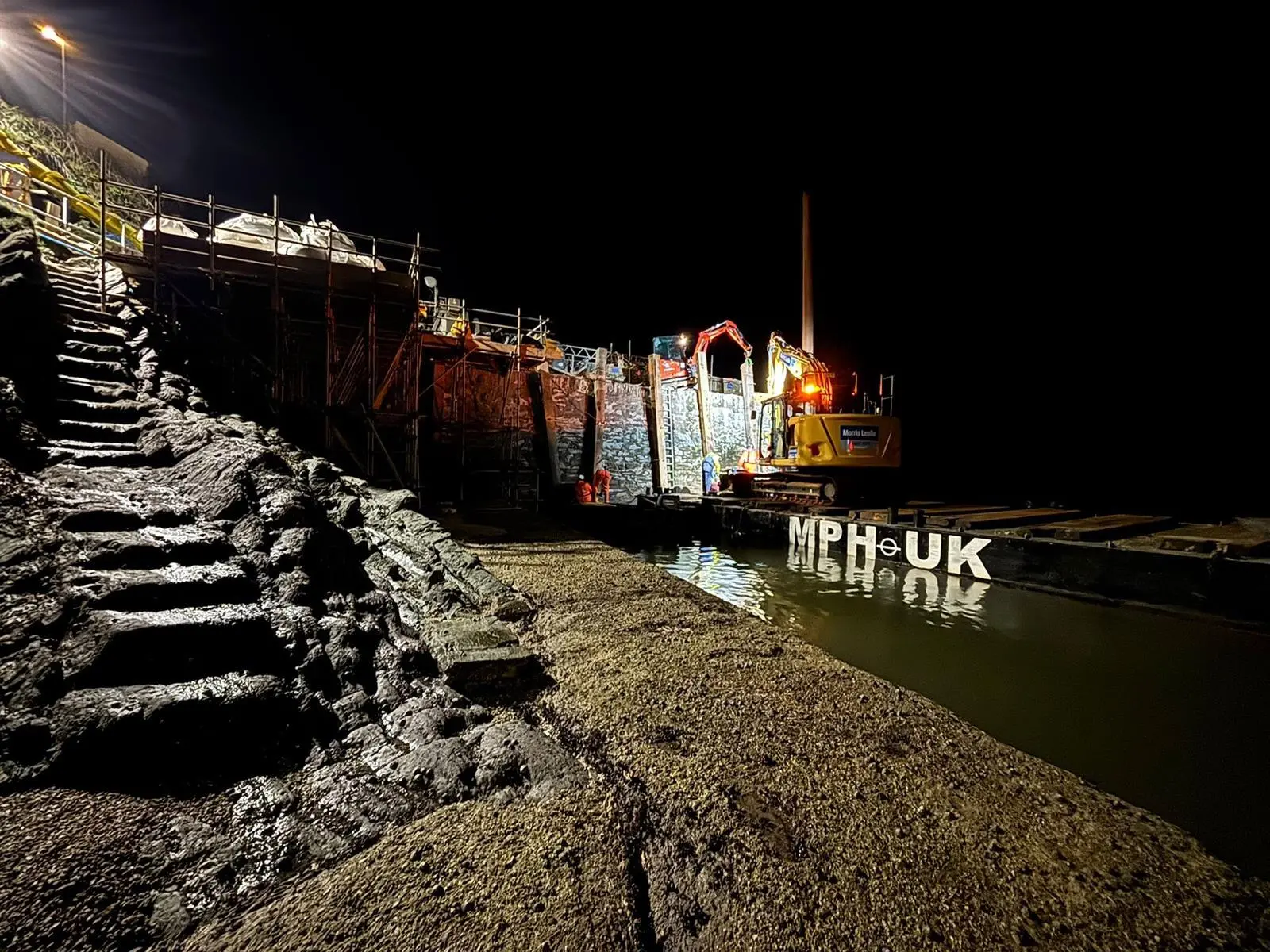
“The challenges of working with water cannot be underestimated. Shifting tides, different weather patterns coming through, the need to just stop work because you’re unable to do something safely. It’s very real, and it’s very different from doing complex civil engineering on land.”
It all adds expenses, of course – a couple of days’ break because of bad weather can be an excruciating cost. Addressing this, Ancora is increasingly looking at predictive maintenance, LiDAR surveys, drones, subsea scanning, AI and automation, which, he says, is all there already, just not taken up.
“Very, very smart heads have been putting this together for a while,” he says. “But I’d say that it’s not often not known in a sector which is, I’d argue, one of the most important sectors for keeping the UK economy going with exports, imports and so on.
“I’d say in marine, the adoption of these technologies and so on is there, but it hasn’t yet been industrialised across the sector.”
Attracting talent and what’s next
“It’s well known that we’ve got an ageing workforce, we’ve got new skills required and a chance to attract people to the industry,” Light says. “But we’re waiting for a relatively small pool of talent to come through.”
Ancora is working with universities in Plymouth and Dartmouth and already has apprentices and placement students in the business.
“But we need to be doing much more of that as a business,” he says. “We just bought the multicat, which takes us off into new fields as well, and I think the excitement that brings to the existing workforce could also attract new people to the industry. And perhaps it’s symptomatic of my earlier point around a lot of what happens in the industry is a really well-kept secret.
“I think the broader opportunities that the sector provides definitely have got room to improve, to attract top talent to this industry, which gives people the opportunity to go and explore different parts of the world through the sector.”
Light’s own career has included work in the Middle East on waterfront developments, the Palm Islands and golf course projects, before senior roles with EC Harris, Arcadis and GHD, where he was involved in post-merger integration and business transformation.
Growth remains firmly on the agenda.
“Our strategy is to grow both organically and inorganically,” Light says.
So does this mean other companies are being eyed up?
“The short answer to the question is, yes, we are in discussion with some other companies,” he says. “For now, all UK based. We’re looking at the option of expansion into Ireland at the right time. We’ve got a very strong platform with Red7 and TMS coming together that allows us to build a bit more momentum organically.
“We’ll get that going, we’ll get these businesses integrated and moving forward and then we’ll look at others.”