![MaritimeJournal[Seawork]](https://www.maritimejournal.com/wp-content/uploads/2026/09/MaritimeJournalSeawork.svg)


Certification must be at the crest of the USV wave
Jeffrey Tuckerman, USV Regulatory Compliance Officer at SEA-KIT, a Fugro company, and Matthew Palmer, Global Nuclear, Submarines & Autonomous Shipping Director at Lloyd’s Register, write about the need for a so-far unregulated sector.
From aviation’s drones to automotive’s driverless cars and computing’s generative AI, automation is quickly becoming a technological and operational reality.
As the ability to see, sense, communicate and react remotely improves, we’re seeing the same happen in the maritime world. Behind the scenes of these technological advancements a great deal of certification, authorisation and regulatory work must take place.
Uncrewed surface vessels (USVs) bring together the ability to operate and monitor remotely, with sophisticated sensors and data analysis, in near real time.
With Fugro having racked up more than a million hours of remote operations experience, including on projects using USVs, it is already redefining how marine subsea inspection and survey projects are handled.
Reducing carbon emissions and improving crew safety, USVs will also help ease broader industry-wide challenges such as vessel resource limitations and the speed of data sharing.
Lloyd’s Register steps in
Through its acquisition of USV design and build manufacturer SEA-KIT International, Fugro has built a strong working relationship with international maritime classification society Lloyd’s Register (LR). Testament to that relationship is the global fleet agreement that is now in place between LR and SEA-KIT, which manages the agreement on behalf of Fugro’s USV fleet. This is a significant step forward in the certification process.
Normally associated with conventional vessels, this brings the global fleet of Fugro USVs under one certification agreement, streamlining the process of organising surveys and collating vessel certification into an online LR database for easier management.
The arrangement highlights how USVs have gone from a pipe dream to an operable reality.
As the importance of uncrewed systems has grown in prominence amongst regulatory bodies, a more standardised process has become essential – and LR was the first marine classification society in the world to develop a code for uncrewed vessels.
Marine classification requires assessment against standards set out in the Workboat Code, administered by the UK Maritime and Coastguard Agency (MCA), which sets technical safety requirements for commercial small workboats and pilot boats operating at sea.
From maintaining and inspecting wind farms and ports and harbours through to oil and gas infrastructure, these small workboats are key to sustaining a wide range of economic activity near and offshore.
Workboat Code Edition 3, which was launched in December 2023, includes USVs for the first time, introducing the world’s first maritime safety legislation for the development of remotely operated uncrewed vessels and workboats using alternative fuels and propulsion systems such as lithium-ion or lead-acid batteries.
SEA-KIT and LR have closely collaborated throughout the specification, design and manufacture process of the latest USVs, ensuring the crafts are built to certain standards.
The LR Unmanned Marine Systems (UMS) Code certification process is goal based and designed to support assurance of uncrewed systems through a process of tailoring to demonstrate compliance. The existing maritime regulatory framework targets crewed vessels’ risks, which differ greatly from those of uncrewed vessels.
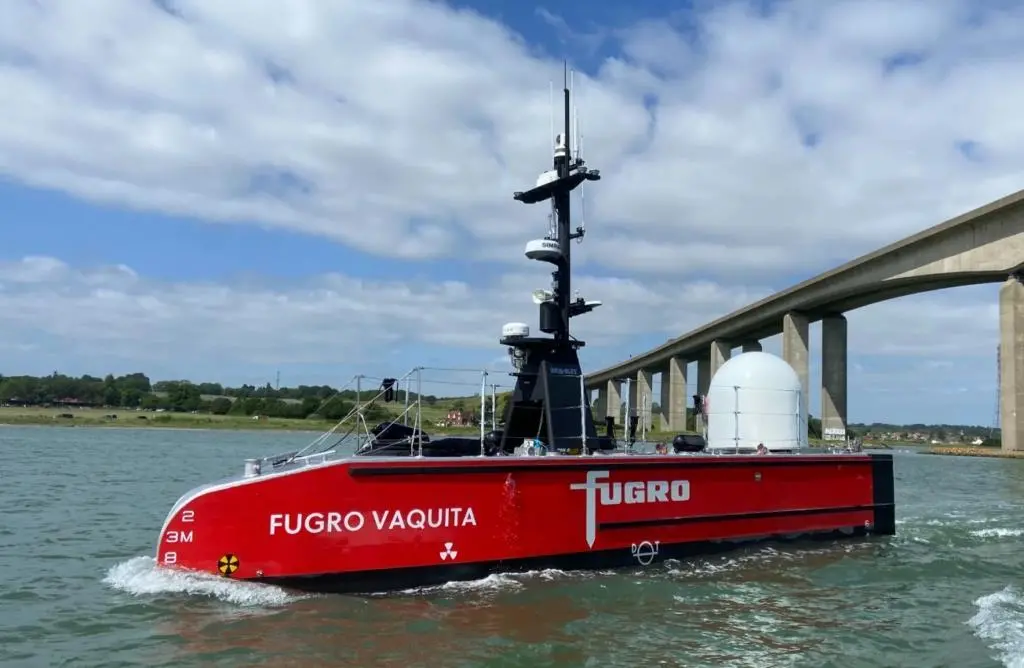
To meet market demand for uncrewed vessel assurance, LR released the UMS Code in 2017.
Steps to certification
• The first step is understanding the vessel’s use and agreeing on a strategy for key elements like structure and control systems, which results in a certification plan that ensures all stakeholder requirements are included.
• LR then conducts necessary activities such as design appraisal, build survey and sea trials, similar to crewed vessels.
• Stability tests in water take place, with LR closely reviewing and approving structural drawings and electrical diagrams to ensure they align with operational and safety requirements. Particular attention is given to the control system, with LR UMS Code’s goal-based approach building a safety argument through a risk-based approach.
• The remote operations centre is surveyed to make sure there is adequate redundancy and resiliency in place.
• It all culminates in sea trials – operating the vessel out in open water, testing a range of factors including speed, manoeuvrability, equipment and safety features.
Once all the activities have been completed and verified, LR’s UMS certificate can be issued.
One of the many benefits of using a goal-based approach is that it enables vessels to operate in multiple countries with different regulations.
Fugro vessels certified under LR’s UMS Code have already operated in various countries around the world, from Brazil and Abu Dhabi to Australia and the North Sea.
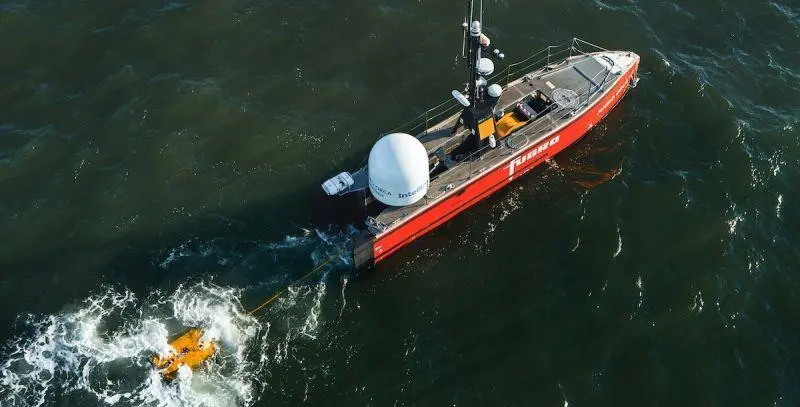
The latest uncrewed vessel to undergo this process is Fugro’s Blue Eclipse, an 18-metre USV that will soon become Category 0 USV certified against the MCA’s Workboat Code 3.
Working to known standards
With the International Maritime Organisation’s Maritime Autonomous Surface Ships (MASS) Code not expected to come into force until 2032, there are currently no international standards in place amongst maritime authorities for uncrewed vessels.
Having proof the vessel has been built and operated to a known standard is of huge benefit to
securing approvals in other maritime territories. Fugro vessels have already operated in the Netherlands and Denmark with Workboat Code certification, and approval for operation with the Norwegian Maritime Authority is ongoing.
As the collective industry experience in developing and deploying USVs grows, they are likely to become an invaluable part of the marine engineering future fleet mix – and the progress made in certification and classification is helping to make it all possible.