![MaritimeJournal[Seawork]](https://www.maritimejournal.com/wp-content/uploads/2026/09/MaritimeJournalSeawork.svg)






Cutting the umbilical: Dynautics dives in with ‘Phantom Two’
 Part of our special report
Autonomy at Sea · January 2026
All 10 features
Part of our special report
Autonomy at Sea · January 2026
All 10 features
For all the talk of autonomy in cars, drones, and aircraft, the most demanding frontier remains largely invisible.
Beneath the waves, radio signals die, GPS disappears and pressure mounts. It is here, far from roads, runways or rails, that true autonomy is particularly desirable; and it is here that Dynautics is quietly building its reputation.
At the centre of Dynautics’ latest ambitions is Phantom Two, an autonomous underwater vehicle (AUV) designed not only to prove the company’s control systems, but to embody its philosophy of autonomy: robust, pragmatic and built for the real constraints of the ocean.
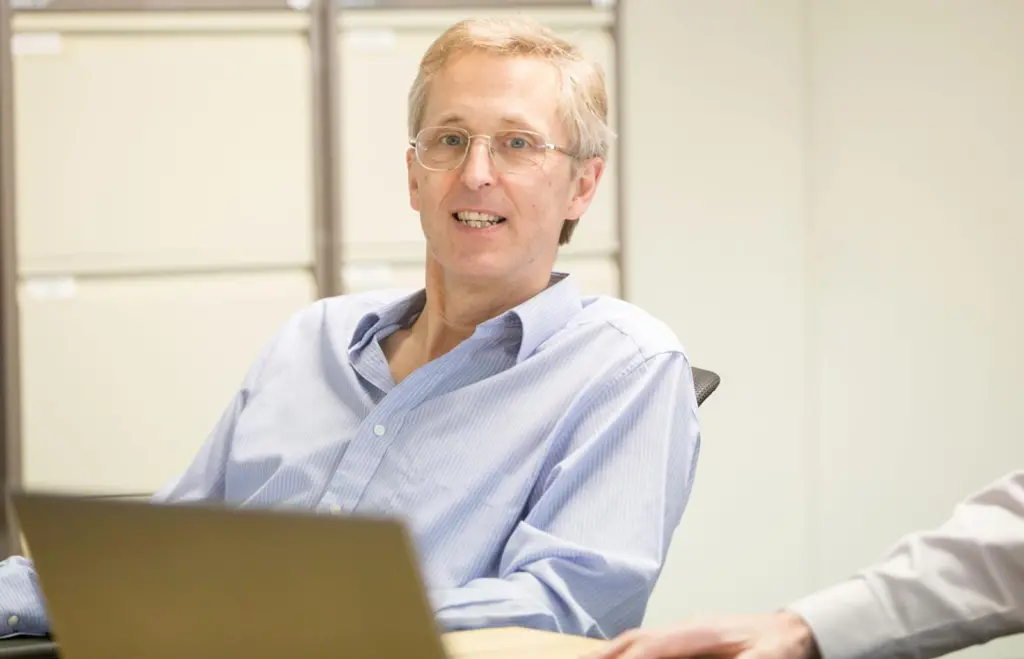
We talked to Dynautics CEO Dr Henry Robinson about the march towards autonomy under the waves.
From surface to deep
Dynautics’ early work focused on autopilots for small vessels – an area often overlooked in discussions of autonomy.
“There are more very small vessels worldwide than there are large vessels, particularly when it comes to unmanned,” says Robinson. “The risks are much lower if you’re dealing with a five-metre vessel. We provided autopilots, self-tuning autopilots that would control vessels, learn the characteristics of the vessel and then control it.”
The move underwater was a natural – but far from simple – extension. Ships, after all, are broadly similar in shape – they are ‘pointy at one end and they’ve got propellers and rudders at the other’ – whereas underwater vehicles can be all shapes and sizes.
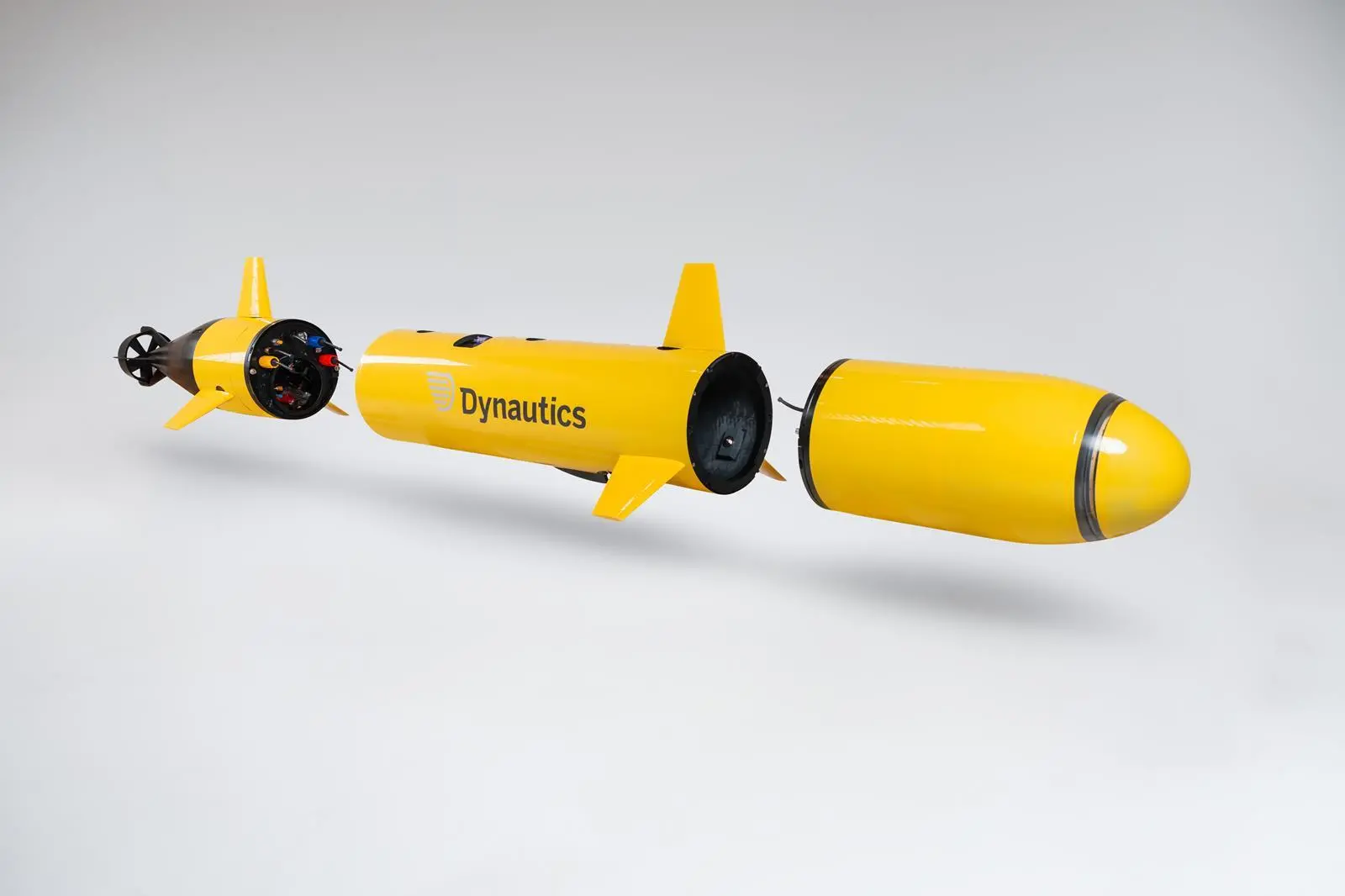
“When you go to underwater vehicles, there are all sorts,” he says. “Observation-class ROVs, work-class ROVs which look like a great big brick, torpedoes and everything in between And you’re also dealing, of course, with six dimensions, so buoyancy and pitch and roll start to become important.”
Robinson says the challenge became irresistible more than two decades ago, when a two-page spread of all the ROVs in the world caught his eye. But of them all, just six were AUVs.
“It didn’t take a genius to realise this is the way things are going. People are going to want to cut the umbilical.”
And thus began the move towards an architecture that would lend itself to lots of different configurations.
“We came up with an architecture which is particularly versatile,” he says. “I can honestly say we haven’t yet found a vehicle that we can’t control with this. We’ve applied it to torpedo types and to work-class ROVs 2,000 metres deep in the Gulf of Mexico and everything in between. And it’s been fun.”
Autonomy where it matters
Above the surface, autonomy is as much about regulation as technology.
“The MCA will not allow people to put an unmanned boat and get it to drive through a busy harbour,” Robinson says. “They’re scared stiff. The maritime industry generally is conservative.
“Underwater communication and navigation are the two biggest challenges. Salt water is a barrier to radio waves, and that’s why small, unmanned underwater vehicles have to be autonomous, much more than on the surface.
“Even the smallest AUV, once you cut the umbilical, it really is on its own. You have to give it parameters and it has to stay within them, or stop.
“I think of it as a little bit like navigating down a corridor. You can take even a drunk and send him down the corridor and say, ‘If you hit the wall, just lie down.’”
The underwater version of that corridor is multidimensional: depth limits, pitch angles, roll thresholds, battery charge.
“If something dodgy happens, this is what you do. if there’s something really unexpected, come to the surface.”
Phantom Two: Nose-up buoyancy
Phantom Two is not just a platform for software – it is a physical manifestation of Dynautics’ thinking about failure, recovery and trust.
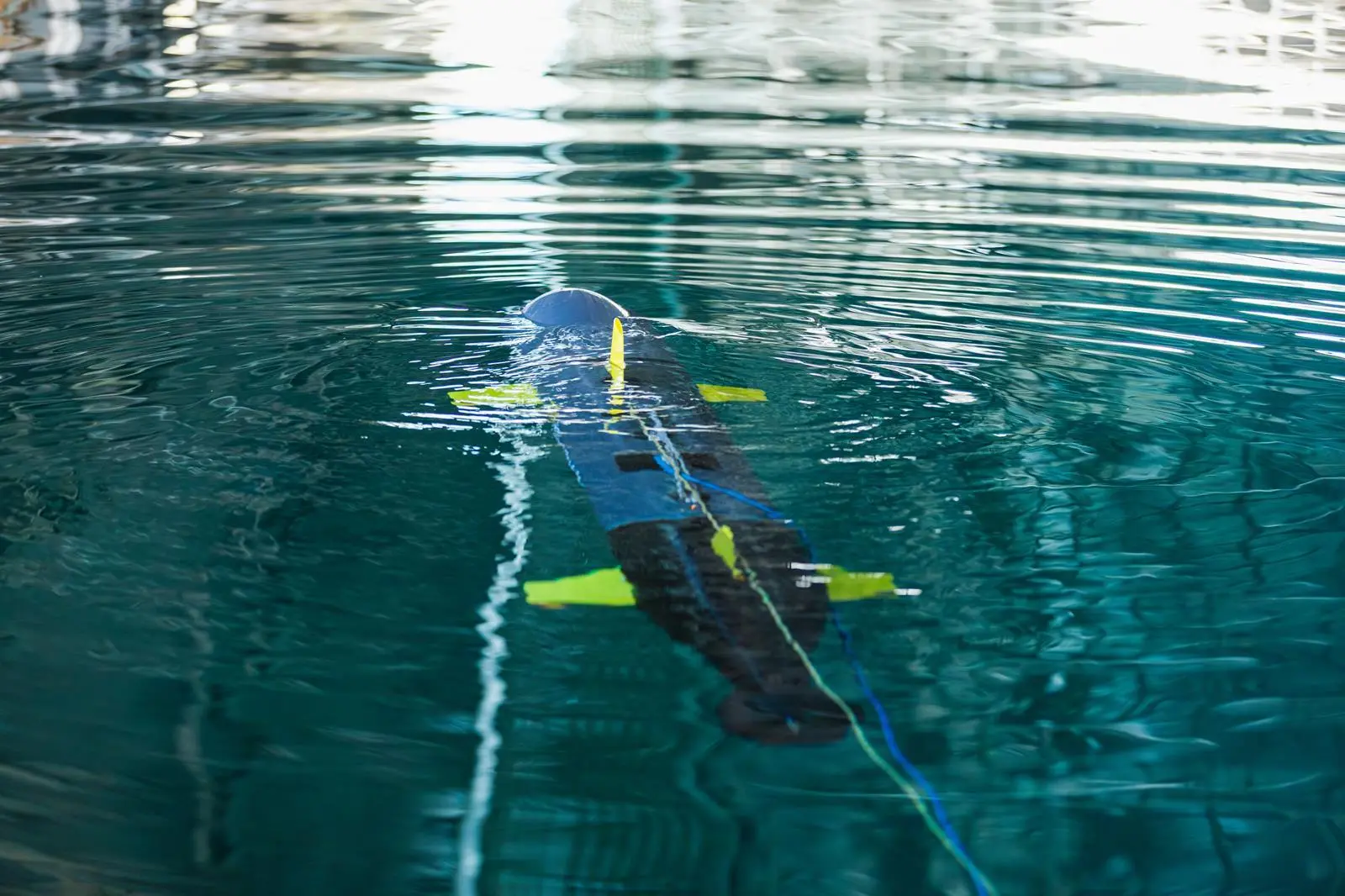
One of its most distinctive features is its nose-up attitude at the surface.
“We did Phantom One a few years ago, and we decided that worked so well, we would use it on Phantom Two with an added dimension. Phantom Two has got instrumentation in the nose – so that it tends to poke up a little bit more, improving the chances of antennas clearing the waves.
“If anything happens, you just stop everything and it’ll float. It literally just floats to the surface. Once it gets there, it can gently push itself so as to maximise the emergence of that little nose.”
From there, redundancy takes over: multiple radio frequencies, and even a flashing optical beacon.
“After an exhausting day, we’ve even got an optical beacon, a flashing light, and that can be seen from some distance away,” he says.
There’s quite an emotional side to this, as well.
“The first time you put this thing in the water, it disappears, and you’re left with an empty sea and the hope that you’re going to get it back,” Robinson says. “It can be quite worrying the first time.”
Have they lost any? “No,” he says.
Workload
Much of Phantom Two’s mission is survey work – scanning the seabed for oil and gas exploration, offshore wind, security and science. The data volumes are enormous.
A side-scan sonar mission produces a huge amount of data, and there is no way it could all be communicated back to base, Robinson says.
This is where onboard processing becomes transformative. GPUs (Graphics Processing Units) can flag anomalies without understanding them.
“It doesn’t need to work out what it is. Just say, ‘Look, there’s something interesting there,’” he says.
The vision is a single mission: scan, identify, revisit, and photograph – without human intervention between stages.
“So you really can send it off, scan the seabed, come back, and here are the pictures of the things,” Robinson says. “The grunt work has already been done by the GPU.”
This matters most where time is critical. “They’ve got a backlog of a year’s worth of data,” Robinson says of one operator. “By the time you analyse it all, it’s stale data.”
‘Unmanned’ reality
Autonomy, Robinson says, is not about eliminating people; it is about letting people focus on decisions that matter.
And sometimes, curiously, automation can need more people – he mentions a defence exercise that involved hundreds of unmanned vehicles, something like 15 people to each one, he says, ‘which I thought was rather paradoxical’.
Unmanned does not mean unstaffed – but it does mean safer.
“There are so many ways in which you can get hurt underwater, the pressure is huge, and staying down there for hours and carrying all the life support etcetera for man divers is expensive, so it is much cheaper than doing the same thing with manned vehicles, and of course much safer.”
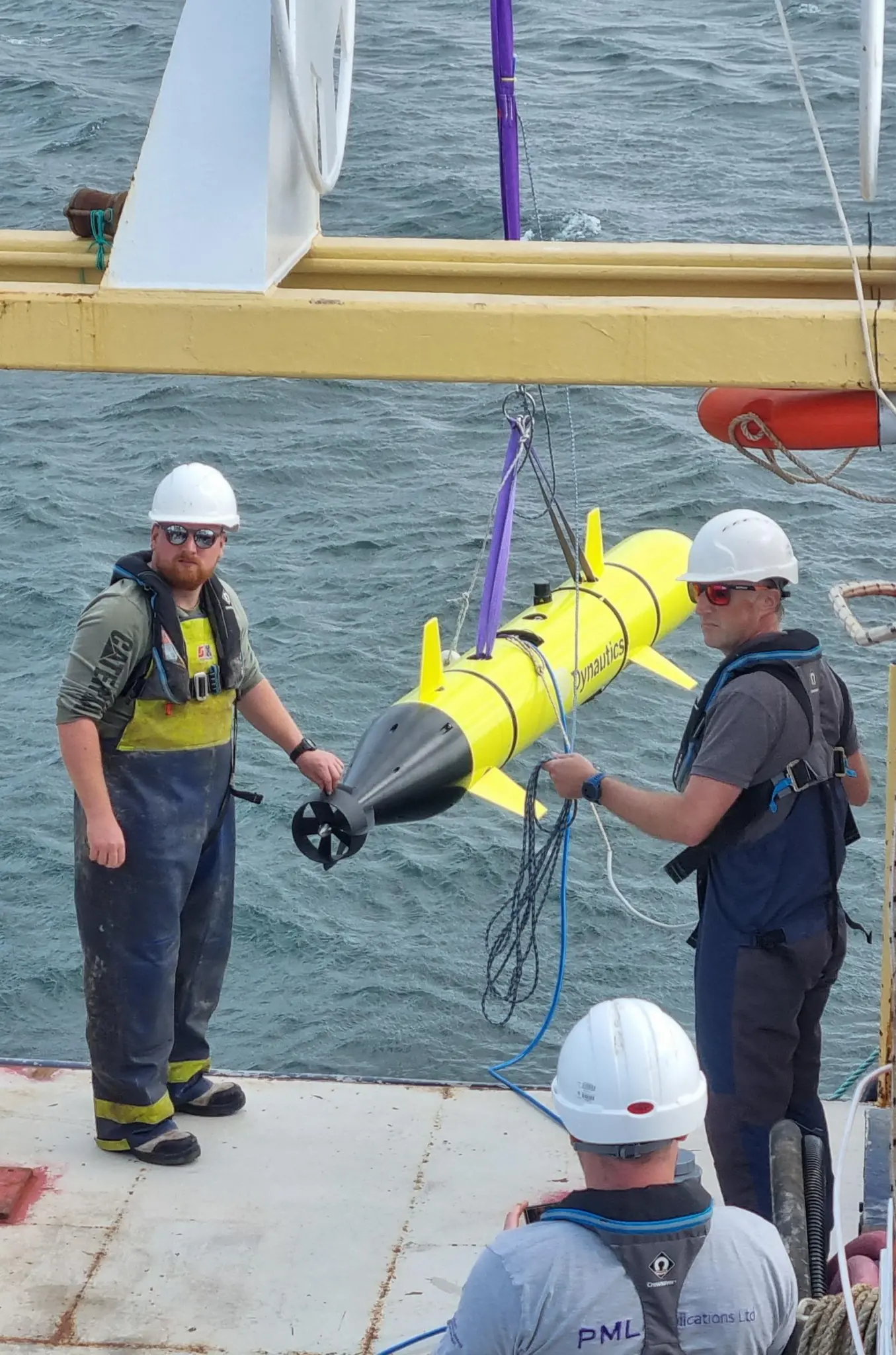
Phantom Two is typically launched from a crewed vessel, but that is not a technical limitation. “There are plenty of unmanned vessels launching unmanned submarines. That technology is all doable, really,” Robinson says.
The hard part is the sea itself.
“What looks very benign on a lovely summer’s day can turn into something very violent,” he says. “Launch and recovery is the difficulty–but as soon as you go below the waves, things calm down.”
How Phantom Two has changed things
Dynautics usually supplies systems, but with Phantom Two it is a complete vehicle, designed and built in-house.
“Phantom Two is particularly important because it’s been demonstrated and it’s working, and there are several being built,” Robinson says. It can also be scaled up and is deliberately versatile.
Phantom Two is not the end goal – it is a demonstration of what autonomy can look like when it is designed for the ocean, not borrowed from the road, he says.
“We are taking further steps towards autonomy, so you can send the USV out routinely, it leaves the dock unmanned, goes miles out, does the job and comes back – that opens the door to all of that.”