![MaritimeJournal[Seawork]](https://www.maritimejournal.com/wp-content/uploads/2026/09/MaritimeJournalSeawork.svg)






When AI adds noise, safety runs aground
 Part of our special report
Autonomy at Sea · January 2026
All 10 features
Part of our special report
Autonomy at Sea · January 2026
All 10 features
AI is arriving on ship bridges faster than bridge routines are changing. Nowhere is the gap highlighted more than in ports and harbours, where pilotage, tug assistance, crossing traffic and restricted waters mean decisions need to be made with increasing speed.
In that environment the bridge team does not need more information – it needs help deciding what matters now.
Too much AI is failing that basic test in maritime. Many systems are sold as ‘decision support’ yet behave like information amplifiers.
They add alerts, risk scores and predicted tracks on top of radar, AIS, ECDIS and VHF, while the bridge team is already coordinating with pilots and tugs in a high-tempo setting.
This often leads to more noise and a higher cognitive load in the very waters where attention is most scarce.
Confined waters are not a demo environment
Picture the approach. The pilot is on board, visibility is down, a tug is coming up on the shoulder, the ferry is keeping to schedule, and small craft are skating along the channel edge.
Radar is cluttered, AIS is patchy, and VHF is constant. In that moment, any tool that asks for extra analysis is not providing support.
If an AI system throws up five medium-risk flags without ranking, context or a clear recommendation, it has not improved safety. It has simply created another task at the worst possible time.
This is not an anti-AI argument. Machine learning can genuinely help in ports by taking on the high-frequency monitoring that humans struggle to sustain over a watch. Machines can track many targets at once, fuse sensor inputs, detect subtle changes in motion and maintain vigilance without fatigue.
But people remain better at judgement, coordination and communication, particularly when intent is unclear or behaviour turns unpredictable. The aim should be a clean division of labour that sees AI monitor and filter, while humans decide and coordinate.
A standard the industry can actually use
The problem is that many AI deployments expose complexity to the operator instead of absorbing it. They present problems and expect bridge teams to translate statistics into action while they are already managing speed, helm, communications and a tight traffic picture. In confined waters, the question is rarely about what might happen; usually it is ‘what matters now, and what should I do next?’
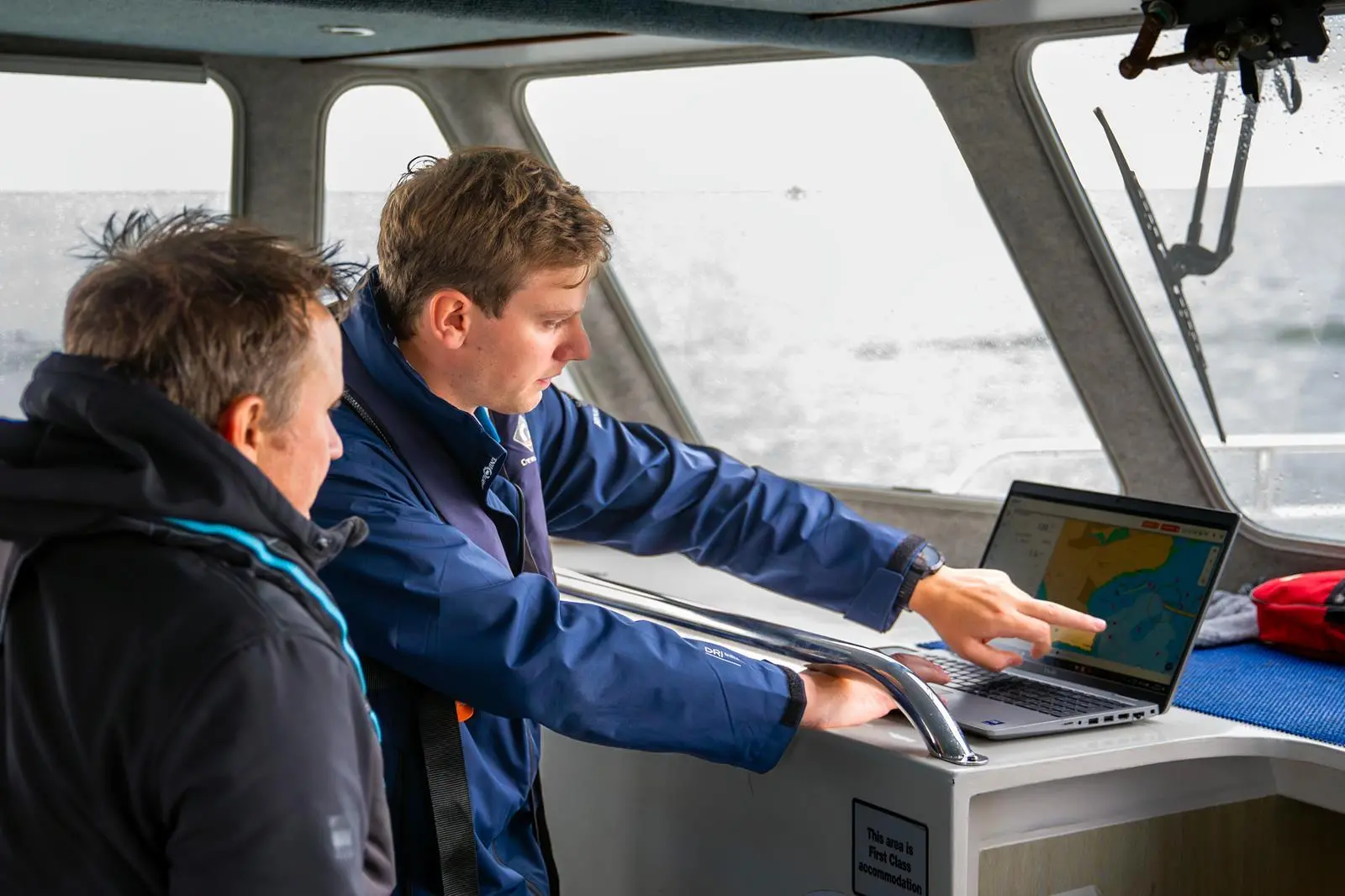
A minimum standard for maritime AI in ports should be how well it reduces cognitive burden at the point of decision. If we want AI to earn trust in pilotage waters, three expectations should be non-negotiable.
First, disciplined prioritisation. The system should compress dozens of signals into a small number of ranked concerns that match how navigators work in port.
Second, confidence you can read. When the system is uncertain, it should say so in operational terms and adjust its guidance accordingly. Bridge teams can work with uncertainty, but they cannot work with false precision.
Third, robustness when conditions degrade. Ports are messy data environments. AIS can be incomplete, targets can drop in and out, sensors can be compromised by clutter and weather, and behaviour can be inconsistent. An AI that only performs in clean conditions will be ignored. A system that stays useful, and is explicit about what it cannot see, will be used.
These are not design preferences, they are important safety requirements. Confined waters leave little margin for tools that distract, over-alarm, or add mental work just to interpret what they are claiming.
Maritime technology becomes indispensable when it helps people see clearly and act decisively. Radar, ECDIS and AIS earned their place by improving a single shared traffic picture, not by duplicating it across multiple competing alerts, overlays and interpretations. Maritime AI should meet the same standard, especially in ports and harbours, where cognitive load is at its highest. If AI is to improve safety in confined waters, it must bring clarity at the moment decisions are made.
The winning system will not be the one that detects the most. It will be the one that helps the bridge team decide and act with confidence when it matters.
MarineAI’s white paper, Cognitive Load: the navigator’s lifeline in the age of AI at sea, explores how maritime AI can reduce workload rather than add to it in confined waters.
Read more here.