![MaritimeJournal[Seawork]](https://www.maritimejournal.com/wp-content/uploads/2026/09/MaritimeJournalSeawork.svg)


MARIN seeking increased research funding
The leading Dutch marine research centre MARIN (Maritime Research Institute ) is seeking more funding for what it claims is its vital research work. The Institute says that unless the government reverses a steady drop in research funding, the country will lose its status as a leader in maritime know-how and innovation.
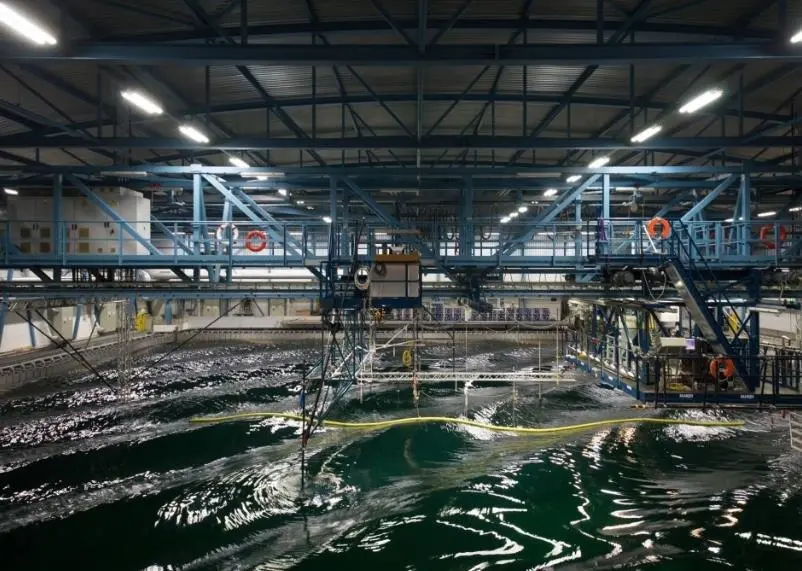
Founded in 1929, MARIN is a global leader in maritime research. It offers a broad suite of tanks to test powering performance, seakeeping and maneuvering, shallow water effects, cavitation, vibration, noise etc. The research centre has been responsible for a number of innovative developments in the marine world many of which have been used to test and enhance the performance of workboats.
“MARIN’s future and that of the Dutch maritime sector is at stake”, claims MARIN Director Bas Buchner. “The situation is urgent,” he says. His appeal reflects the findings of an independent study that called MARIN’s work ‘world class,’ but expressed concern about financing assistance for the research organisation.
The government commissioned study said public research funding for the work of MARIN had dropped to below 15 to 20 % of MARIN’s annual turnover. In 2017, MARIN will get €3.3 million in public aid which is less than 7% of its turnover. Back in 2003, that public aid stood at 18% of the research institute’s turnover.
MARIN says it needs between €7 and €9 million a year in public assistance to maintain its level of research and development. The report said in the past decade diminishing research funding has eroded the opportunities to perform innovative research and reduced the opportunity to replace or revamp large-scale research infrastructures. Currently MARIN has seven tanks for testing and evaluating hull designs and equipment with dedicated tanks for some specialties such as shallow water operations and offshore equipment as well as ship maneuvering. The facility also has a cavitation tunnel and there is a need to upgrade some of these facilities to meet modern requirements.
Next year MARIN plans to open a Seven Oceans Simulator which is packed with monitoring and image-analysis technology. Recently MARIN launched a Better Ships, Blue Oceans! strategy that focuses research on clean and safe maritime transport and durable energy generation at sea.
Buchner said “MARIN wants to craft floating solutions for cities and ports facing rising sea levels and overpopulation but we risk running aground as public research aid has dropped to 7% of turnover. MARIN’s ambitious research plans need budgets now. He said, “It was curious the Dutch government was actively supporting research in self-driving cars but not in unmanned vessels.” He commented that Norway was investing hundreds of millions in maritime research.
By Dag Pike