

German-UK subsea power link enters next phase
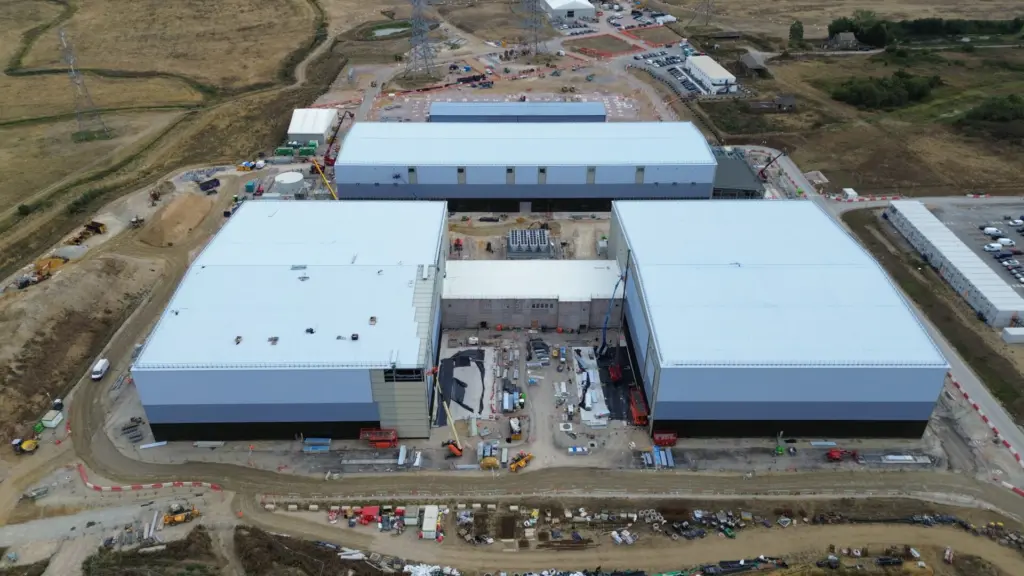
The €2.8 billion NeuConnect interconnector between Great Britain and Germany has entered a new phase of construction, with mechanical and electrical fit-out now under way at converter stations on the Isle of Grain in Kent and near Wilhelmshaven in northern Germany.
The privately financed project is designed to create the first direct electricity connection between the two countries. It will comprise about 725km of land and subsea high-voltage direct-current (HVDC) cabling, crossing UK, Dutch and German waters, with a capacity of 1.4GW. NeuConnect is aiming to switch on commercial operations in 2028.
For the civil engineering programme, the latest milestone marks a shift from major structural construction towards fitting out the converter stations. The buildings have reached their full height – about 24m high and 70m wide – and work is now progressing on cable trays, ladders, HVAC systems, drainage, cladding and internal control-room infrastructure. At the UK site, more than 2,000 tonnes of structural steel have been installed, comprising more than 8,000 sections.
The UK works have involved substantial ground and foundation engineering. More than 5,700 cubic metres of concrete was used for the 17,350 sq m converter-station slab, following piling works. At the German site, Siemens Energy has completed the installation of about 1,800 piles.
Cable route
The cable route presents a separate marine construction challenge. Prysmian is installing the HVDC cables beneath the North Sea, with more than 350km of the overall cabling programme laid by July 2026. All subsea cable installation in UK waters has been completed, with work progressing through Dutch waters towards Germany.
At the landfalls, horizontal directional drilling (HDD) has been used to take the cables beneath sensitive coastal areas. On the Isle of Grain, more than 1.2km of underground ducts were installed during the initial HDD works. Germany has required a further 12km of onshore cable, with HDD used for sections of the route from the North Sea coast towards the converter station.
NeuConnect’s purpose is to allow electricity to move in either direction between the British and German grids. The project is intended to make greater use of renewable generation in both countries by allowing power to be transferred when supply and demand differ. The project says the connection could contribute to a net reduction of more than 13 million tonnes of CO₂ over 25 years.
NeuConnect is part of a wider European build-out of long-distance electricity links.
Viking Link, between Britain and Denmark, uses a similar combination of converter stations and buried/subsea HVDC cable, running about 765km with a 1.4GW capacity. North Sea Link, between Britain and Norway, is another comparable project, stretching about 720km beneath the North Sea and also capable of transferring 1.4GW.
“NeuConnect’s construction is moving into an important new phase as we start to install the key systems and equipment that will help to power this vital new UK-German energy link,” said NeuConnect CEO Arnaud Grévoz.