![MaritimeJournal[Seawork]](https://www.maritimejournal.com/wp-content/uploads/2026/09/MaritimeJournalSeawork.svg)




Machine learning predicts piles
A team from a Dutch subsea engineering specialist has won a global competition in geotechnical machine-learning around the driving of subsea piles.
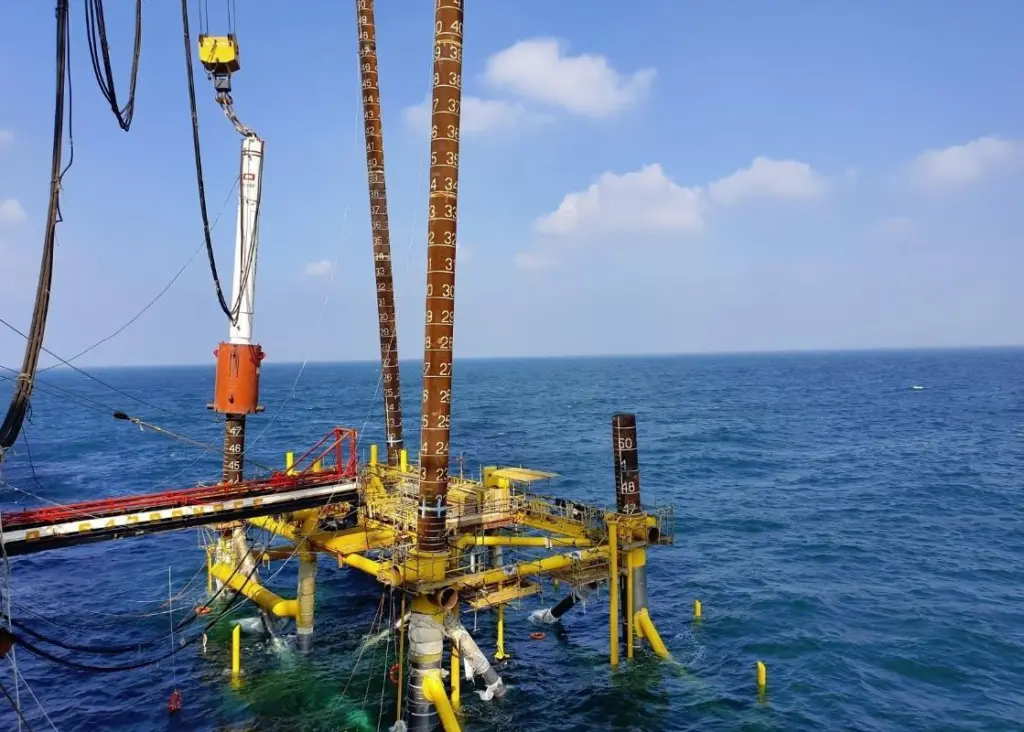
Competing with 60 other teams from industry and academia around the world, the Fugro team came first in the pile-driving prediction event organised as part of the International Symposium on Frontiers in Offshore Geotechnics (ISFOG) 2020 conference. The competition ran from April to December 2019, and ended on 1 January 2020, when it was announced that Fugro had won.
Using the supplied dataset of cone penetration test results, hammer energy and pile dimensions, competing teams had to predict the most accurate pile installation driving blowcount versus depth for jacket piles installed in the North Sea; in essence, the number of hammer blows required to drive the pile a given unit of depth. The Fugro team combined machine-learning techniques with their geotechnical expertise to develop a stable and reliable pile-driving model that proved the clear winner.
The competition was hosted on Kaggle, a subsidiary of Google that is an online community of data scientists and machine-learning practitioners.
By Jake Frith