![MaritimeJournal[Seawork]](https://www.maritimejournal.com/wp-content/uploads/2026/09/MaritimeJournalSeawork.svg)

NDT challenge
In a corrosion monitoring project that could also provide findings of use to the renewables and marine civils industries, a consortium of Oil & Gas industry organisations has set out to tackle one of the most enduring challenges in the North Sea: the non-destructive testing (NDT) of corroded pipes under insulation and engineered temporary pipe wraps.
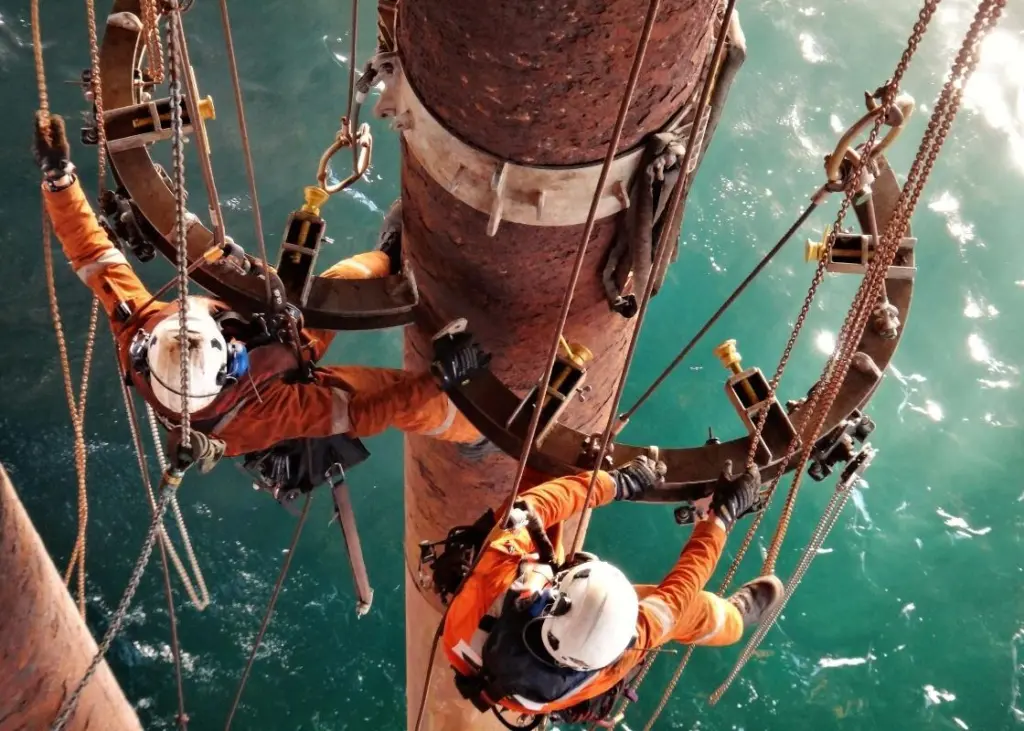
The group – which includes TRAC Oil & Gas; the University of Strathclyde; and CENSIS, the Scottish Innovation Centre for Sensor and Imaging Systems – will methodically audit the tools, capabilities, and approaches currently used by industry to look at the steel surfaces of assets; often obstructed by layers of material.
According to the consortium, while there are a number of NDT technologies on the market, many are ineffective when used on pipes that are protected by insulation. They tend to average out wall thickness where corrosion “scabs” have formed, failing to pinpoint specific areas of vulnerability.
Taking and interpreting these readings is further complicated by the varying dimensions, materials, locations, and accessibility of different assets. While insulation can be removed, it requires significantly more time in challenging conditions, making the task more dangerous to the technician undertaking the inspection, and ultimately more expensive.
After assessing the limits of what is available, the consortium will then explore how improvements can be made, including the development of new techniques for accurately identifying and measuring areas of corrosion. The first phase of the project is a feasibility study, the results of which will be shared with wider industry and its stakeholders, including the Health and Safety Executive.
CENSIS brokered the relationship between TRAC and the University of Strathclyde, and will provide project management support as the initiative progresses.
Rachael Wakefield, Business Development Manager at CENSIS, commented: “Being able to accurately analyse corrosion under insulation is the holy grail of NDT. We’ve already learned a great deal from working with TRAC about the technical and economic challenges facing the industry.”
By Jake Frith