![MaritimeJournal[Seawork]](https://www.maritimejournal.com/wp-content/uploads/2026/09/MaritimeJournalSeawork.svg)





£111 million port expansion granted dredge licences
A major expansion at one of Scotland’s ports has passed a milestone with the granting of marine and dredging licences.
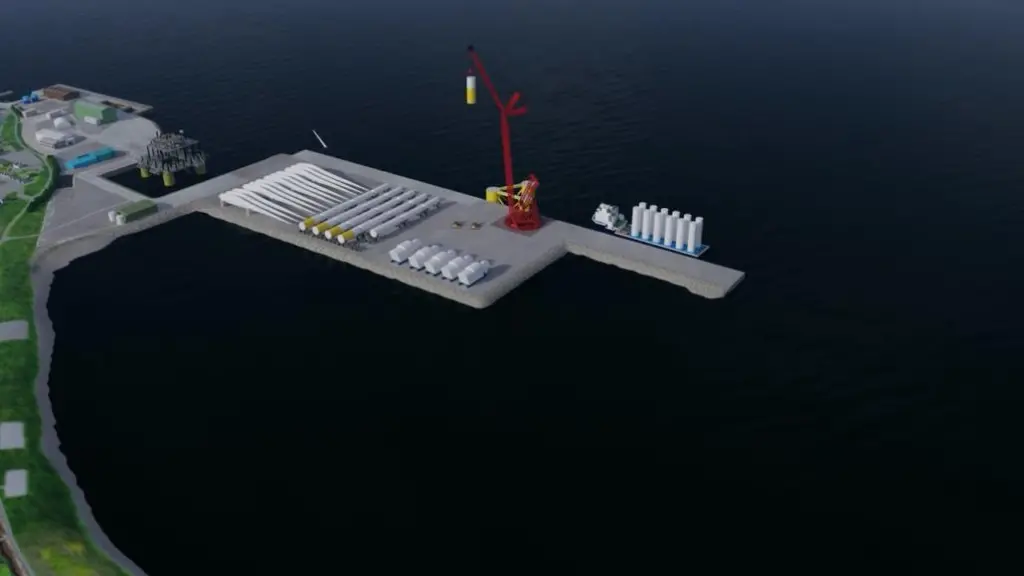
The Port of Cromarty Firth, which is almost at the top of Scotland’s land mass, has said it intends to become the UK’s first custom-built floating wind turbine integration and assembly facility.
Just six months after applications were submitted for marine and dredging licences they have been granted by Scottish ministers.
“Achieving this consent so quickly is exceptional for a project of this scale,” said the port’s CEO, Alex Campbell. “It reflects the strength of our environmental assessments, the quality of our engagement and the clear national importance of the infrastructure being delivered. It enables Port of Cromarty Firth to progress our strategy to develop a world-class, custom-designed and globally cost-competitive offshore renewables hub.”
The port will need major upgrades to serve as a floating wind hub, including building new heavy-lift quays and strengthening existing berths, carrying out extensive dredging to deepen channels and creating large reinforced laydown areas for assembly.
Land reclamation, heavy-lift crane foundations and load-out or float-off facilities will be essential, as will fabrication halls, upgraded port utilities, road access improvements and installation of navigational aids. Electric infrastructure for grid export and cable handling will also be added.
Environmental mitigation, scour protection and marine safety systems will support operations, enabling the port to handle large floating wind platforms and installation vessels.
Floating wind baby steps
Floating offshore wind generation in the UK is at a small scale so far, with just two farms operating currently.
These are both in Scotland, according to government papers – Hywind Scotland, off the coast of Peterhead, has five 6MW turbines commissioned in 2017; and the Kincardine wind farm has five 9.5MW turbines off the coast of Aberdeen, commissioned in 2021.
Scotland’s geographical features make it very suitable for floating wind because it has deep waters close to shore. where fixed-bottom turbines would be impractical. Through the Scotwind Leasing process, 14 projects with a generation capacity of almost 18GW were made available in 2022.
According to Renewable Energy Scotland, which calls Scotland ‘the Saudi Arabia of renewables’, Scotland enjoys extremely windy conditions, and with its experience in offshore oil and gas, has a strong base of expertise working in harsh environments.
In December 2020 the Crown Estate, which owns rights to the seabed around the coast, also identified areas for floating offshore wind in the Celtic Sea off the coast of southwest England and Wales.
Related Articles
 INDUSTRY NEWS
 MARINE CIVILS
 MARINE CIVILS