![MaritimeJournal[Seawork]](https://www.maritimejournal.com/wp-content/uploads/2026/09/MaritimeJournalSeawork.svg)






Belfast Harbour Masterplan looks to new horizons
Belfast Harbour has announced a £1.3 billion (€1.5 billion) spending programme that will reshape the city’s port infrastructure over the next 25 years, with major engineering projects aimed at expanding freight capacity, modernising quays and preparing the harbour for a new era of maritime trade and clean energy.
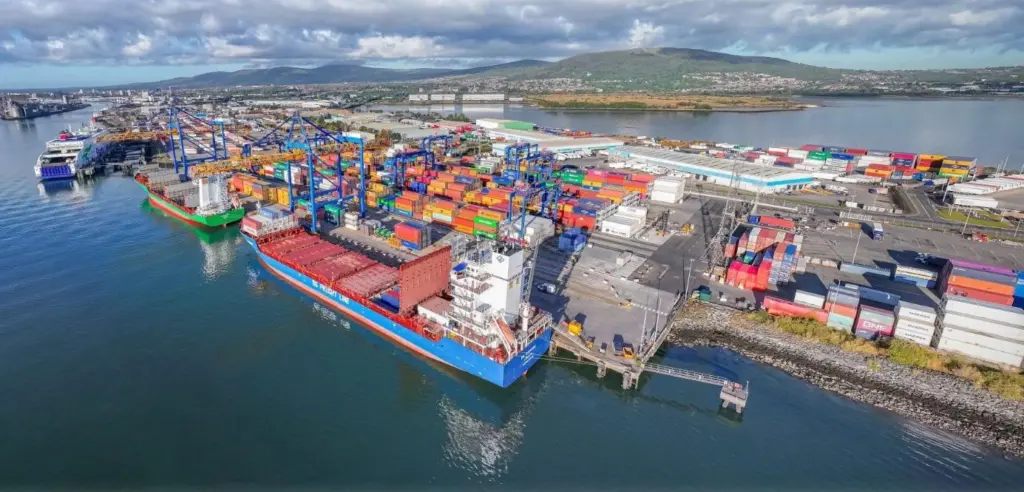
The plans are set out in Belfast Harbour’s Horizons of Opportunity Masterplan for 2025–2050, a ‘bold framework’ for the future of the harbour’s 2,000 acres of land and 1,000 acres of water.
Belfast Harbour says more than two thirds of its initial investment programme will be directed towards port-related works.
The programme is structured across three phases, beginning with immediate upgrades designed to strengthen operational capacity and future proof Belfast Harbour’s role as Northern Ireland’s main maritime gateway.
‘Horizon 1’, the first phase, is under way and will last until 2029. It will see the build of a £90 million (€104 million) D3 dual-purpose deepwater quay, a major marine engineering project that will serve both cruise ships and the offshore wind sector.
The first phase of development will also focus on increasing capacity on land and sea through upgraded freight areas, expanded port infrastructure and the allocation of additional land for clean energy uses. A proposed Maritime Skills Academy is also planned to support the specialised workforce required for future harbour operations and engineering activity.
Horizons 2 and 3
Longer-term proposals involve substantial civil engineering interventions.
Between 2030 and 2040, Belfast Harbour plans to redevelop Stormont Wharf to accommodate new cargo trades and larger vessels, enhancing infrastructure and maximising existing capacity.
Victoria Terminal 3, one of the port’s principal container facilities, would be extended and deepened to receive a new generation of larger ‘Irish Max’ container ships, significantly increasing freight-handling capacity. The harbour also plans to introduce shore power infrastructure at key berths.
Belfast Harbour and Marina will also be expanded to boost leisure and tourism.
Perhaps the most significant physical transformation is proposed for the final phase of the masterplan, Horizon 3, which will entail the first land reclamation project in 25 years to support a new freight terminal on West Bank Road.
The proposal would create new berths, storage facilities and transport links by extending operational land into Belfast Lough, effectively moving port activity further seaward to accommodate projected growth in container and trailer freight.
Plans also include a Clean Energy Hub capable of supporting alternative fuels such as hydrogen, ammonia and methanol.
“Belfast Harbour is a working port first and foremost,” said Belfast Harbour chief executive Joe O’Neill. “Much of what people and businesses across Northern Ireland depend on passes through here every day, from food and fuel to construction materials and consumer goods. Ensuring that trade continues to flow efficiently is our core purpose.
“As capacity tightens at key ports on the Irish east coast, we are putting the scale of our estate to work providing the planned capacity the island needs, supporting customers today and preparing Belfast Harbour to be the principal maritime gateway on the Dublin–Belfast Economic Corridor.”
Long maritime history
The maritime history of Belfast is inseparable from the growth of its harbour, shipbuilding industry and trading links, which transformed what was once a modest settlement on the River Lagan into one of the world’s great industrial ports.
By the 19th century, Belfast had emerged as a major centre for linen manufacturing and transatlantic trade, with its expanding harbour handling raw materials, manufactured goods and emigrant traffic bound for North America.
No company shaped Belfast’s maritime identity more profoundly than Harland and Wolff, of course, the builders of the doomed RMS Titanic.
Founded in 1861 by Edward James Harland and Gustav Wilhelm Wolff, the shipyard became synonymous with industrial ambition and engineering excellence, at its peak employing tens of thousands of workers and producing some of the largest and most technologically advanced vessels of the age.
Harland & Wolff also built cargo ships, naval vessels, tankers and offshore engineering structures that served Britain’s commercial and military interests across the globe.
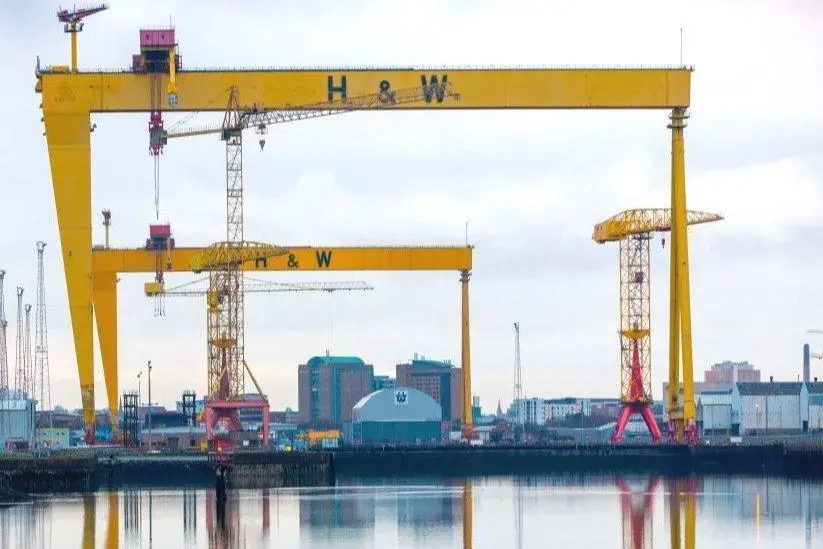
The skyline of Belfast still bears the imprint of this industrial heritage with the iconic yellow cranes Samson and Goliath.
Although shipbuilding declined sharply during the late 20th century, Belfast Harbour remained a vital economic engine, adapting towards logistics, freight, cruise tourism and offshore renewables.
Today, Harland & Wolff has entered a new chapter under the ownership of Navantia, the Spanish naval shipbuilder and defence group.
The transition reflects a broader revival of Belfast’s maritime expertise, with renewed emphasis on ship repair, defence contracts and offshore wind infrastructure.
Related Articles
 INDUSTRY NEWS
 MARINE CIVILS
 MARINE CIVILS