![MaritimeJournal[Seawork]](https://www.maritimejournal.com/wp-content/uploads/2026/09/MaritimeJournalSeawork.svg)




Dyke breach marks key Scheldt tunnel milestone
Another key milestone has been reached in the construction of the new Scheldt tunnel in Antwerp with the deliberate breach of the river’s dyke.
A consortium of Belgian and Dutch companies is working on the €570 million project which will help alleviate traffic congestion in and around the city.
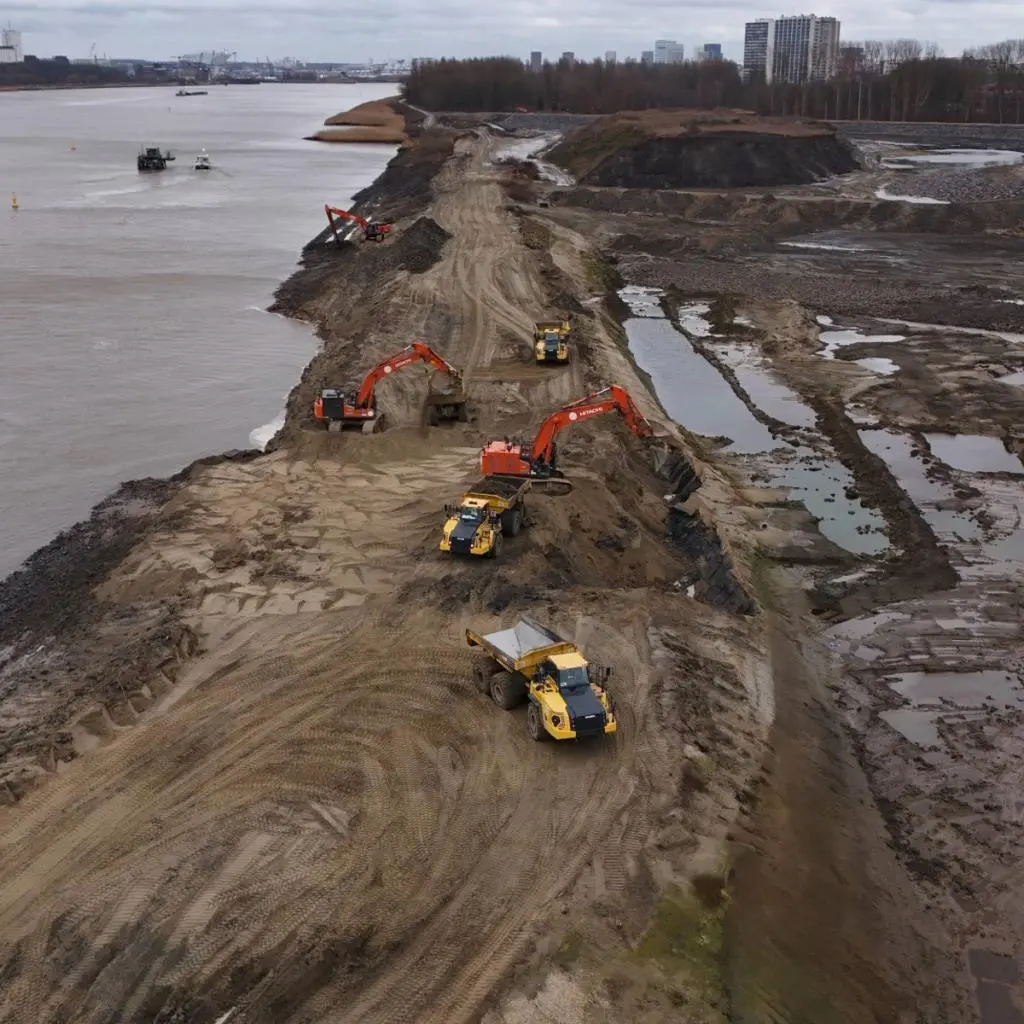
In October 2024, Jan De Nul, working as part of the TM COTU consortium, dug away 400 metres of the old dyke to make way for the first tunnel element coming from Zeebrugge.
In early December, Jan De Nul deliberately breached the dyke in a controlled manner to prevent an inadvertent, natural breach causing significant harm to the structure. This milestone means that the tunnel construction is now officially situated in the river for the first time.
“We are once again taking a crucial step in realising the Scheldt Tunnel and the Oosterweel project, the site of the century,” said Annick De Ridder, Minister of Mobility and Public Works:
“The Scheldt Tunnel is a key link in completing the Antwerp Ring. By relocating the dyke, we are creating significant space for ecologically valuable nature.”
In the coming months, Jan De Nul will continue working to receive the first tunnel segment from Zeebrugge, which is due this summer.
Dredging vessels are currently preparing the trench where Jan De Nul will place the eight massive tunnel sections. In February, anchor piles will be installed in the river to ensure the tunnel sections can be lowered into the Scheldt in a controlled manner.
According to the schedule, all eight tunnel sections will be in place beneath the Scheldt by the end of 2025. The tunnel will open for cyclists in 2028, with motorised traffic following in 2030.
Related Articles
 INDUSTRY NEWS
 MARINE CIVILS
 MARINE CIVILS