![MaritimeJournal[Seawork]](https://www.maritimejournal.com/wp-content/uploads/2026/09/MaritimeJournalSeawork.svg)

EU-backed offshore charging pilot targets emissions from anchored vessels
An international consortium led by Stillstrom has secured €5 million in funding from the European Union’s Horizon Europe programme to develop offshore charging infrastructure for vessels anchored off the coast of Denmark.
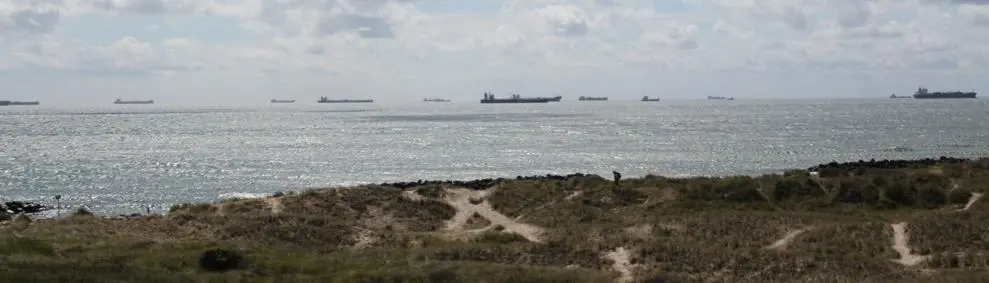
The three-year project, known as SPARK, will test an offshore power system in Skagen, one of Northern Europe’s busiest anchorage areas, where ships often remain stationary with auxiliary engines running while awaiting orders, cargo or berth availability.
The pilot will focus on reducing emissions from idling vessels by enabling ships to connect to electricity while at anchor rather than relying on onboard engines for power generation.
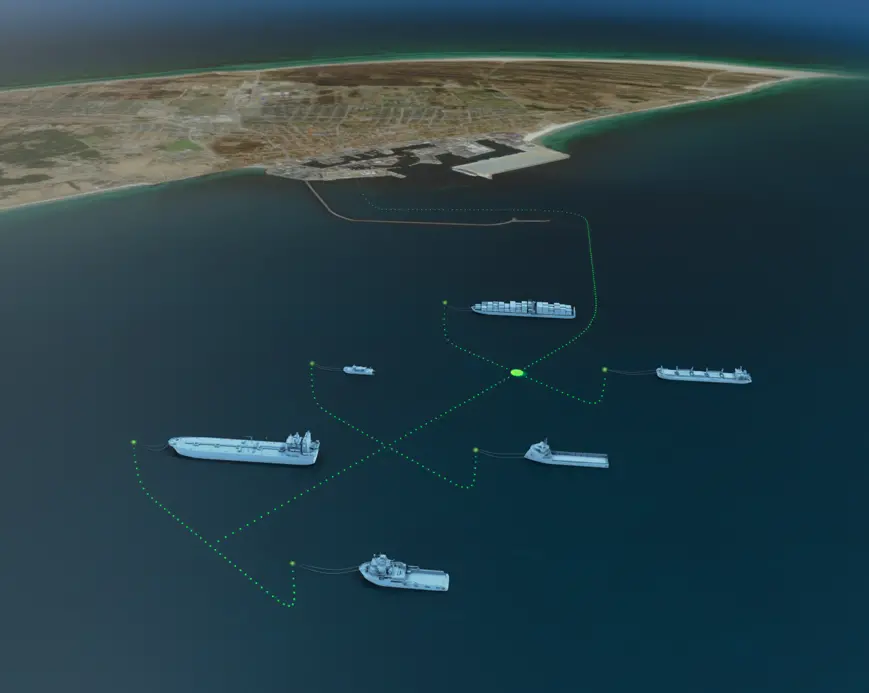
The project’s marine civil engineering requirements are expected to centre on establishing a new type of offshore utility infrastructure. Unlike conventional shore power systems, which rely on quayside electrical connections, the Offshore Power Zone concept will require power delivery beyond the port boundary to ships anchored offshore.
Electricity will be transmitted from the nearby Port of Skagen to an offshore charging point, where vessels will be able to plug in while stationary at sea. The first phase will support a single vessel connection to validate the concept in operational conditions.
Subsea engineering
Developing such infrastructure is likely to involve a lot of seabed engineering, offshore cable installation, mooring systems and grid integration capable of handling variable vessel demand and harsh marine conditions. The pilot is also expected to assess how offshore charging assets could be replicated at major anchorage zones globally.
The consortium includes researchers, vessel operators and port authorities from five countries, including Aalborg University, DNV, Maersk, MARIN, the Port of Malta, the Port of Skagen and University College London.
“Near-shore idling vessels represent a significant and often overlooked source of GHG emissions, making them a clear and immediate opportunity for decarbonisation,” said Stillstrom CEO Kristian Borum Jørgensen. “We are grateful for the opportunity to collaborate through this €5 million Horizon Europe programme, which reflects strong confidence in the potential of our technical and operational capabilities. Project SPARK brings together partners from across the maritime ecosystem, enabling us to collectively accelerate offshore power from concept to real-world deployment, delivering a practical and economical solution for the maritime sector.”

Background work on commercial viability and regulation will run alongside technical development. The project is due to begin in June and continue for 36 months.
Shore power systems are already used at ports to reduce emissions from berthed vessels, particularly ferries and cruise ships. However, extending electricity supply to vessels anchored offshore presents a more complex engineering challenge, requiring floating or fixed connection systems that can safely transfer power in exposed marine environments while accommodating vessel movement and weather conditions.
Related Articles
 INDUSTRY NEWS
 MARINE CIVILS
 MARINE CIVILS