![MaritimeJournal[Seawork]](https://www.maritimejournal.com/wp-content/uploads/2026/09/MaritimeJournalSeawork.svg)





FEATURE: Inside Bilbao’s electric port transition
The Port of Bilbao is undergoing a sweeping transformation, with major investments in electrification, e-fuels and digital systems reshaping one of Europe’s most strategically significant Atlantic gateways.
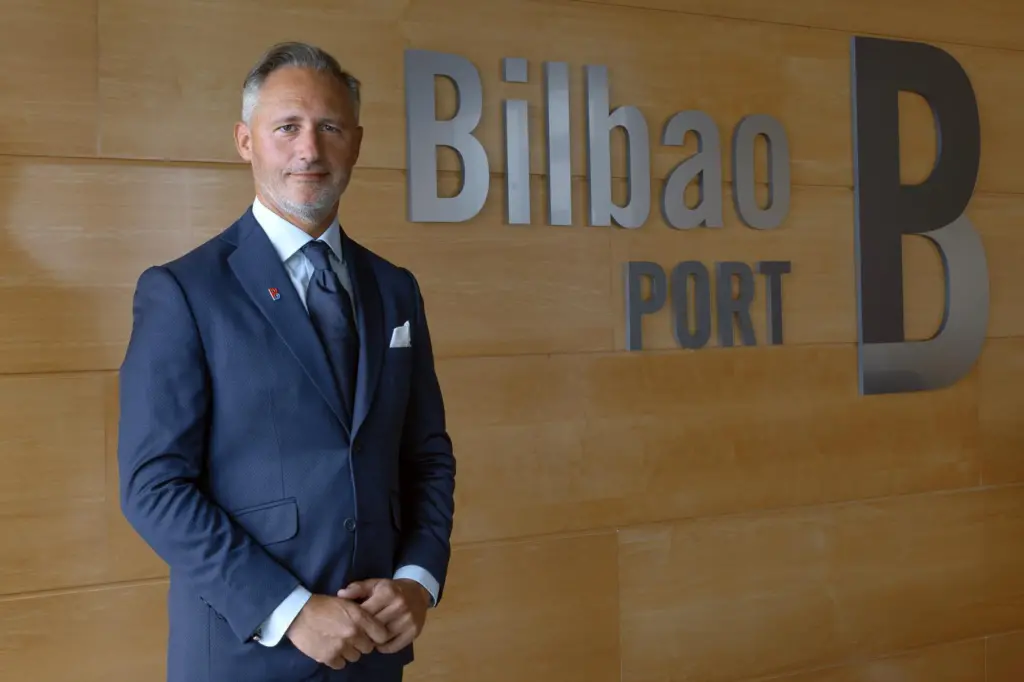
Ivan Jimenez, CEO of the port, talks to Maritime Journal about electrification, e-fuels and the digital transformation reshaping one of Europe’s most strategically vital Atlantic ports.
When Ivan Jimenez took the helm of the Port of Bilbao just six months ago, he inherited not just one of Spain’s four ‘first division’ ports, but an institution on the verge of a profound transformation.
A lawyer and economist by training, with an MBA, a master’s degree in business analytics and 14 years’ travelling the world to find engineering talent for the Basque Country, Jimenez is now steering a port that handles 30 to 34 million tonnes of cargo a year, comparable in scale to the UK’s Liverpool, through the most ambitious energy and digital overhaul in its history.
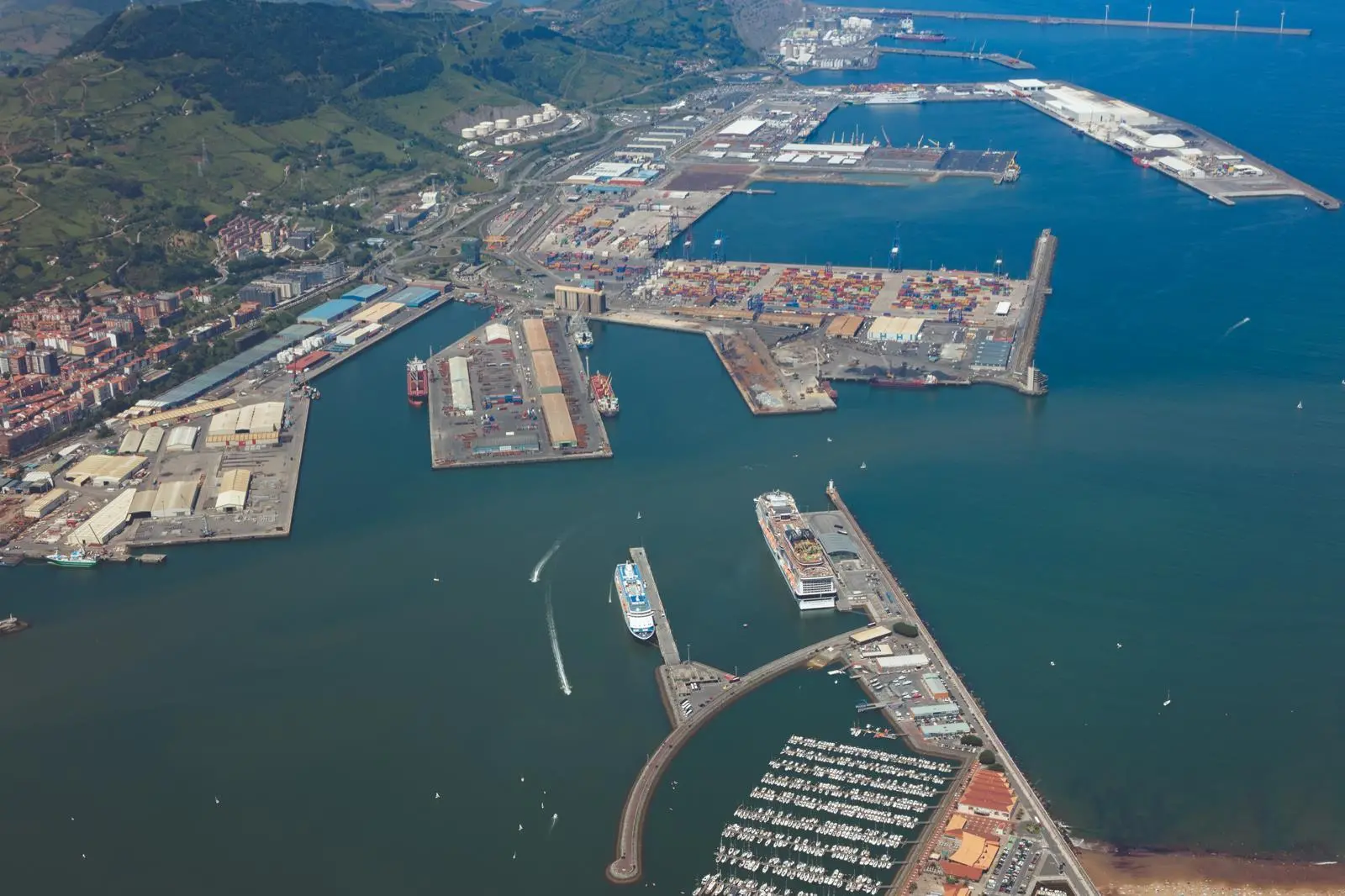
Bilbao is very industrial, closely tied to the steel, automotive and energy industries of the Basque Country, with liquid cargoes like oil and liquefied natural gas accounting for 60% of its traffic.
Its main export market is the United Kingdom, with around 20% of all goods shipped from Spain to the UK passing through Bilbao. In the Atlantic arc, stretching from Sines in Portugal to Le Havre in France, it is a dominant port.
“It’s one of the four ports that are called first division ports in Spain along with Barcelona, Valencia, and Algeciras,” Jimenez says. “These three are in the Mediterranean area, and this is the only one in the north.”
Plugging in: The race to electrify
At the heart of Bilbao’s transformation is a sweeping electrification drive.
The European Commission has mandated that all berths in ports on the trans-European transport network – the so-called TenneT backbone – must offer charging for ferry, container and cruise lines by 2030. Bilbao intends to beat that deadline by three years.
“We will be the first port in the Atlantic arc and also in Spain to have all the berths electrified by the end of 2027,” Jimenez says. “We will have 11 connecting points for vessels – 11 points in seven berths of the port. The first one is starting this April and that will be for ferry lines coming from and going to Northern Europe and also to and from the UK and Ireland.”
Shorepower, or onshore power supply (OPS), is only as clean as its source, and Jimenez says it will be ‘100% green’, and certified. Some 25% of it will be generated within the port itself, through a combination of wind and solar installations, and this is a huge task.
“Last year we had 30MW in the port, and the need by 2030 will be around 180MW,” he says. “We are going to produce 50MW of that. So yes, the needs of energy are huge.”
The Spanish grid has approved the additional supply, and a new substation – doubling existing capacity, with a further doubling already in planning – is currently under construction.
For vessels that lack the equipment to connect to shore power, the port will remain open but the economics will increasingly push them towards plugging in.
“For them it will be cheaper to be connected than to be spending fuel during their stay in the port of Bilbao,” he says, estimating that cruise ships, for example, could see a reduction of between 25% and 95% in port emissions. Already, 60% of the world’s cruise ships are prepared for cold-ironing, he says.
“If you are not ready for this new system, you will lose money in Europe,” he says. “It’s like when vessels changed from sails to coal. They started going to the port that had the coal. Our idea is that they will aim to go to the ports that are ready for this new system because they will save money.”
Bilbao is committing more than €100 million to its OPS infrastructure and renewable energy systems, with 70% coming from the port and 30% from the European Union, through different projects.
The Petronor e-fuels plant: A waterfront world first
Within the port’s boundaries sits a facility that is set to become one of the largest e-fuels production facilities in the world.
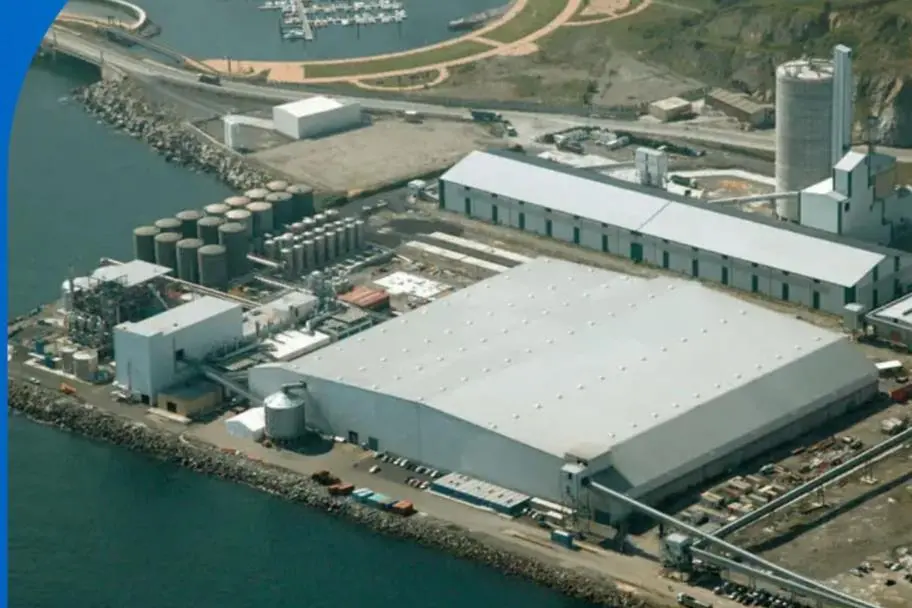
Petronor, jointly owned by Repsol and the Basque savings bank Kutxabank, is completing a €146 million synthetic fuels plant that is due to come into full operation in early 2027.
The plant will use captured CO2 and renewable hydrogen produced by a 10MW electrolyser to synthesise diesel, sustainable aviation fuel and naphtha. These e-fuels can be used in any existing vehicle, whether car, lorry, ship or aircraft with no engine modification required. Annual production capacity will reach 2,000 tonnes.
It was brought about by a logistical operation that involved nearly 200 people, witnessed by Jimenez, in which a 1,200-tonne mechanical structure, the frame on which the entire plant’s equipment was mounted, was towed into the port by sea.
“It’s spectacular,” he says.
And this first plant is just the beginning: second project, 10 times larger at 100MW, is already in development.
“The next one that they will start building in the following months will give green energy to the classical refinery, so they can start producing classical fuels, but also e-fuels, with less pollution,” he says. “That will be the first one in the world.”
The 100MW plant also underpins a broader hydrogen corridor ambition.
“The idea is to create a hydrogen corridor, once the 100MW facility is built,” Jimenez says. The port has already signed an agreement with the Port of Amsterdam, which envisions a maritime hydrogen supply route to support green steel production in Central Europe. Steel is only made today in any meaningful way by burning coal.
Green energy hub
For Jimenez, the broader significance is the emergence of Bilbao as an energy hub rather than merely a cargo port, with a nearby bio-LNG facility also in the mix.
“For us, the conception of energy hub is very important,” he says. “It’s not only that we are going to produce green energy, it’s not only that we will provide green energy to our vessels, but also that the e-fuels we are creating can be exported to other places.”
On the question of which alternative fuel will ultimately prevail, Jimenez admits there is still uncertainty.
Ammonia, despite interest from some quarters, is a non-starter for Bilbao’s dense port environment.
“It’s dangerous to have it in the port because of safety reasons – you need a distance of 500 metres away from it,” he says. “So it’s quite difficult to have it in the port.” LNG and methanol are more realistic options, with LNG currently leading new vessel orders, but the picture is changing: “There are many options and nobody knows whether green hydrogen will be the future or not,” he says.
Digital transformation: An €18 million overhaul
Alongside its energy transition, the Port of Bilbao unveiled in December 2025 a 2025–2030 Digital Transformation Plan: a €18.1 million programme to modernise its entire technological infrastructure.
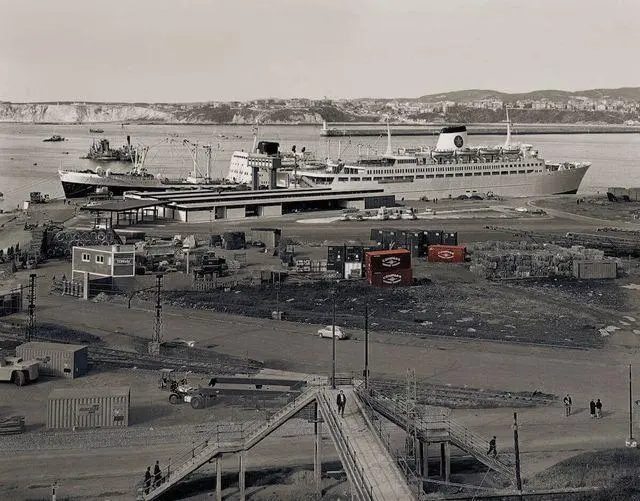
“We are working to make it very easy to arrive at the port of Bilbao and make everything when it comes to permissions and working with the tools as efficient as possible,” he says. “There are plenty of things to do, and that’s why we have already approved this digitalisation plan – to try to not only facilitate things for our workers, which is important also, but also for the vessels and the companies. Again, everything that you make easier for them is to win competitiveness.”
Automation is part of the conversation, but Europe is lagging behind the likes of China, he says, where he has seen fully automated container terminals in Shanghai.
“In Europe, there are no places where everything is automated. There is a big tradition, and they’ve got big power in the ports. So I think that transition will take quite long.” Semi-automatic cranes are already in operation at Bilbao, and the digitalisation plan will expand what can be streamlined short of full automation.
One innovative dimension of the plan is the creation of an energy consumption community within the port.
“We are going to create this community where we are going to provide energy to the different users of the port and shave a lot of money off the different tariffs that you need to pay when you get the energy from outside,” Jimenez says. “The idea is to save money: not only to give vessels cheaper energy, but also to the direct clients and the concessions of the port.”
For new concessions, green energy is already becoming a condition. “One of the requirements will be to have green energy within two years,” Jimenez says. “At the moment, if they connect their installations to green energy, they get a modification when it comes to the fees they have to pay to the port authority.”
Port and city: The sustainable Getxo/Bilbao master plan
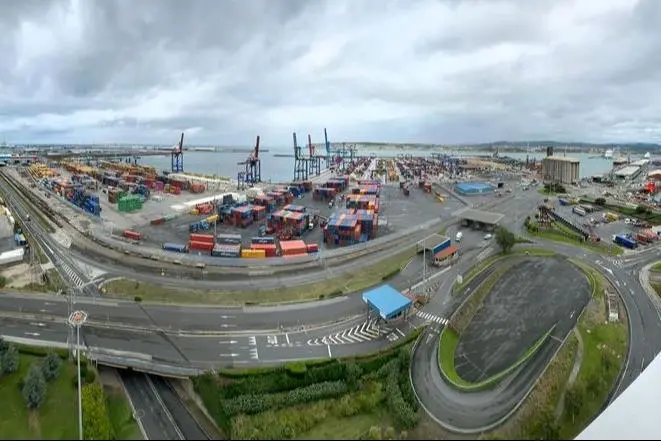
This month the port launched a €300,000 international tender for its Sustainable Port-City Getxo/Bilbao Master Plan: Integrated Vision 2030+.
The 11-month study, expected to conclude in July 2026 with new concessions beginning in 2028, will cover the port’s marina at Getxo, on the opposite, residential bank of the River Nervion from the main industrial port, together with the cruise terminal and the Getxo waterfront.
“We want to regenerate this marina that was opened in 1995,” Jimenez says. “We want to make a master plan for this area where the cruise lines are also located, to combine that. For us, the integration between the port and the city is very important.”
Everything, he says, will be anchored in the UN Sustainable Development Goals. The process will include an architecture study, public participation and a final master plan, potentially incorporating underground car parks and sustainable infrastructure. BIM (Building Information Modelling) and digital twin technologies are mandated tools for the successful bidder.
The scope of the tender – environmental and climate assessment, urban integration, economic feasibility and strategic scenario development – reflects the growing pressure on ports to think beyond the quayside.
The bigger picture: Geopolitics, ETS and the Atlantic opportunity
Jimenez is acutely aware that Bilbao’s transformation is taking place against a shifting geopolitical backdrop. The port’s LNG imports, once dominated by Russian supply, now flow predominantly from the United States – a shift driven by the fallout from the war in Ukraine.
“This year, everything has changed because of Mr Trump,” he says.
He is also watching the EU’s Emissions Trading System, which is already reshaping cargo flow direction: vessels from Asia seeking to avoid European carbon costs are increasingly diverting to UK ports outside the ETS, he says.
“There is an analysis that the UK has gained a lot of percentage of movement in the last two years because they are not integrated in the ETS system,” he says. “The London Gateway port has almost doubled the number of containers in the last two years.”
Jimenez expects the UK to eventually align with the ETS, though he’s careful not to predict when.
For Jimenez, the trajectory is clear: the ports that invest now in green infrastructure, digital agility and alternative fuels will be the ones that attract the next generation of shipping.
Bilbao, with its industrial depth, Atlantic position, energy cluster and the pledge to provide full electrification three years ahead of the EU deadline, is making its bid to be among them.
“Energy is the energy of the future, but we need to start from today,” he says. “Because it takes a very long time.”
Related Articles
 INDUSTRY NEWS
 MARINE CIVILS
 MARINE CIVILS