![MaritimeJournal[Seawork]](https://www.maritimejournal.com/wp-content/uploads/2026/09/MaritimeJournalSeawork.svg)

12 offshore TSOs lay foundations for offshore grids
North Sea transmission system operators (TSOs) have come together to coordinate offshore grids and implement cross-border projects.
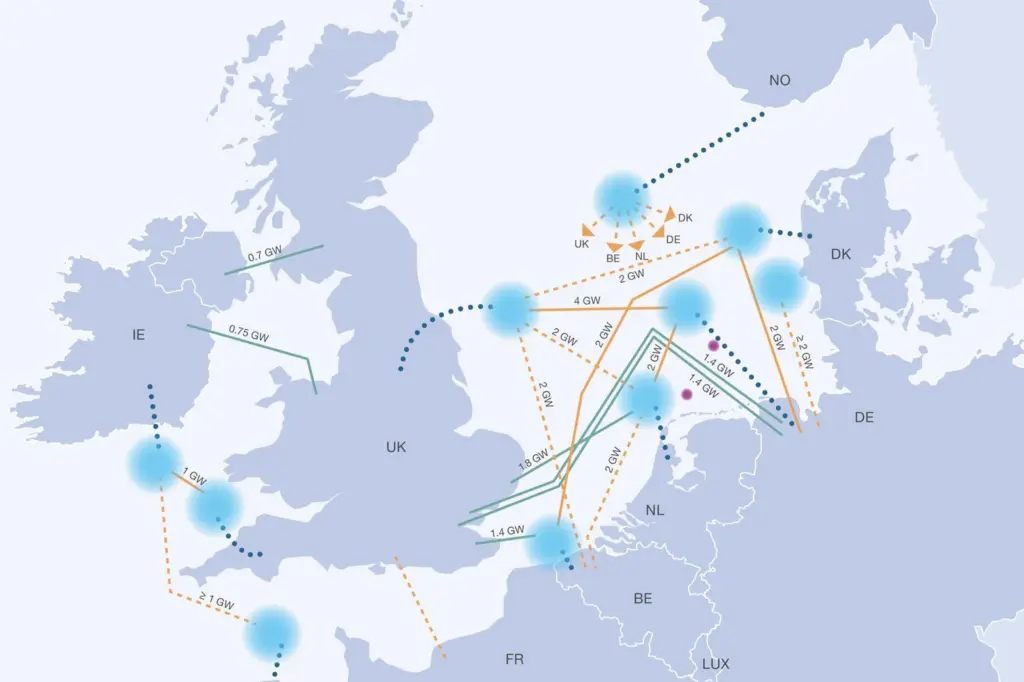
At a press conference at last week’s WindEurope conference in Copenhagen, the so-called Offshore TSO Collaboration (OTC) presented a pilot study that named the North Sea ‘Europe’s green power plant’.
The move aims to secure an ‘independent, affordable and decarbonised energy supply’ for itself.
TSOs have been working towards joint grid development for the past three years, with infrastructure to eventually be developed to combine offshore wind capacity in the North, Irish and Celtic seas (collectively known as the Northern Seas).
“The initial results of the joint study demonstrate how a regional approach to offshore grid development in the Northern Seas can offer both economic and environmental benefits for all Europeans,” said the statement.
A grid map shows cross-border projects, which are being considered as part of a broader offshore regional grid in the Northern Seas, ’maximising synergies and cost efficiencies’.
Early stages
Such an ambitious project will take time, and press officer Mathias Fischer said there was no specific information on the actual physical work as yet.
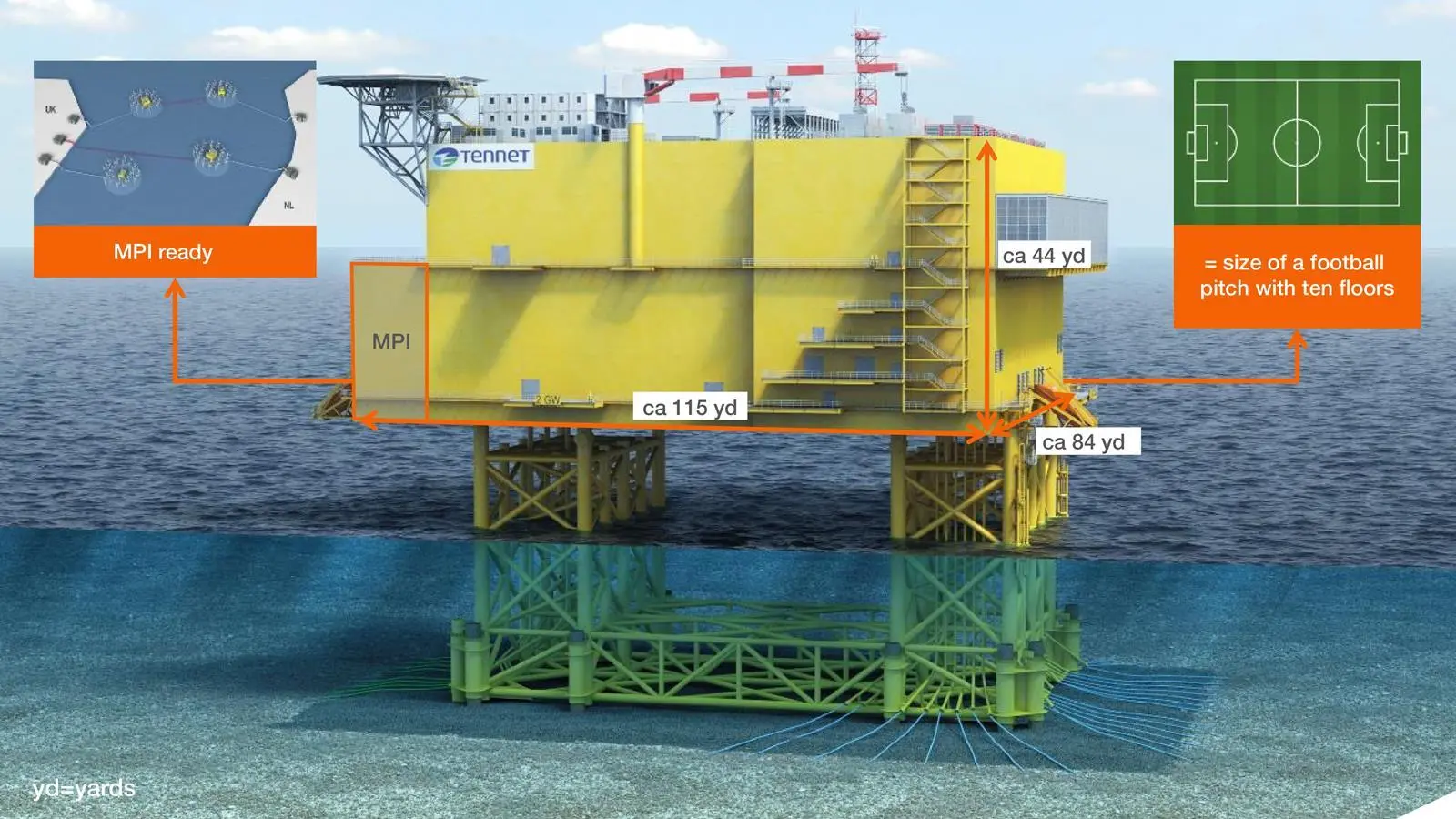
Plans are being laid for a ‘2GW Program’, a ‘one fits all’ standardised platform to connect 14 high-voltage direct current (HVDC) offshore grid connection systems with a transmission capacity of 2GW each in the North Sea, seven in Germany, seven in the Netherlands.
The platform design contains four transformers to increase the energy collected from surrounding wind farms to a higher voltage before it enters the converter halls. An innovative cooling system in the platform circulates oil that is cooled by surrounding air, thus reducing the number of auxiliary systems and the need for maintenance.
“As the continent faces overlapping climate, energy, geopolitical and security challenges, the need for greater energy independence and resilience has never been more urgent,” says the OTC (Offshore TSO Collaboration), which comprises CEOs from the likes of Statnett, Amprion Offshore, TenneT, Elia Group, EirGrid, Energinet, National Grid (UK) and RTE.
“Energy independence must begin at sea and that there will no successful energy transition in Europe without developing the wind potential of our seas, with offshore wind farms and the grids that connect them to the shore. The North Sea holds immense potential with regard to providing Europe with reliable, clean and affordable energy.
“However, unlocking this potential will require coordinated European action and the development of the necessary offshore and onshore infrastructure to transport offshore wind power from generation sites to onshore consumption centres. Collaboration is fundamental, as renewable energy resources are unevenly distributed across Europe.”
Multi-terminal hubs
At the heart of the grid infrastructure will be ‘multi-terminal hubs’ which will control the electricity coming in from offshore wind farms with a DC (direct current) switchgear system that will connect all DC lines with each other.
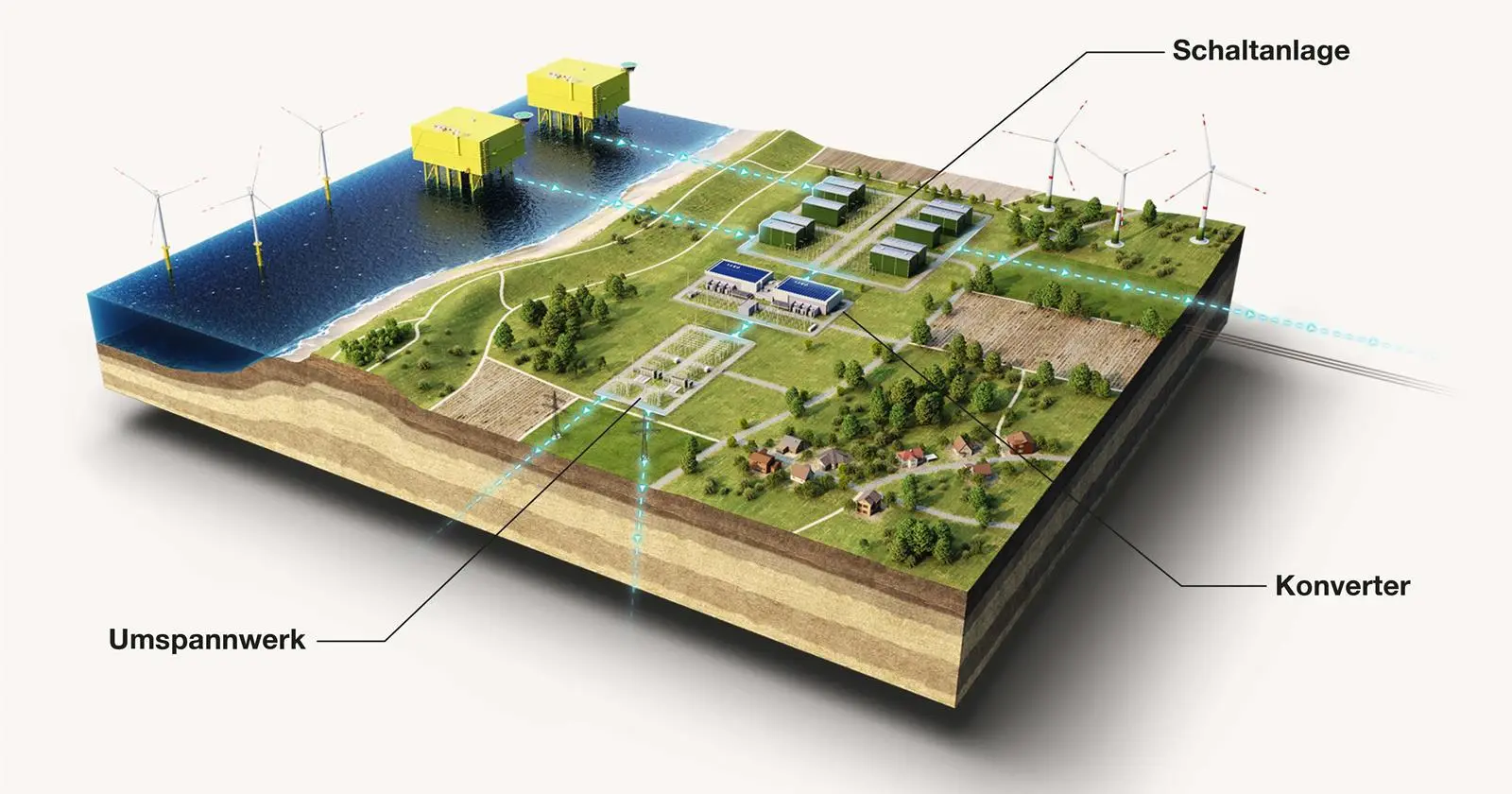
Grid connection systems from the North Sea and shoreside DC connections can be linked with each other, and where a converter and substation are also built, the electricity will be fed into a three-phase grid on site – contributing to a secure and stable power grid.
Tne converter and substation will also accept onshore wind.
The first three multi-terminal hubs are being built in Schleswig-Holstein and Lower Saxony, in Germany. At Schleswig-Holstein, the Heide multi-terminal hub will be connected to the offshore wind farms LanWin2 and LanWin3, with the underground cable NordOstLink connecting them.
Up to 4GW of offshore wind energy will be fed through this into the power grid from 2030, TenneT, the Dutch TSO.
The necessary onshore infrastructure plans have not been included but will be considered ‘in other planning exercises’.
Related Articles
 FEATURES & VIDEOS
 ENVIRONMENT
 OTHER NEWS