![MaritimeJournal[Seawork]](https://www.maritimejournal.com/wp-content/uploads/2026/09/MaritimeJournalSeawork.svg)


Ireland’s ports transformation: Policy outlines major changes
A new draft National Ports Policy for Ireland has placed offshore wind at the front and centre of its ambitions to transform its ports along with improved cargo operations.
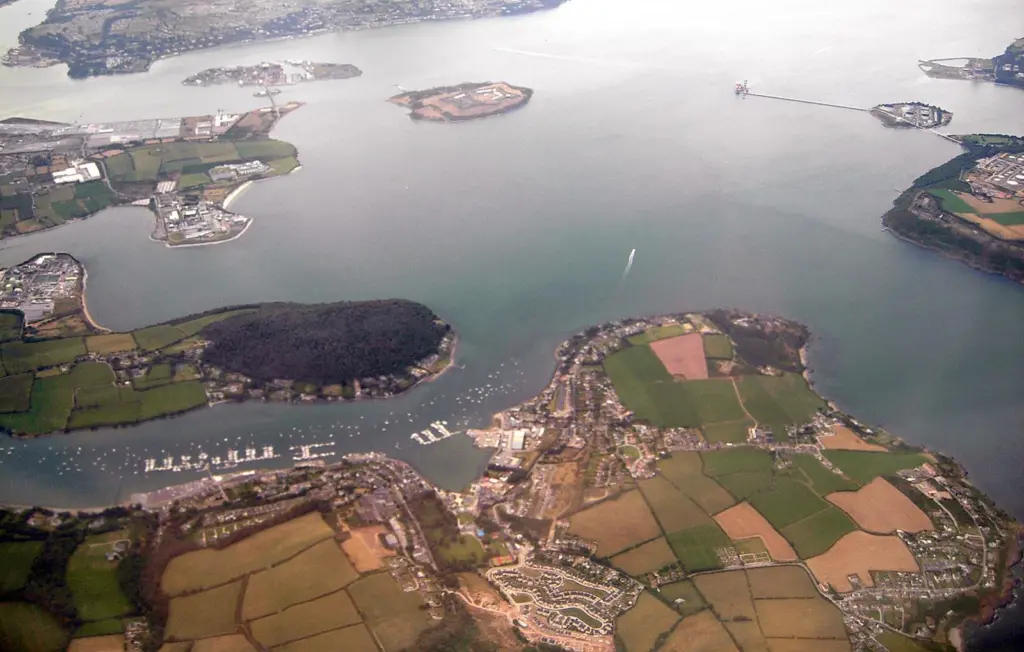
For more than a decade, Ireland’s ports policy has been largely about maintaining trade capacity and encouraging commercial self-sufficiency, but now it redefines them as strategic national infrastructure, ‘crucial to our economic well-being and a key enabler of our renewable energy future’, according to minister for Transport Darragh O’Brien.
“The strategic importance of the Ports of National Significance – Dublin Port Company, Port of Cork Company, Shannon Foynes Port Company, Port of Waterford Company, and Rosslare Europort – is reaffirmed,” he said. “These ports will continue to lead on the facilitation of trade and will also take a leading role in the development of renewable energy, particularly offshore energy.”
Offshore wind and future fuels
Offshore wind has become as important as accommodating cargo and large vessels.
Ports are identified as strategic enablers of Ireland’s energy transition, with future facilities expected to accommodate turbine assembly, heavy components, renewable fuels and potentially green hydrogen production.
The document also acknowledges that no single alternative marine fuel has emerged as the obvious winner.
Instead, ports must prepare for multiple possibilities including methanol, ammonia, hydrogen, shore power and electrification. It means port developments must now consider future bunkering systems, hazardous fuel storage, electrical capacity, resilience and flexibility – even where operational demand may still be several years away.
It is going to mean stronger quays, heavy-lift infrastructure, marshalling areas, enlarged laydown space and deep-water berths capable of handling the enormous components associated with floating and fixed offshore wind, and tidal energy, if it gains ground.
It is also going to mean entirely new markets alongside traditional cargo – installation vessels, service operation vessels, crew transfer vessels and other craft not previously catered for at Ireland’s ports.
Bremore and the east coast
The publication was immediately welcomed by the promoters of the proposed Bremore Ireland Port, which would be the first deep-water port on the east coast.
A joint venture between Drogheda Port Company and Ronan Group Real Estate, Bremore has been earmarked as a key development to solve capacity constraints at Drogheda Port and growing pressure on the east coast.
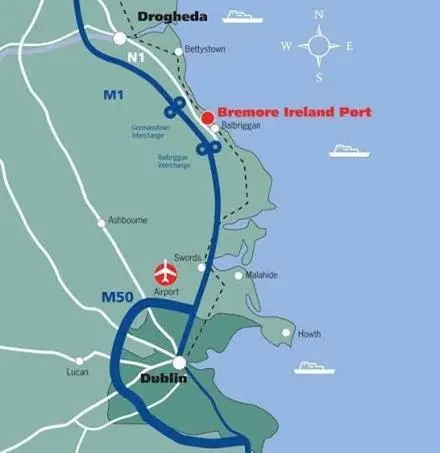
The project, which has been under discussion for years, and would be located on the Meath-Dublin border. Designed as both a commercial freight port and a hub for offshore renewable energy.
It is also designated as a ‘Core Port’ on the EU TEN-T network and is closely aligned with the European Union’s emerging ports strategy, supporting the development of competitive, resilient, secure and digitalised port infrastructure powered by renewable energy and alternative fuels.
“This is a once-in-a-generation opportunity to deliver a critical piece of national infrastructure that will strengthen Ireland’s trading capacity, enhance energy security and drive green innovation, while creating sustainable employment and economic growth for decades to come,” said Drogheda Port Company Group CEO Paul Fleming. “The explicit support for the development of a new east coast deep-water port underscores the national importance of the Bremore Ireland Port project.”
A construction programme over decades
The policy concludes that Ireland will ultimately require additional east coast capacity equivalent to an entirely new commercial port.
It also directs every Port of National Significance to revisit its masterplan, maximise existing assets and prepare for long-term expansion.
For marine contractors, consultants and engineering firms, that points towards decades of investment in:
- Quay wall construction
- Dredging
- Navigation improvements
- Berth extensions
- Land-side logistics
- Rail and road connectivity
- Utility upgrades
Safety and funding
One proposal likely to receive widespread support from harbour masters is the creation of an Irish Port Marine Code.
While non-statutory initially, the Code aims to consolidate existing marine safety obligations into a single operational framework. The policy says it will draw together governance, operational guidance and recognised best practice while helping ports manage operational risks more consistently.
Rather than introducing another layer of regulation, it seeks to provide a common benchmark across the sector, which for ports already operating sophisticated safety management systems will already be familiar.
For smaller organisations, however, it could become an important reference point for marine operations, pilotage, emergency planning and assurance.
When it comes to paying for it all, where earlier policies expected ports to finance infrastructure almost entirely through their own commercial resources, the draft policy softens that position leaves open the possibility of government investing directly in nationally significant port infrastructure where projects contribute to trade resilience, climate adaptation or offshore renewable energy.
Combined with European TEN-T and Connecting Europe Facility funding, that potentially unlocks far larger investment programmes than were previously possible.
More than a ports policy
Taken as a whole, the draft National Ports Policy is about far more than ports: it is an infrastructure strategy, an energy strategy and a maritime strategy rolled into one.
For harbour masters, it signals new operational expectations around safety, performance and resilience.
For marine civil engineers, it points towards one of the most significant long-term waterfront construction programmes Ireland has seen.
For vessel operators, it highlights the emergence of offshore renewables as a parallel market alongside conventional cargo operations.
Most importantly, it confirms that the Irish commercial port of the future will no longer be judged solely by the ships it handles, but by the wider role it plays in enabling trade, supporting offshore wind, delivering cleaner shipping and strengthening national resilience.
Related Articles
 INDUSTRY NEWS
 MARINE CIVILS
 MARINE CIVILS