![MaritimeJournal[Seawork]](https://www.maritimejournal.com/wp-content/uploads/2026/09/MaritimeJournalSeawork.svg)






Meeting the challenges: A jack-up in action
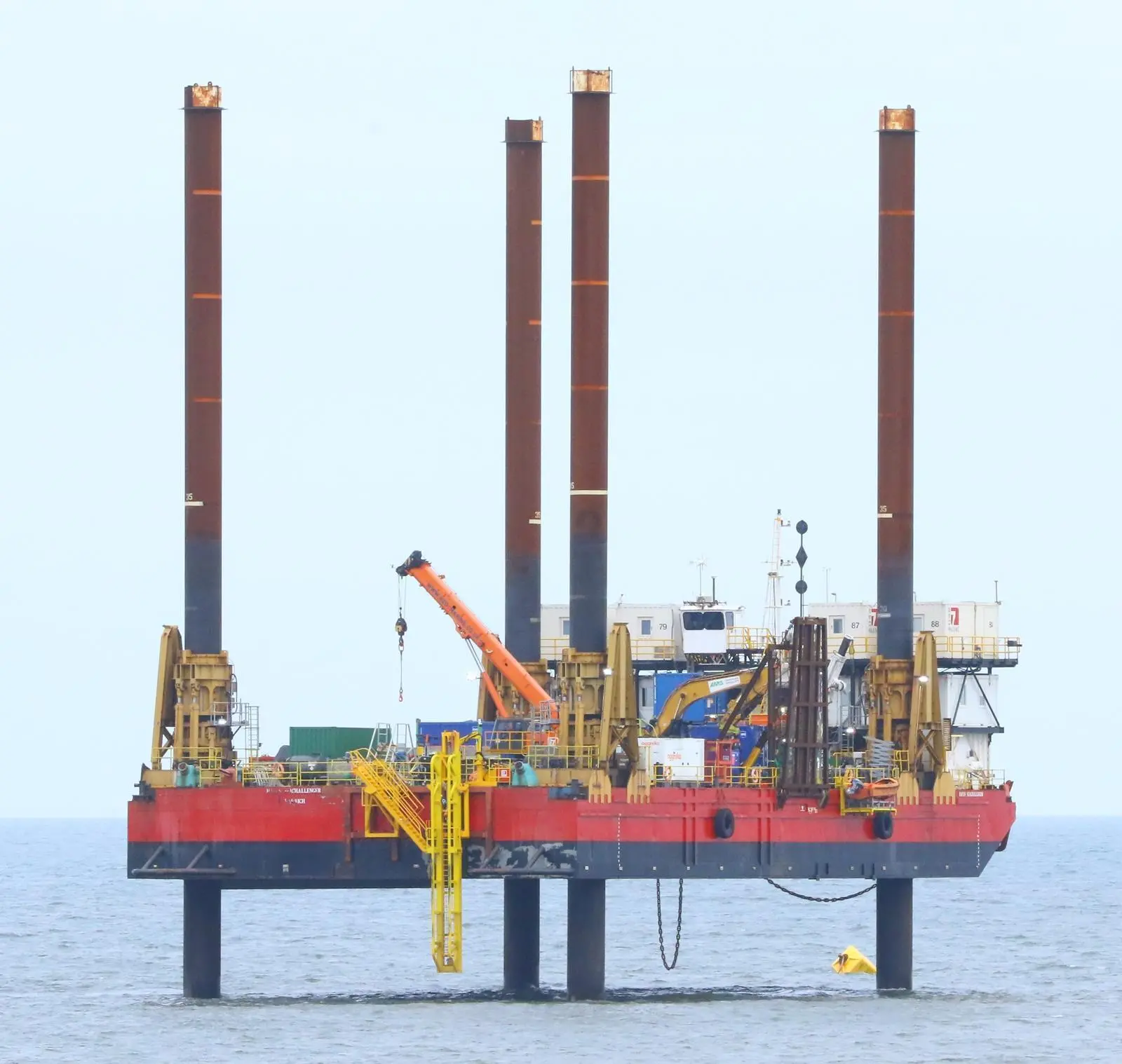
The Haven SeaChallenger jack-up barge has played a crucial role in Ørsted’s Hornsea 3 Offshore Wind Farm project, providing support for horizontal directional drilling operations and enhancing offshore infrastructure efficiency.
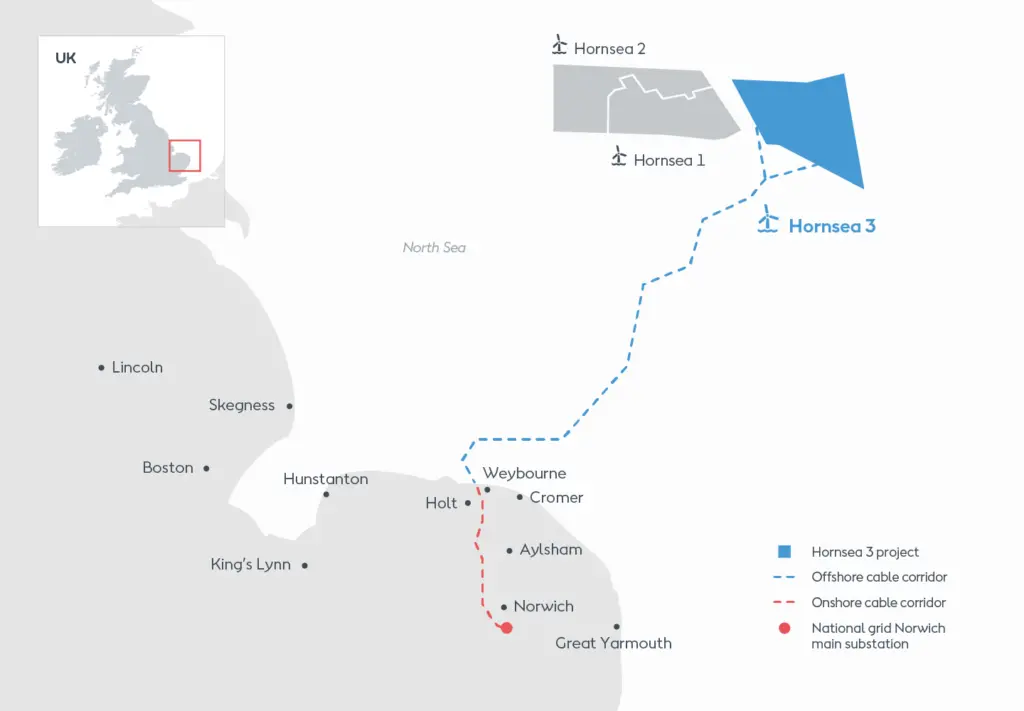
The vessel has been chartered for Ørsted’s development, 120km off the coast of north Norfolk in England.
Since 2021, Haven SeaChallenger, a 1,000t non-propelled monohull jack-up barge, has been owned by Red 7 Marine, Ipswich, who invested in her to support clients in nuclear power, renewable energy, port infrastructure, coastal protection and flood defences and alleviation schemes, by adding to the 11 jack-up barges ranging from 100t to 1,000t it already owns and operates.
SeaChallenger, (formerly known as Fugro 1200) has just turned 50, having been constructed by Nippon in 1974. Her initial contracts with previous owners Fugro Seacore were focused in Western Australia before she was brought over to the UK for the Hinkley Point C Nuclear Power Station project.
Fugro Seacore upgraded and replaced multiple components and made significant changes from 10 to 15 years ago, including upgrades to the jacking system for her 55m length legs, enabling a jacking speed of 30mph.
“The Haven SeaChallenger is a relatively large vessel for inshore and nearshore work, with a variable load capacity of 1,000t and a very large open deck space, which made her very attractive to us as an enhancement to Red 7 Marine’s existing fleet,” says Operations director Matthew O’Sullivan.
“With deck dimensions of 50 x 24m, she allowed us the flexibility for loading a variable range of equipment up to 1,000 metric tonnes and a practical, economical live-aboard option for various projects such as installing ducting for Hornsea 3. Red 7 Marine retro-fitted a sophisticated GNSS positioning system supplied by Trimble Marine Construction, allowing consistent and accurate vessel positions.”
SeaChallenger’s ability to work at varying water depths and in different types of conditions has seen her take on charters including a new-build deep water berth at a cruise liner terminal at Portland Port in Dorset in 2022.
For this project she worked alongside Red 7 Marine’s 250t Haven Seariser 4 and the Haven Seaforth flat-top barge. The piling was carried out from the deck of SeaChallenger, which features a bull rail arrangement on the port side allowing the fitment of a pile gate that was used to install the piles to accuracy and tolerance.
As part of Hornsea 3’s moves to compensate impacts on kittiwake populations off the coast of Lowestoft for Ørsted, SeaChallenger was involved in the installation of three specially fabricated artificial nesting structures, with a life expectancy of 40 years, to accommodate 500 pairs of nesting kittiwake.
Drilling operations
“For the contract off Weybourne in North Norfolk, tugboats towed the floating pipe to SeaChallenger prior to the installation back to the beach at Weybourne; an operation that was repeated three times to complete this phase of the project,” says O’Sullivan. “SeaChallenger’s positioning system allowed the barge to be located within millimetre accuracy – this was crucial to the success of the drilling and duct installation, ensuring that vital components did not exceed the minimum bend radius, which could have resulted in failure.
“Following extensive calculations, the drill string was pushed out and recovered to the deck of the barge, where the tooling changes took place to enlarge the bores. This was achieved via a bespoke hinged stinger and A-Frame arrangement, designed and fabricated by AMS to allow vertical stowing when under tow and rapid deployment when positioned on site, cutting down on preparatory work offshore and improving safety and efficiency.”
The drilling operations and marine spread technique were overseen and managed by horizontal directional drilling firm and principal contractor AMS No-Dig Ltd, based in Scunthorpe.
The construction method involved drilling pilot bores using a gyroscopic steering method under the ground and seabed so that the cable ducts could be pulled through. The same process is being used along the onshore cable route and avoids some of the surface disruptions caused by traditional open trenching.
A hydraulic rock drill string was pushed out 800 metres from the shore to reach SeaChallenger, where the direction was controlled and it was steered up and punched out from the seabed. The method used a 250t drilling rig in the Transition Joint Bay area to drill a small diameter bore from shore, which confirmed the designed alignment and was reamed using a bottom hole assembly to suit the duct outside diameter.
This opened up to receive the 1km long ducts with a diameter of 450mm made at PipeLife in Norway before being stored in Scapa Flow.
The ducts were then towed down one at a time to site before being installed over the deck of SeaChallenger using depth assembly to the Bottom Hole Assembly, using Leask Marine and its diving spread, before being retracted through to the landside and capped ready for the Ørsted offshore team to install the cables.
“Works on Hornsea 3 are progressing on schedule, with work continuing this year on the onshore cable route, as well as the construction of the Battery Energy Storage System to be co-located with Hornsea 3 at the Onshore Sub Station site in Swardeston, south of Norwich,” said Sarah Brown, External Communications lead, Hornsea 3 UK Media Relations Commercial.
Related Articles
 INDUSTRY NEWS
 MARINE CIVILS
 MARINE CIVILS