![MaritimeJournal[Seawork]](https://www.maritimejournal.com/wp-content/uploads/2026/09/MaritimeJournalSeawork.svg)






New opportunities at sea: Floating data centres
Wave energy developer Mocean Energy believes offshore engineering could unlock a new generation of marine infrastructure, looking beyond offshore power generation with plans to develop floating AI data centres.
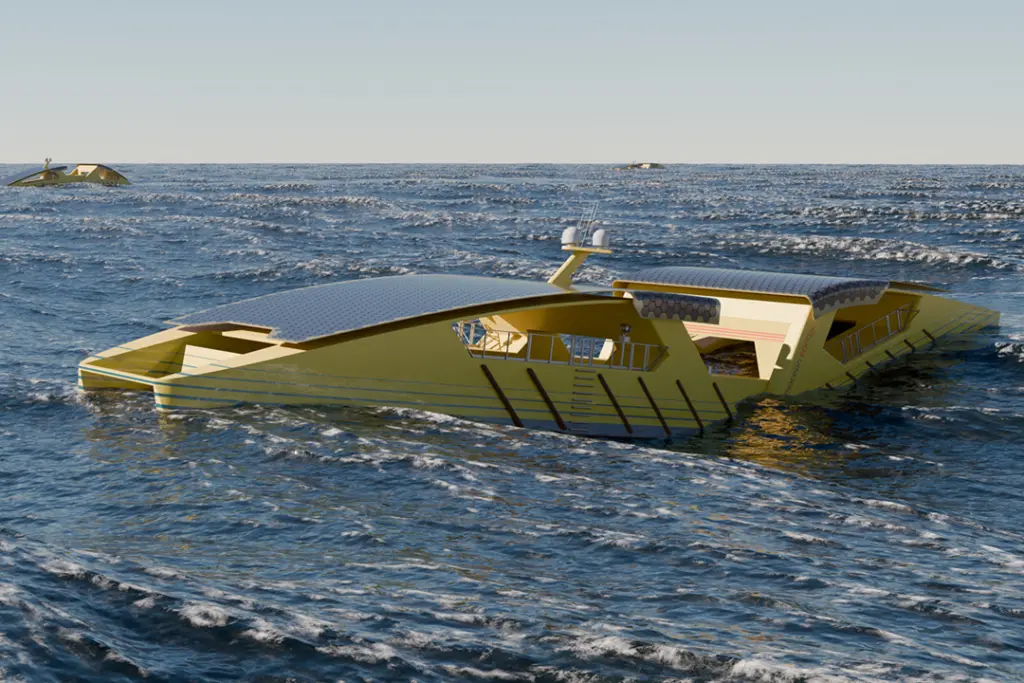
The Edinburgh-based company believes floating data centres could create an entirely new market for the commercial marine sector and has unveiled is Blue Core concept, combining wave energy, offshore solar and battery storage to power AI computing without relying on a shore-based electricity grid.
Installations can’t come too soon, with the energy regulator Ofgem preparing to charge on-land developers fees to connect to the already choked grid.
While the proposal is aimed at addressing the growing energy demands of artificial intelligence, it also signals a potential diversification of the offshore industry beyond its traditional oil, gas and offshore wind markets.
If commercialised, floating data centres would require many of the same services needed by the offshore energy sector: fabrication, towage, mooring installation, inspection, maintenance, vessel support and eventual decommissioning.
For Mocean, the move is a natural extension of technology it has already proven offshore.
Rather than developing a completely new platform, Blue Core builds on the company’s Blue Star offshore power system, which shares the same wave energy conversion technology, mooring systems and control architecture developed over the past decade.
“Blue Core generates power in the same way as our existing technology – using our system’s geometry optimised to convert wave motion into electrical energy efficiently across a broad wave spectrum,” a Mocean spokesman told Maritime Journal. “Combined with solar generation, the power is stored in onboard batteries and delivered as a stable power supply through an energy management system.”
The company says each unit would generate between 500kW and 1MW of electricity before supplying AI servers housed within the floating platform itself.
“The power is then supplied to the data centre, with all compute infrastructure contained within a single, self-sufficient unit. No cabling back to shore is required: all communications are handled wirelessly through proven communications gateways,” the spokesman said.
The concept is intended to address several challenges facing the rapid expansion of AI computing, including limited grid capacity, lengthy connection times, shortages of suitable development sites and the huge energy demand of conventional data centres.
New data centres will need homes
According to the International Energy Agency, electricity consumption by AI-optimised data centres is expected to increase sharply over the next decade as demand for computing capacity accelerates.
For the marine sector, however, the significance lies in the possibility of creating a new category of offshore asset.
Unlike offshore wind farms, which export electricity ashore, Blue Core proposes carrying out the computing process at sea, with digital data rather than electrical power becoming the primary product transmitted to customers.
Mocean says the concept can also be scaled using modular offshore infrastructure.
“Units can be connected to scale from a single unit to a farm, and then to multiple farms, using a new multi-device mooring system,” the spokesman said. “In subsequent phases, the technology will gain self-transit capability, with integrated propulsion and autonomous operation.”
The company says future autonomous capability would allow individual units to reposition themselves or return for maintenance while reducing reliance on support vessels for routine movements.
“In terms of avoiding crashing into things at sea, it would have its own self-navigating system akin to those used in smart shipping and ASVs (autonomous surface vehicles),” the spokesman said.
Interest in offshore computing infrastructure has gathered pace in recent years. Microsoft’s Project Natick demonstrated improved reliability from subsea data centres, while China has deployed an offshore data centre and several start-ups have attracted substantial investment for floating computing concepts.
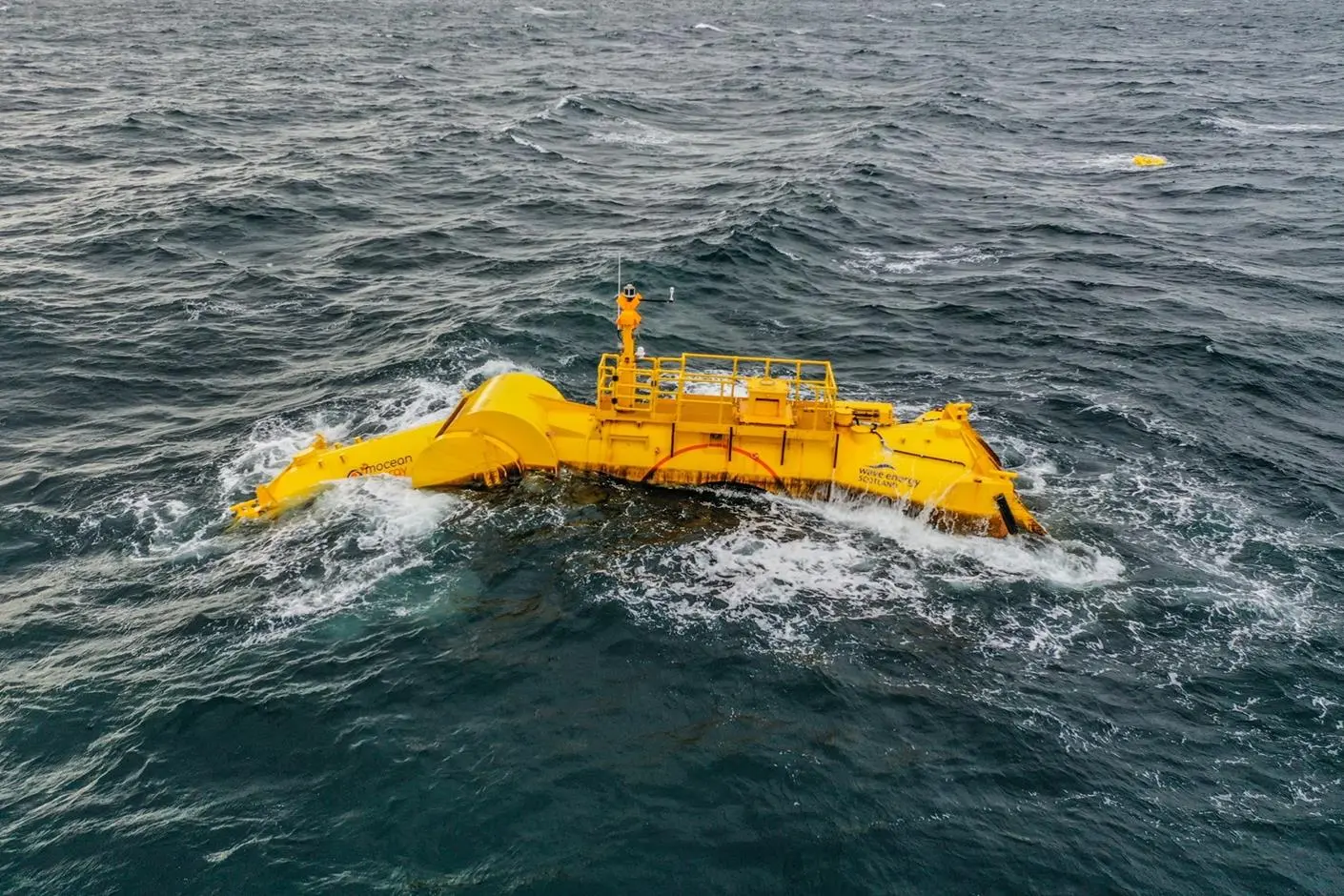
Mocean believes its proposition differs because it is rooted in offshore technology that has already been demonstrated at sea.
It says Blue Star has completed 18 months of full-scale testing with offshore energy companies and technology developers, validating the wave energy conversion, mooring and control systems that now form the basis of Blue Core.
The company has secured a further Blue Star pilot project, with first commercial sales forecast for 2028, while Blue Core is following a parallel development programme.
“It’s currently in development and we are building on our proven offshore Blue Star technology, with a small-scale demonstration planned for 2027,” the spokesman said.
The company is targeting early commercial Blue Core deployments from 2030 and has set a long-term ambition of providing around 6GW of offshore computing capacity.
Related Articles
 INDUSTRY NEWS
 MARINE CIVILS
 MARINE CIVILS