![MaritimeJournal[Seawork]](https://www.maritimejournal.com/wp-content/uploads/2026/09/MaritimeJournalSeawork.svg)



Partnership plans ‘virtual quarry’ for nuclear power station build
A logistics partnership is bringing together marine, rail and aggregates to form a ‘virtual quarry’ to support the build of a nuclear power station on the eastern English coast.
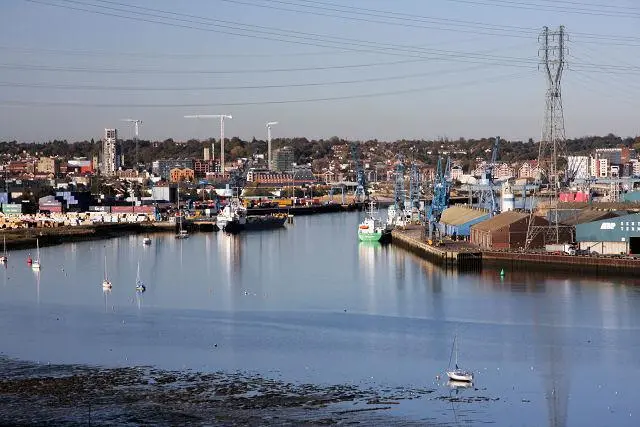
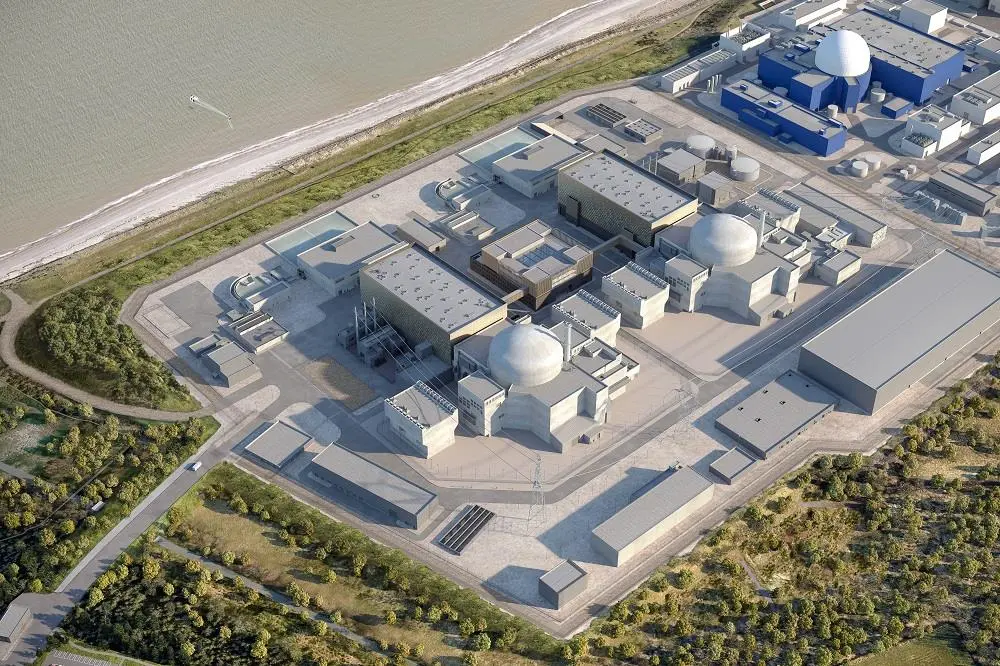
The partnership aims to provide Sizewell C, a 3.2GW nuclear power station under construction on the English coast with two reactors, with an integrated route for construction materials, combining vessel deliveries into Ipswich with storage, processing and onward movement by rail.
The project aims for at least 60% of construction materials to arrive by rail or sea, reducing the number of heavy vehicles travelling to the Suffolk site.
The West Bank of the Port of Ipswich is being developed as a high-volume supply hub for the project, which is being coordinated by Associated British Ports (ABP) and building materials suppliers Brett and Tarmac.
The port, which is around 33 nautical miles from the Sizewell C site, already has direct rail connectivity to the national network, while the West Bank has multiple berths and space for bulk storage.
For the marine side of the operation, Brett already has an established aggregates terminal at West Bank, where marine aggregates are imported, processed and distributed. Its Ipswich operation has been handling marine cargoes for decades and is connected to both road and rail networks.
“We believe this partnership gives Sizewell C a practical solution with strong marine and rail capacity at its core,” said Paul Ager, Divisional Port Manager at ABP. “Ipswich gives the scale, the storage capacity, quayside strength to support large volumes and the connectivity needed for reliable delivery. This is a solution that works with the local community and reduces pressure on local roads.”
Scale of port infrastructure
The scale of what the infrastructure can handle was demonstrated in 2024, when Brett received 11,000 tonnes of Type 1 granite from the MV Pasila, its largest individual primary-rock delivery at Ipswich. The material was processed at the terminal before being sent to Sizewell C for enabling works, including foundations and a temporary access road.
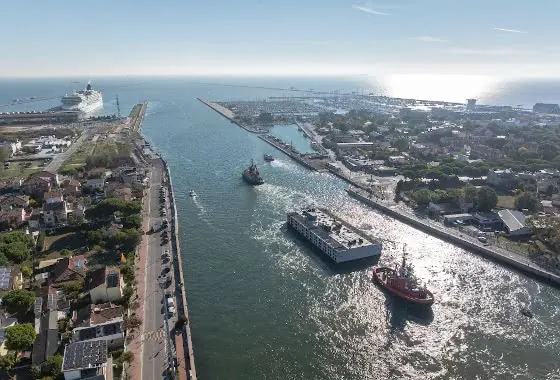
The Pasila operation also highlighted some of the practical challenges of handling large marine cargoes at the port. The vessel had three cranes, allowing faster discharge but requiring additional space on the quayside and more loading shovels to keep material moving. Brett worked with ABP to schedule the vessel around tidal conditions.
The new partnership is intended to scale this type of operation as construction progresses, providing a route for large volumes of aggregates and other construction materials without relying solely on road transport.
ABP describes the West Bank concept as a ‘virtual quarry’, a multi-user facility where bulk products can arrive by ship or rail, be stored in segregated areas and then distributed to Sizewell C. Its plans include space for high-frequency rail movements, bulk storage and frequent vessel and barge activity.
For Sizewell C is one of the UK’s biggest infrastructure projects, and has been designed to power around six million homes for at least 60 years. Construction began in 2024, with the first power currently expected in the mid-to-late 2030s.
Sizewell B, the existing 1.2GW nuclear power station at the site, has generated electricity since 1995 and is now expected to operate until 2055, following a 20-year life extension.
Related Articles
 INDUSTRY NEWS
 MARINE CIVILS
 MARINE CIVILS