![MaritimeJournal[Seawork]](https://www.maritimejournal.com/wp-content/uploads/2026/09/MaritimeJournalSeawork.svg)



Pilot project first for large-scale oyster reef restoration
Partners from science and industry are building the first offshore pilot project for large-scale oyster reef restoration in the Belgian North Sea.
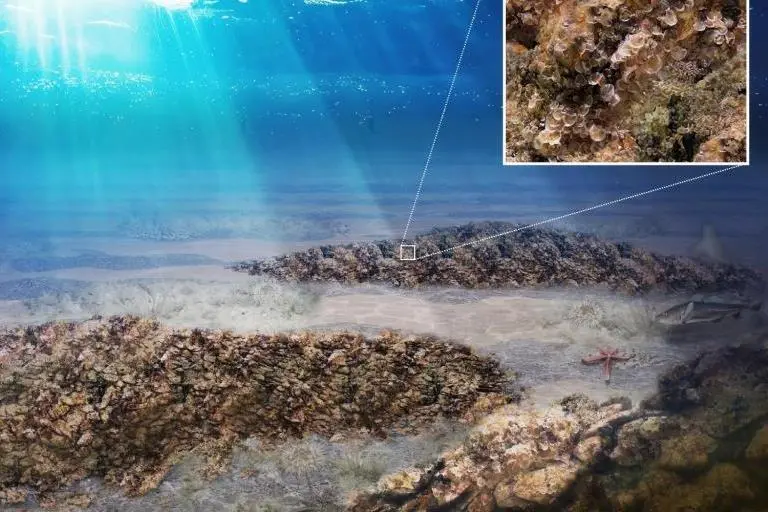
The BELREEF project is a collaboration between Jan De Nul Group, the Belgian Institute of Natural Sciences, Shells & Valves and Mantis Consulting, acting in accordance with the recommendations of the Native Oyster Restoration Alliance (NORA).
“We want to create an oyster reef that is self-sustaining. Our ambition is to create long-term nature restoration, without further human intervention,” said Vicky Stratigaki, engineer and project coordinator for BELREEFS at Jan De Nul Group.
”One of the choices we are making to achieve this, is to install the oyster reefs where they historically occurred: at the so-called gravel beds.”
Important ecosystems
Before 1850, flat oyster reefs were a dominant structural and ecological component of the North Sea ecosystem, but due to human influences and a persistent oyster parasite, they have all but disappeared today. Nevertheless, oyster reefs are important ecosystems.
But they’re important because they are so-called “ecosystem engineers” which create habitats that support entire ecosystems.
The BELREEFS concept comprises three phases: From the current gravel bed to the deployment of oyster reef substrate seeded with oyster spat within the BELREEFS project.
This will progress to the third phase where biodiversity increases characterised by various marine fauna and flora species attracted to a self-sustaining oyster reef.
The complexity of the logistical support and the sensitivity of oysters to disturbance (during seeding, transport and installation at sea), requires in-depth knowledge covering different fields of expertise.
So, this project builds on some key innovations including ‘remote setting’, a technique in which they allow oyster larvae to settle directly on a suitable substrate in the lab, to release them into the sea afterwards.
Once installed, the oysters will be followed for several years through an intensive monitoring programme.
Related Articles
 INDUSTRY NEWS
 MARINE CIVILS
 MARINE CIVILS