![MaritimeJournal[Seawork]](https://www.maritimejournal.com/wp-content/uploads/2026/09/MaritimeJournalSeawork.svg)


Pushing boundaries: Africa-Europe subsea link
Scientists who have for four decades contemplated building a subsea tunnel to link Africa and Europe have finally been tasked with investigating the seabed.
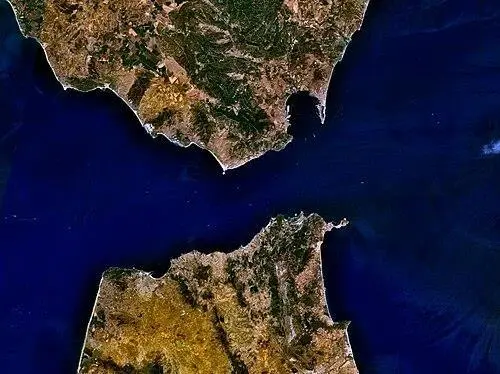
The fixed link would connect southern Spain and northern Morocco via a subsea rail tunnel beneath the Strait of Gibraltar, linking Europe directly with Africa for the first time by permanent infrastructure.
Spain’s Official State Gazette has published an agreement between the fixed-link project company SECEGSA and Spain’s national scientific research council, CSIC. The agreement authorises and defines a new marine research campaign focused on the Camarinal Sill, one of the most technically challenging sections of the route.
“The execution of the campaign will be carried out in the shortest possible time, in any case, before the end of the first half of 2026,” says the Gazette.
It is a geologically complex and hydrodynamically extreme zone with strong currents, steep seabed gradients and highly variable rock formations.
Earlier studies established that a bridge solution was not feasible. Instead, the project has focused on a deep bored tunnel, with rail traffic chosen over road to reduce ventilation loads, safety risks and operational complexity at extreme depths.
Under the new agreement, the campaign will generate high-resolution bathymetric, geomorphological and shallow geological data, specifically to reduce uncertainty around faulting, sediment thickness, rock contacts and seabed morphology. These data will feed directly into an updated three-dimensional geological model of the strait, which is described in as a prerequisite for selecting final tunnel alignment, excavation method and lining strategy.
The work programme includes multibeam echosounder surveys with metre-scale resolution, parametric sub-bottom profiling to image shallow stratigraphy, and seabed sampling for laboratory analysis.
The emphasis is on integrating marine geophysics and physical samples into a single interpretive model, rather than relying on isolated datasets.
How the tunnel will be built
Beyond seabed surveys, official procurement documents outline a staged construction philosophy centred on progressive risk reduction.
A key element is the concept of a full-length reconnaissance tunnel – an exploratory gallery driven along the final alignment before committing to the full-scale operational bores.
This reconnaissance tunnel would be excavated using a tunnel boring machine, allowing continuous observation of ground conditions, in-situ testing and real-time adaptation of design assumptions.
The documents describe the use of directional probing and boreholes drilled ahead of and from within the tunnel lining, enabling engineers to characterise faults, permeability and stress conditions as excavation progresses.
Segmental lining is expected to play a critical role. Project documentation highlights interest in bi-layer lining systems, combining a structural concrete ring with a compressible external layer, to accommodate deformable ground and high in-situ stresses expected beneath the strait. Such systems are specifically referenced as suitable for highly fractured or squeezing geology.
Auxiliary caverns and niches are also envisaged along the route, providing space for investigations, equipment installation and operational safety systems. Even at the reconnaissance stage, ventilation modelling and fire-scenario simulations are required.
Only once geological uncertainty is sufficiently reduced will final decisions be taken on tunnel diameter, number of bores and construction sequencing.
Pushing the boundaries
From an engineering perspective, the Europe-Africa fixed link will push the boundaries of subsea tunnelling in depth, length and geological complexity.
From a strategic standpoint, project bodies describe it as infrastructure that would enhance cross-continental connectivity, strengthen rail freight corridors and support long-term economic integration between Europe and North Africa.
Related Articles
 INDUSTRY NEWS
 MARINE CIVILS
 MARINE CIVILS