![MaritimeJournal[Seawork]](https://www.maritimejournal.com/wp-content/uploads/2026/09/MaritimeJournalSeawork.svg)






Thermal imaging monitor Swedens coast
Thermal imaging technology means that Sweden’ s navy and coastguard service can now detect and read at distance, the name of a ship in total darkness, making the checking of potential intruders and smugglers along the country’ s 3,200km coastline much easier.
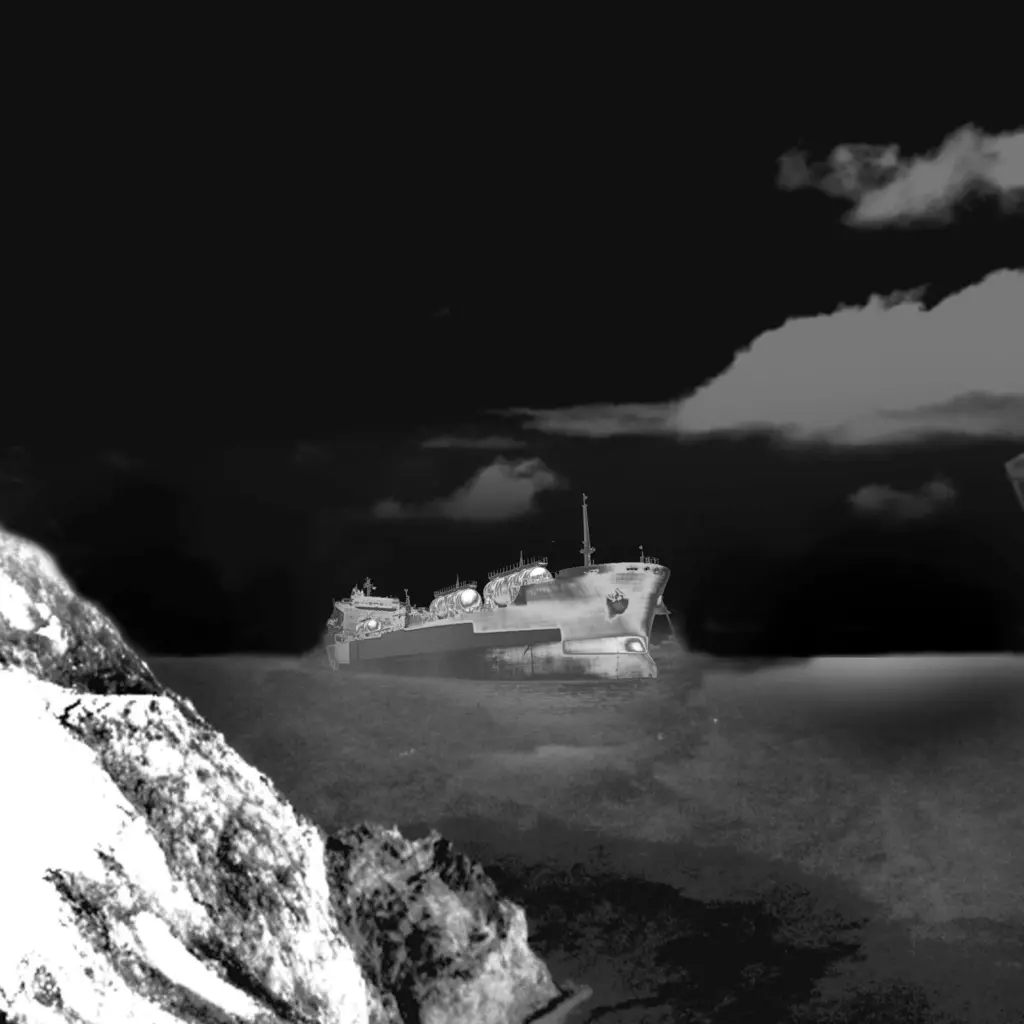
As part of a contract for the Swedish Navy and Coastguard Service, Sweden based Informationssytem AB has developed and deployed a number of Electro- Optical Surveillance Systems (EOSS) to monitor key parts of the Swedish coastline. With a rugged housing and mounted high on a remote controlled platform, EOSS are designed for round the clock operation in extreme environments including the near arctic temperatures found in northern Swedish winters.
They are equipped with two daylight cameras. One camera gives full visual coverage of the surveillance area, whilst the other is equipped with a long range zoom lens which can read of the name of a ship over many kilometres. However, for night and low light vision purposes, they are also equipped with a thermal imaging module based on a FLIR Systems ThermoVision 3000 core.
FLIR Systems markets a full range of thermal imaging cameras but the ThermoVision 3000 core, has been specially designed for OEMs who require an easily integrated, advanced cooled thermal imaging solution. In this case the module is equipped with a long wave, cooled Quantum Well Infrared Photo detector (QWIP) operating in the 8 – 9 μm waveband. It has triple field of view optics, meaning a man-sized target can be detected at over 12km away.
In order to see as far as possible, each EOSS is positioned on a tower more than 20m above sea level. They are designed to work in conjunction with radar in a ‘slew-to- cue’ configuration. If the radar detects a target, the camera will automatically turn in the right direction so that the operator can see what the blip on the radar screen really means and can begin the identification process.
In darkness, the ThermoVision 3000 will do this job seamlessly. The communication between the cameras and the monitoring station is based on a digital network system. Connection links can be in fibre, coax, or wireless microwave link and require a band width of 8 MBit for real time pictures using MPEG-2 video streaming.
All the functions of the EOSS, including those from the ThermoVision 3000 core, can be controlled from the central monitoring station by a PC with graphic user interface or by a joystick. Any of the central monitoring stations fitted with the interface equipment connected to the digital network can view and control the cameras.
Related Articles
 INSURANCE, LEGAL & FINANCE
 EQUIPMENT
 EQUIPMENT