![MaritimeJournal[Seawork]](https://www.maritimejournal.com/wp-content/uploads/2026/09/MaritimeJournalSeawork.svg)


Buoys for the boys at Seawork
Hydrosphere will be using this year’ s Seawork, its ninth consecutive appearance at the exhibition, to demonstrate its growing range of buoys, lights and auxiliary navigation products from Carmanah, Mobilis and Vega Industries.
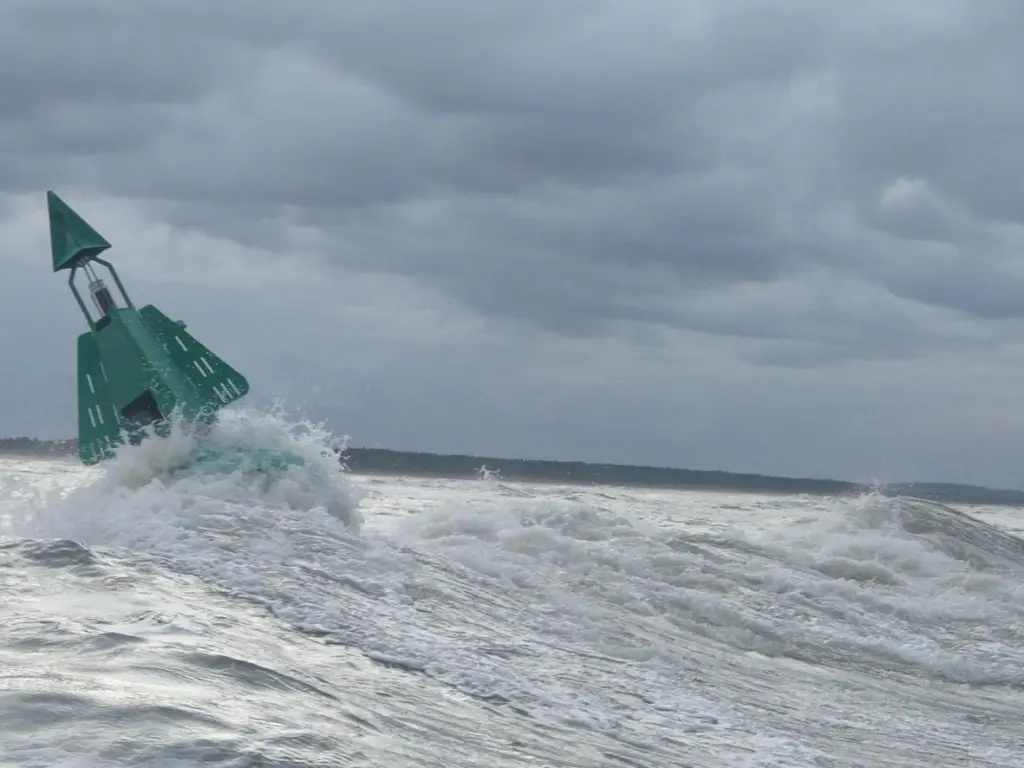
Centre stage will be a Mobilis JET 2500 FB buoy, ideal for rough and exposed locations, as proven by the successful deployment of a similar buoy at the channel entrance for Wells next the Sea in Norfolk UK last year. This is a medium size buoy in the JET series, suitable for use in nearshore locations where a highly visible navigation buoy is required. Its 1.85m diameter hull provides 2,500kg of buoyancy.
The standard configuration is the 2500FB, which has a flat bottomed galvanised steel core which allows the buoy to stay upright even in areas of shallow water. The FB has a single point mooring and provides a focal height of 2m. If bigger focal heights are needed, the JET 2500Q can get to a 3m height through the neat addition a tail tube assembly.
All JET 2500 buoys are constructed around a central galvanised steel hull structure and use common hull floats, tower and topmark assemblies. This modular design allows for commonality of parts which in turn reduces maintenance, inspection, replacement and spares holding costs.
The result is a buoy which has longer than usual maintenance intervals and also is much lighter and easier to handle than comparable steel buoys. The 2500FB weighs in at 750kg excluding ballast. This allows buoys to be maintained using smaller vessels and pulled by a single lifting eye.
The buoys are available with a range of marks and can be configured to meet the user’s individual requirements with navigation lights, solar panels and battery configurations. The buoys offer an easily handled alternative to traditional GLA Class 3, 4 and 5 steel units.
Hydrosphere will also be giving a live demonstration of Vega’s latest version of its Vegaweb system at Seawork. This is a very robust remote monitoring, logging and control system, boasting low power needs and designed specifically for use on buoys and fixed aids to navigation. Data communication is transmitted via GPRS or Orbcomm satellites whilst user set alarms are sent by GSM, email or landline telephone. Information such as light character, power consumption, solar charging, battery condition, buoy position, and impacts is logged at regular intervals and can be readily accessed by authorised personnel in the harbour or marine authority.
Related Articles
 VESSELS
 MARINE CONSTRUCTION
 VESSELS