![MaritimeJournal[Seawork]](https://www.maritimejournal.com/wp-content/uploads/2026/09/MaritimeJournalSeawork.svg)






Controlling the costs of wind farms
A report from the UK Energy Research Centre investigating the ‘dramatic’ rise in the cost of offshore wind farms in the UK over the last five years has lifted the lid on factors that affect the many strands that make up the industry.
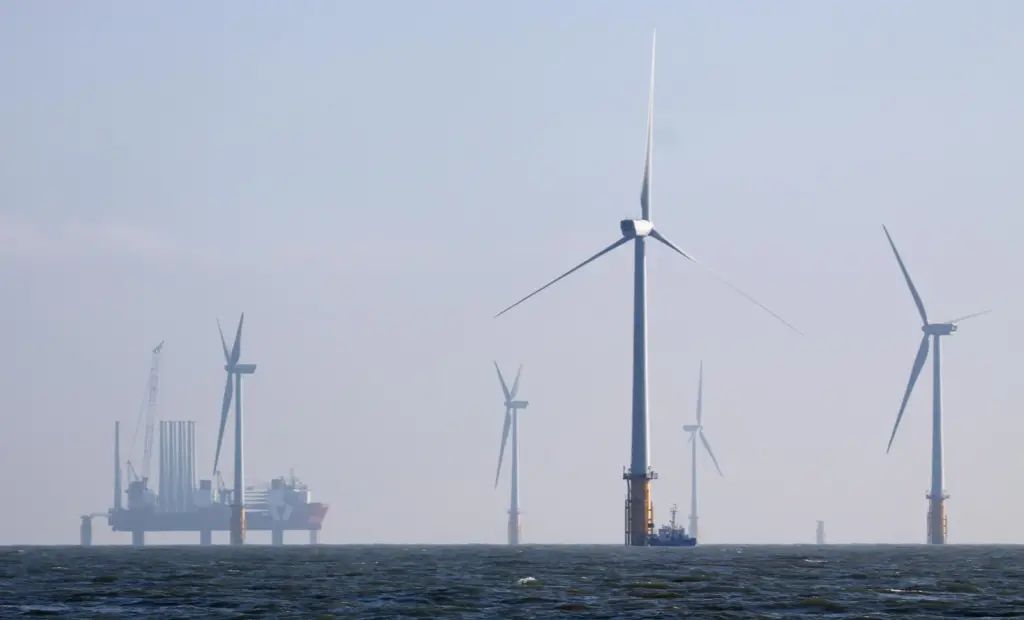
It finds grounds for optimism but tempered with a sense of realism about the challenges and policy requirements necessary to ensure that the gradual decline in costs that were previously anticipated can be realised.
Offshore wind farms are still a nascent industry at the equivalent stage of building the first conventional power station and the report examines the big ambitions and expectations of the early years, the reasons behind the cost increases from both industry and policy perspectives, and analyses the potential future trends.
The Early Days
Early predictions of future costs based on the learning curve and comparisons with other European countries are now considered to have been premature and carried out at an unrepresentative stage where early small scale developments failed to provide an accurate guide to future supply chain costs due to the rapid growth. Progress with Round 1 projects was slower than expected, with nearly a quarter of the original 2GW planned capacity lost to project withdrawals or downsizing. Symptoms of cost escalations from the mid-2000s include developer resource limits, waiting for transmission grid upgrades, weak economics, construction delays and shortages of turbines. It is hoped that planning delays, including dealing with multiple bodies that affected costs and even led to cancellations with Round 1 and 2 projects will be alleviated, with recent and proposed changes to planning laws covering offshore wind farms.
Components
Around half of wind farm capital expenditure is in the turbines and there are a number of reasons for the increase in turbine costs. Increased commodity prices, particularly steel, are part of the story but with 98% of offshore turbines installed in the UK (up to 2009) coming from just two manufacturers the report considers it too early to predict the financial effect of the increasing number of turbine manufacturers in the market. With less than 3% of worldwide installed wind capacity being in the UK, the influence of demands by other countries such as China and India is reflected in the costs.
At the time of the report it was noted that GE and Siemens were planning to build factories in the UK, with Clipper and Mitsubishi developing turbines in Britain. It is considered that dedicated offshore turbines rather than marinised onshore versions could ease supply constraints but overall, prices are expected to remain at current levels until around 2015. Foundation costs have the potential to reduce significantly in the longer term but are likely to increase short term, with jacket style foundations being considered over monopile designs for the depth and distance challenges of Round 3.
Currency movement savings could result from the construction of foundations in the UK rather than relying on the current situation of sourcing them mainly from Holland. The move into deeper waters, with innovation challenges for foundations designers, is also identified as an area of opportunity for UK manufacturers. Two factors identified with the cost of cables and transformers are the gradual increase in lead times and the UK requirement for a 3m cable burial depth.
UK Supply Chain/Ports
Supply chain bottlenecks from supply/demand imbalances are a well known contributor to cost increases in recent years. The small level of delivered capacity so far together with the rapid growth in the global demand for turbines generally and resultant relatively small percentage of sales for most companies in the supply chain for UK projects has deterred them from making the required investment. The benefits of building a UK industry with resultant reduced transport costs and currency stability are again highlighted, adding that with UK consumers footing the bill for offshore wind it makes sense that policy should seek to benefit UK companies.
The report states that UK ports have previously been regarded as under-developed compared with continental ports. The requirement for investment in ports will naturally go hand in hand with any development of the UK supply chain, particularly with the huge increase in demand expected from Round 3. The £200m allocation for low-carbon technologies outlined in the government’s Comprehensive Spending Review (announced after publication of the report) together with the £60m competition aimed at regenerating UK ports will be welcomed by those keen to encourage more UK involvement in offshore wind.
Currency/Financing
80% of a typical UK wind farm is imported from elsewhere in Europe, priced in euros or a currency tied to the euro. Costs are therefore subject to currency variations and up to 2009 component costs increased due to the Euro’s gradual appreciation. Bringing the supply chain into the UK would offer cost savings by avoiding these fluctuations.
Early projects were funded using balance sheet financing and the report assesses the effect of the global credit crisis given the financial scale of Round 3. Around 2008, when Round 3 was launched, the Renewable Obligation scheme was modified to run until 2037 with projects accredited up to March 2014 qualifying for 2 ROCs/MWh. An additional £400m in support for the offshore sector with development of a further 3GW in capacity was expected from this ROC increase.
Summary
A number of complex scenarios surrounding future cost predictions are explored. Factors surrounding cost increases from the mid 2000s are well understood and recent evidence is that costs have peaked. Employing expert market and engineering based assessment rather than a learning curve based approach, the report estimates that in the period up to 2025, if favourable developments take place in all of the main factors, then costs could fall to under £95/MWh from the industry consensus figure for 2010 of £150/MWh. Reviewing capital costs, the report notes an increase from around £1.5m to over £3m per MW in the previous five years.
In 2009 a report from the British Wind Energy Association (now renewableUK) and Garrad Hassan noted that the consensus was that these costs would see a slight rise in the following two years followed by a slight fall by 2015.With the latest Round 2 project coming in at £2.9m/MW, there is evidence that a plateau has been reached, with cautious optimism for the period up to 2025.
By Peter Barker
Related Articles
 OTHER NEWS
 FEATURES & VIDEOS
 MARINE CIVILS