![MaritimeJournal[Seawork]](https://www.maritimejournal.com/wp-content/uploads/2026/09/MaritimeJournalSeawork.svg)


Galloper bridging the gap between Rounds
The Galloper Wind Farm project has moved a stage closer with acceptance, by the UK’s Infrastructure Planning Commission, of the application for a Development Consent Order.
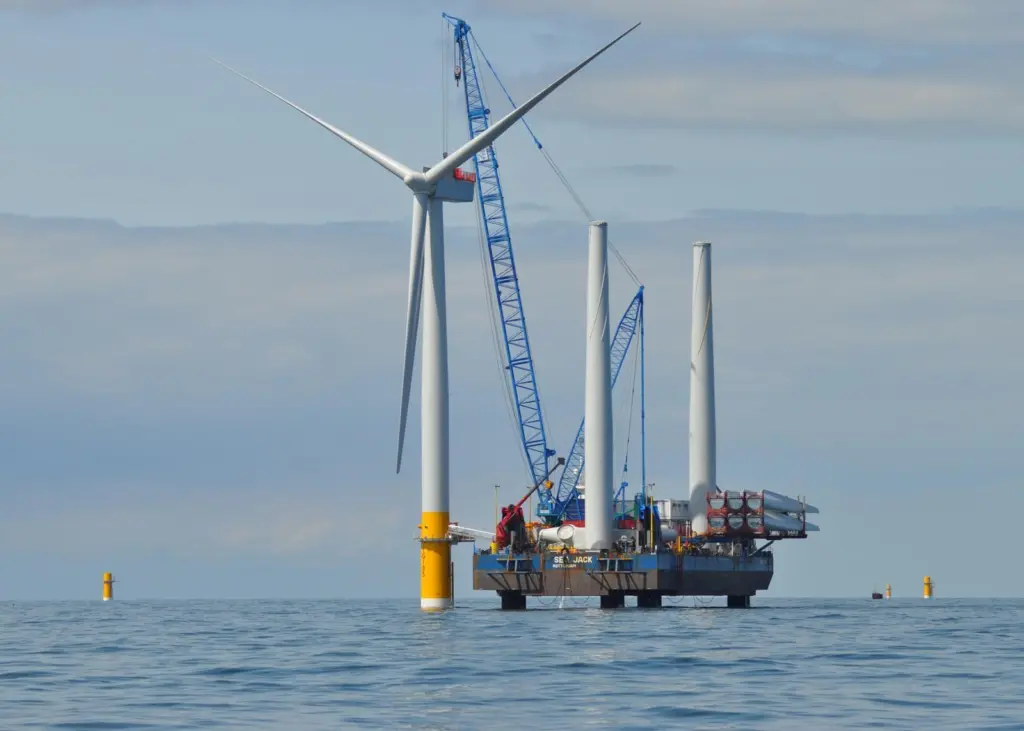
It covers what will be an extension of one of the largest offshore windfarms currently under construction in the UK.
In 2010, The Crown Estate announced the award of development rights to four Round 1 and 2 offshore windfarm operators to extend the boundaries of their existing sites. The new extensions, which became known as Round 2.5, are intended to bridge the gap, as development and construction activity with the first two rounds enters the final stages, before activity gets under way with Round 3. There were concerns that momentum would be lost if there was a pause in the demands on among others, the construction and supply chain sectors of the industry.
Greater Gabbard Offshore Winds Ltd, a joint venture between SSE Renewables and RWE Npower Renewables, is currently constructing the 504MW, 140 turbine Greater Gabbard windfarm 25km off the Suffolk coast in the outer Thames Estuary. Despite a dispute with a contractor following problems with some of the foundations, steady progress is being made. At the time of writing it was reported that over 90% of the turbines had been installed, the vast majority of which are now generating power, with installation of the third and final export cable under way.
Galloper windfarm, the Greater Gabbard’s proposed Round 2.5 extension, will be a project of virtually identical scale to its neighbour. The application, by Galloper Wind Farm Ltd, (GWF), comprising the same partners as Greater Gabbard, proposes development of an area of up to 183km² roughly bordering the east and south perimeters of the existing Greater Gabbard site. The proposed output and number of turbines is identical, at up to 504MW and 140 turbines to be arranged in up to three key areas. The application also includes proposals for up to four offshore substation platforms, up to three meteorological masts, and the usual provision of intra and inter-array cables. The export cables will come ashore at Sizewell on the Suffolk coast, with underground cables connecting to an onshore substation immediately west of the existing Greater Gabbard substation site.
The application includes the required Environmental Impact Assessment and an Environmental Statement, all of which were made available for public viewing locally. This period allows the Infrastructure Planning Commission to decide whether, among other things, public consultation has been adequate. Further stages of examination and consultation will follow, at the end of which, the Secretary of State has three months in which to come to a decision or recommendation. GWF anticipates the windfarm will be operational in 2017.
By Peter Barker
Related Articles
 OTHER NEWS
 FEATURES & VIDEOS
 MARINE CIVILS